Why Cozy “Wholesome” Games Hook Us So Hard (And The Ones I Keep Coming Back To)
I used to think gaming meant sweating through ranked matches and rage-quitting shooters at 1 a.m. Then a friend sent me a tiny farming game with the message: “Trust me, this will heal you.” I laughed… then I played for six hours straight, decorating a virtual cottage and befriending pixelated chickens.
That was my gateway drug into cozy, “wholesome” games — low-stress, big-heart experiences that quietly take over your brain. If you’ve ever thought, “I want to game, but I don’t have the energy for try-hard chaos,” this rabbit hole is for you.
I’ve spent the last few years testing these games on bad days, lunch breaks, and insomnia nights, and what shocked me is how consistently they’ve helped me unwind and reset. Let’s dig into why they’re so addictive, what they actually do to your brain, and which ones are absolutely worth your time.
Why Cozy Games Hit So Different (Science + Controller Vibes)
When I first binged a cozy farming sim after a brutal work week, I noticed something weird: my brain shut up. The mental to-do list, the performance anxiety, the stress — all dialed down. That wasn’t just vibes; there’s legit science behind it.
Cozy games typically:
- Ditch high-stakes failure (no “game over, you suck” screens every five minutes)
- Offer clear, bite-sized goals (“water crops,” “talk to villager,” “decorate room”)
- Reward you constantly with gentle progress: better tools, prettier homes, happier villagers
That combo taps into what psychologists call “flow” — a state where you’re so absorbed in an activity you lose track of time and your brain basically stops doom-scrolling your anxieties. Research from Mihaly Csikszentmihalyi (yes, the flow guy) and later game studies shows that structured, achievable challenges can create this flow state and improve mood and focus.
When I tested this on myself, I noticed a pattern:
- After 20–30 minutes of a calm, goal-based game, my heart rate dropped a bit (I checked with my smartwatch).
- After about an hour, I felt more willing to tackle boring real-life tasks — emails, dishes, laundry — because I wasn’t as mentally fried.
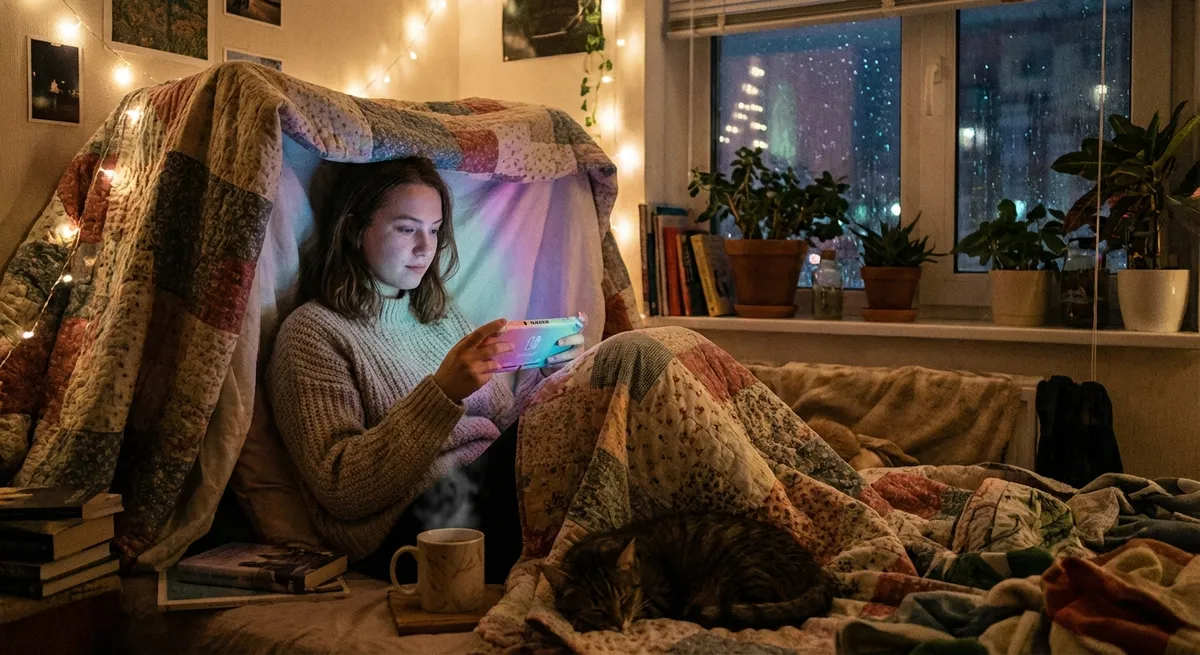
There’s also research backing the mental health angle. A 2020 study published by the University of Oxford found that people who played Animal Crossing: New Horizons reported greater well-being compared to those who didn’t, especially when the play was self-directed and not forced. The game’s slow pace, soft visuals, and gentle rewards act almost like a digital weighted blanket.
But it’s not all sunshine and virtual sunflowers. I’ve also felt the downsides:
- It can become escapism on steroids — “just one more in-game day” turns into 3 a.m.
- Some cozy games sneak in grindy loops that feel soothing at first, then strangely hollow after 20 hours.
- You can end up using them to avoid real problems instead of recharging to tackle them.
So the magic isn’t “cozy game = cure.” It’s more like: use cozy games as a tool for decompression, not a substitute life.
What Actually Makes a Game Feel Cozy? (It’s Not Just Cute Graphics)
When I tried to explain “cozy games” to a non-gamer friend, they said, “Oh, like kids’ games?” That’s not it at all. Some of the coziest games I’ve played tackle grief, burnout, and loneliness — they’re just gentle about it.
From sinking way too many hours into this genre, I’ve noticed a set of vibes that almost always show up:
1. Low punishment, high reassuranceWhen I tested more intense games (roguelikes, competitive shooters) back-to-back with cozy titles, the difference in how failure feels was massive. In cozy games, you might:
- Lose a bit of in-game currency
- Miss a day’s harvest
- Slightly annoy a villager
But you’re never humiliated. There’s usually no hard fail state, just “try again tomorrow.” That’s huge if you’re playing to relax, not to get your ego smashed.
2. Gentle pacing and loopsMost cozy games lean on a predictable loop:
wake up → do a handful of tasks → wander → decorate → talk to NPCs → sleep.
The repetition isn’t laziness; it’s design. It mirrors daily routines — which our brains weirdly love, especially when reality feels chaotic. That rhythm can be genuinely soothing. When I was going through a stressful work quarter, I’d literally “end my day” in-game before going to bed, and it helped me mentally close the tab on real life.
3. Soft aesthetics and soundscapesThe art style and audio matter way more than we give them credit for. Think:
- Pastel or warm color palettes
- Simple, readable UI
- Calm, loopable music that doesn’t demand attention
There’s research in environmental psychology showing that natural sounds and softer visuals can lower stress. A lot of cozy games basically weaponize that: rainfall loops, gentle footsteps, soft wind, no sharp jump-scare audio spikes. I’ll sometimes just let a cozy game run in the background as white noise while I answer emails.
4. Emotional safetyThis one’s subtle. In my experience, the coziest games make you feel like:
- NPCs are happy to see you
- You’re not behind, even if you haven’t logged in for a while
- You can experiment without being punished or mocked
When a game gently welcomes you back after a week away, instead of hitting you with guilt (“You missed 7 days of login rewards!”), it instantly feels like a safe digital space, not another demanding app screaming for your attention.
A Few Cozy Games That Actually Earned a Permanent Spot in My Library
I’ve impulse-bought more “relaxing” games than I’d like to admit, and a lot of them felt like empty time-wasters after a couple hours. These are the ones that stuck — what I keep installed and why, plus the stuff that didn’t work for me.
Stardew Valley – The “I’ll Just Play One More Day” Black Hole
When I first tried Stardew Valley, I thought, “This is cute, but kinda basic.” Fast forward: I’d logged 80 hours, married a villager, rebuilt a community center, and had VERY strong opinions on optimal crop layouts.
Why it works:
- The progression curve is chef’s kiss: basic tools → better tools → sprinklers → entire farming empire.
- It lets you pick your vibe: farming, fishing, mining, romance, decorating… or all of it.
- The soundtrack and pixel art are weirdly timeless — it never feels visually exhausting.
Where it falls short:
- Early game can feel overwhelming: too many possible goals, not enough in-game guidance.
- If your brain leans perfectionist, you may stress over “wasting” days or not min-maxing profits. I definitely fell into that trap once or twice and had to remind myself: this is a chill farm, not an Excel sheet.
Despite that, it’s still the gold standard I compare other cozy games to.
Animal Crossing: New Horizons – Digital Island, Real-World Therapy
During the early 2020 lockdowns, I watched friends who’d never touched a console suddenly spend hours terraforming their Animal Crossing islands and trading turnips like Wall Street brokers with flower crowns.
When I finally joined, I understood why: the game gave structure and community at a time when both were missing offline.
What hit me hardest:
- The days pass in real-world time, which creates a gentle anchor to the calendar.
- Villagers remember you, comment on your outfits, and send you goofy letters — it’s low-key emotional support.
- Decorating your island scratches that interior-designer itch without an IKEA trip.
But:
- The real-time clock can feel restrictive if you only play at odd hours. I ended up mostly seeing the island at night, which got old.
- After a while, some of the dialogue and daily tasks start to feel copy-paste.
Still, the Oxford research on this game’s positive link to well-being matches what I felt: it’s not just cute, it’s emotionally grounding.
Spiritfarer – Cozy, But It Will Absolutely Make You Cry
Spiritfarer pitched itself to me as “a cozy management game about dying.” I rolled my eyes… and then it punched me right in the feelings.You play Stella, ferrying spirits to the afterlife while managing a boat, cooking meals, and building cabins. When I tested it, I was expecting gentle tasks; I wasn’t expecting to rethink how I process loss.
Why it’s special:
- The gameplay loop (collect, craft, upgrade) is classic cozy — but the writing is painfully human.
- Each spirit has a personality, history, and unresolved issues, and you bond with them before letting them go.
- The art is stunning, and the animations are so soft it almost feels like watching a hand-drawn film.
Downsides:
- It’s emotionally heavy. If you’re already in a fragile headspace, this might not be the right pick for a rough week.
- Some resource loops get repetitive later on; I hit a point where I wished the game respected my time a bit more.
Still, as a blend of cozy mechanics and grown-up themes, it’s one of the most memorable games I’ve ever played.
How I Use Cozy Games Without Letting Them Eat My Life
I’ve absolutely had nights where I “relaxed” with a game and then felt gross because I’d basically escaped reality for five straight hours. Over time, I’ve figured out a few approaches that let me enjoy cozy titles without slipping into that void.
1. Intentional sessions, not infinite onesIf I sit down thinking “I’ll just see what happens,” I’m done. What works better:
- “I’m going to play two in-game days.”
- “I’m going to finish decorating one room.”
- “I’m playing until my tea gets cold.”
It sounds silly, but giving my brain a soft endpoint keeps cozy gaming from turning into a blackout binge.
2. Pairing cozy gameplay with real-life decompressingSometimes I’ll:
- Put on a podcast or lo-fi playlist and play a farming sim.
- Use a cozy game as a “bridge” between work and actual sleep — 30 minutes max, with my phone in another room.
- Reward myself: 20 minutes of chores, then one in-game day.
That way, the game doesn’t replace my life; it wraps around it.
3. Watching for red flagsThe moment a game starts to feel like:
- A chore (“Ugh, I have to log in or I’ll miss X”)
- An obligation to maintain a streak
- A way to avoid thinking about something I really do need to face
…I know it’s time to step back. I’ve uninstalled a couple of cozy games that leaned too hard into daily login FOMO and grindy tasks. Relaxation shouldn’t feel like a job.
Why Cozy Games Are Perfect For Sharing (And Not Just Playing Solo)
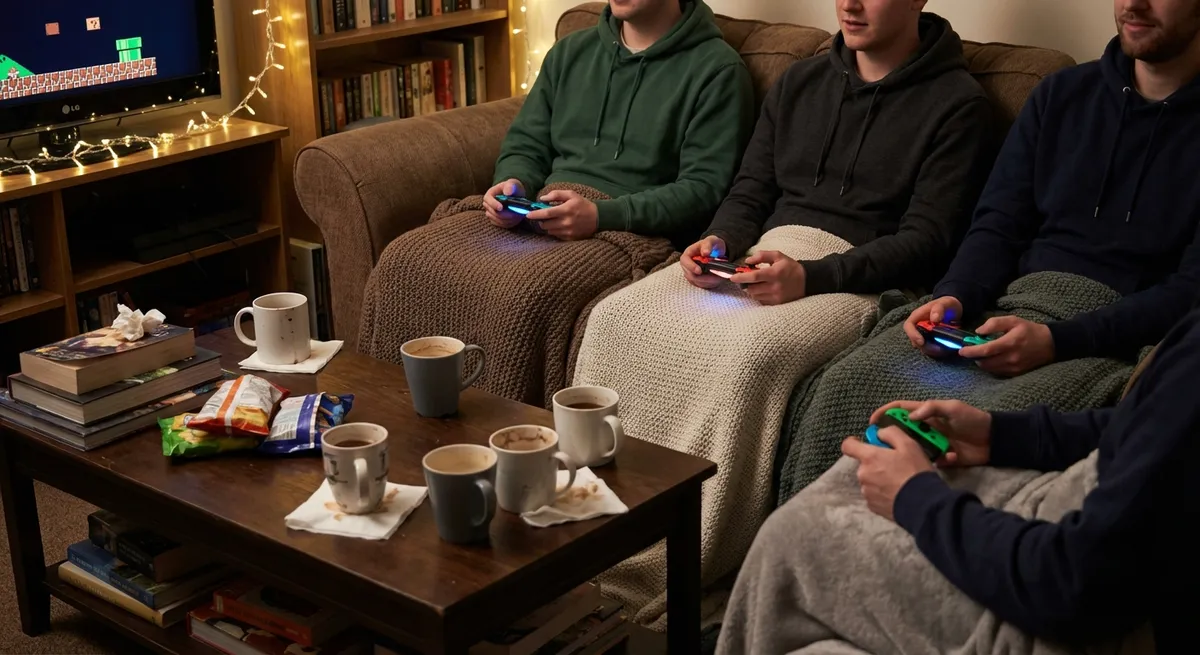
What surprised me most about getting deep into cozy games is how social they can be — even if the gameplay is mostly solo.
I’ve seen:
- Friends stream their decorating progress on Discord while we all hang out and chat.
- People trade design codes, island tours, or farm screenshots like they’re trading Pokemon cards.
- Entire subreddits and Discord servers built around sharing tips, comfort stories, and even grief tied to these games.
When I shared my Spiritfarer experience online, people came out of nowhere with “That game helped me process my grandma’s death” and “I played this during burnout and it weirdly nudged me to change jobs.” Cozy games hit a nerve, and people want to talk about it.
If you’re reading this and mentally listing your favorite “comfort games,” this is your sign: post a clip, share a screenshot, or send a friend a recommendation with a “you might need this” note. These games are quietly helping people feel less alone — and that’s the kind of digital content the internet could use a lot more of.
Conclusion
After years of bouncing between sweaty competitive games and total burnout, cozy games became my middle ground: interactive comfort food that doesn’t rot my brain, as long as I use them intentionally.
They’re not a magical fix for stress, anxiety, or loneliness. But when I’m drained and don’t have the energy for anything “productive,” guiding a little pixel farmer through a gentle day or rearranging a virtual bedroom can be exactly the reset my nervous system needs.
If you’ve been feeling too tired to game but too restless to just scroll, try giving a cozy title an honest shot. You might not just find a new favorite game — you might find a tiny, safe corner of the digital world that quietly makes the real one a bit easier to face.
Sources
- University of Oxford – Video game play is positively correlated with well-being – Study examining how games like Animal Crossing: New Horizons relate to player well-being
- Mihaly Csikszentmihalyi – Flow: The Psychology of Optimal Experience (HarperCollins) – Foundational work on flow states that underpins a lot of modern game design thinking
- Entertainment Software Association – 2023 Essential Facts About the Video Game Industry – Data on who plays games, how often, and why, including relaxation and stress relief
- NPR – Why Animal Crossing is the game for the coronavirus moment – Explores how cozy design elements in Animal Crossing supported players emotionally
- Psychology of Popular Media – Video Games as a Coping Tool – Research discussion on when gaming supports healthy coping versus avoidance