I Rebuilt My Social Life in a Cozy Game Server—and It Low‑Key Worked
I didn’t expect a farming sim and a Discord ping to fix my lonely Tuesday nights, but that’s basically what happened. I’d hit a weird phase: my group chats were dead, everyone was “so busy,” and my attention span was wrecked by doomscrolling. Then I stumbled into a tiny online community built around one game… and it felt more like a group hang than a lobby.
Over a few months, bouncing between Stardew‑style farming, chaotic co‑op shooters, and hidden‑gem indies, I watched something strange happen: my social life moved into games—but in a way that actually felt healthy. Here’s what happened when I started treating games less like escapism and more like a low-pressure, digital third place.
How One “Just One Game?” Night Turned Into a Real Friend Group
I recently joined a friend-of-a-friend’s Discord server that revolved around one cozy game: Stardew Valley. That’s it. No “sweaty ranked,” no drama, just people farming, fishing, and talking about real life between harvests.
On my first night, someone typed: “Anyone want to restart a farm from Year 1? No min-maxing, just vibes.” I joined that call fully prepared to mute myself and silently plant parsnips. Instead, three hours later we’d:
- Compared worst first-date stories while trying (and failing) at the mines
- Paused the game because someone’s cat stepped on their keyboard
- Had a half-serious conversation about burnout while one of us spammed the fishing mini-game
When I tested this “cozy lobby” life for a few weeks, I realized something: people weren’t there for the game. The game was just the table in the café. We haunted that same voice channel whether we were actually playing or just sorting out our weeks.
Psychologists sometimes call this “shoulder-to-shoulder interaction”—you’re doing something next to each other instead of grilling each other face-to-face. For socially anxious brains (hi, it’s me), that’s gold. You get connection without the “so how are you really?” interrogation spotlight.
Do we still have awkward silences? Absolutely. But it’s way easier to ride those out when you can say, “Hang on, my cow just escaped the barn,” instead of staring at someone across a table, panicking about eye contact.
Why Games Low-Key Make Socializing Less Awkward (When You Use Them Right)
Once I started paying attention, I realized games quietly solve a bunch of problems that make adult friendships hard.
1. There’s Built‑In Structure (So You Don’t Have to “Perform”)
When I play co-op survival games like Valheim or Minecraft, there’s always something to do: gather wood, build walls, scream collectively as a troll spawns behind the house. You don’t have to manufacture conversation; you can just narrate chaos.
This lines up with what social researchers have found: shared activities create better bonding than forced “let’s catch up” chats. A 2018 study in Games and Culture highlighted that multiplayer worlds act as “social platforms” where tasks and goals make interaction feel more natural, not staged.
In my experience, that structure is a lifesaver if:
- You’re introverted or socially rusty
- You’re reconnecting with old friends and it feels weird
- You’re making new friends and don’t want to trauma-dump on Day 1
The game gives you something to bounce off, like training wheels for conversation.
2. Micro-Rituals Turn into Real Routines
We eventually created tiny rituals:
- “Monday Mines”: 90 minutes of dungeon runs, no cameras, comfy clothes, low energy allowed
- “Screenshot Sundays”: we’d share the most cursed or wholesome screenshot from any game that week
- One friend does a dramatic “weather report” whenever a storm hits in-game
None of this is life‑changing by itself. But string enough of those rituals together and you suddenly have consistent touchpoints with people you’d otherwise drift away from.
It mirrors what sociologists talk about as “third places”—those spaces that aren’t home or work but give you a sense of belonging. Historically that was cafés, bars, churches. For us? It’s a Stardew Valley voice channel and a “VC is open” message on Thursday nights.
3. Games Make It Easier to Mix Old Friends and New Ones
One night, someone’s cousin joined for the first time. Most awkward introduction possible:
> “This is my cousin. He’s bad at games but good at memes. Be nice.”
Within thirty minutes he’d:
- Fallen off a virtual cliff
- Blown up our carefully-mined tunnel
- Accidentally set our base on fire
And somehow that disaster fast-tracked the social bonding way faster than a normal group chat ever would’ve. Shared chaos is an underrated friendship accelerator.
Because games have clear roles and shared goals, new people can slip into the group identity without needing a full biography interview. You just hand them a pickaxe and say, “We’re building a bridge. Try not to die.”
The Dark Side: When “Just One More Match” Eats Your Real Life
I’m not gonna pretend this is all soft lighting and wholesome friendship arcs. When I leaned hard into online game nights, some less-cute stuff popped up too.
The Burnout Loop Is Real
When I sank hours into ranked multiplayer (shoutout to League and Valorant for wrecking my sleep), I noticed:
- I was “hanging out with people” but feeling weirdly drained, not energized
- I’d dodge IRL plans because “I already talked to my friends this week”… but it was mostly yelling callouts
- My nightly “just one match” spiraled into 2 a.m. doom‑queuing with tilted teammates
There’s actual data backing that vibe. The World Health Organization classified gaming disorder in 2019 for patterns where gaming seriously damages personal, social, or occupational life. I wasn’t at that level, but I could see the slippery slope when games were my only social outlet and my only stress release.
Not All Communities Are Cozy
I’ve also wandered into the absolute worst corners of voice chat: slurs, rage, creepy DMs—especially in competitive FPS and open voice lobbies. If you’ve played for more than a week, you know.
From my time bouncing between servers, here’s what separated the good spaces from the “delete Discord” ones:
- Clear rules and active mods who actually enforce them
- Voice channels where push-to-talk is encouraged and people introduce themselves
- Zero tolerance for “it’s just jokes” harassment
- Spaces that welcome breaks: no guilt-tripping if you can’t play every night
I’ve dipped from multiple servers that treated “you missed raid night” like a moral failure. If it starts feeling like a second job, that’s not a social life—that’s an unpaid internship.
How I Curate My Gaming Social Life So It Doesn’t Wreck My Brain
After trial, error, and a questionable number of Steam receipts, here’s how I’ve made my game‑based social life feel actually healthy.
I Pick “Social Tech Trees,” Not Just Games
When I try a new game now, I ask: what kind of social energy does this demand?
From experience, it shakes out like this:
- Cozy / low-pressure
- Stardew Valley, Animal Crossing, Disney Dreamlight Valley, Spiritfarer (lightly co-op via shared discussion, not live play)
- Great for introverts, background chatting, anxious days
- Tactical / semi‑sweaty but cooperative
- Deep Rock Galactic, Monster Hunter: World, Helldivers 2
- Best when I have 2–3 friends and we want to feel like a competent squad
- High-intensity competitive
- League of Legends, Valorant, Apex, Overwatch
- I treat these like a sport: fun in short bursts, not ideal as my main social environment
I rotate these intentionally. If I’ve had a rough week, I’ll literally say: “No ranked tonight. Only farming and emotionally supporting each other while we water virtual plants.”
I Set “Soft Boundaries” With My Group
I once burned myself out in a clan that expected nightly logins. Now I’m way more upfront. A typical message from me:
> “Hey, love you gremlins, but I’ve got a deadline and my eye twitch has opinions. Might just lurk and watch stream tonight.”
I’ve noticed healthy servers respond with “all good, see you when you’re free” instead of “wow, fake gamer.” That’s my green flag.
I also quietly track my own habits. If I’m:
- Cancelling IRL plans regularly for raid night
- Feeling guilty when I miss a session
- Using games to avoid thinking about actual problems
…that’s my cue to log less and maybe text a friend for coffee instead.
I Use Games to Boost IRL Connection, Not Replace It
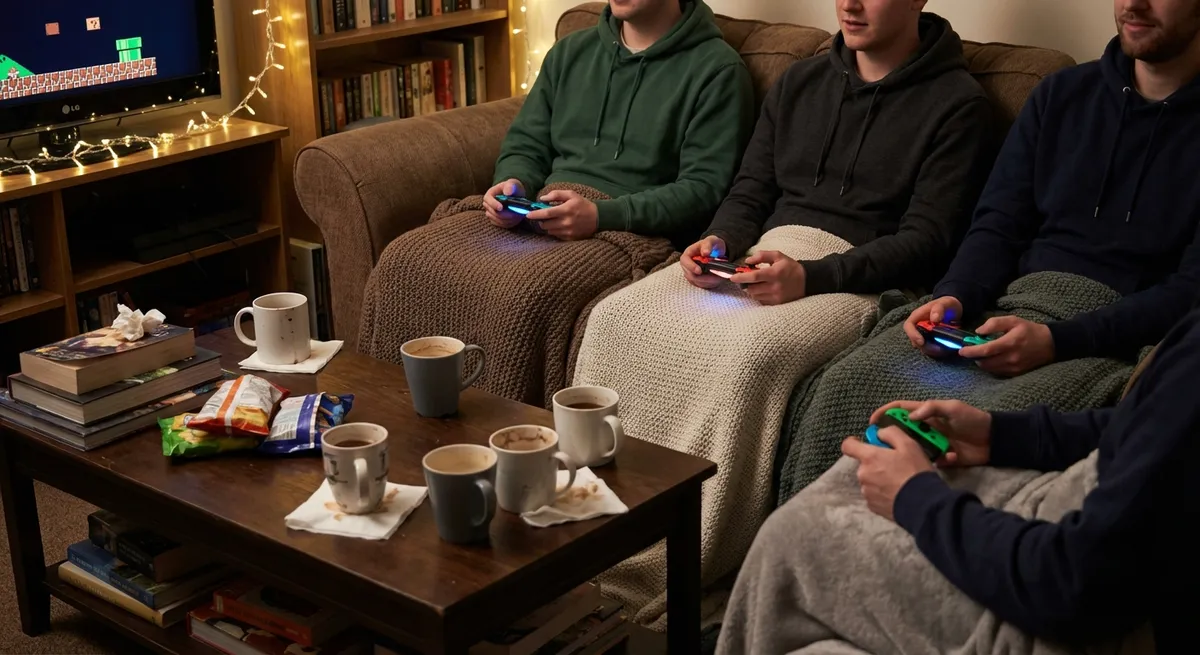
One of my favorite experiments: I convinced my offline friends to do a “co-op + IRL” night. We:
- Ordered the same type of food (pizza supremacy)
- Hopped into a chill co-op game (it was PlateUp!, chaotic but hilarious)
- Switched halfway through to planning an in-person hang using the same call
The game lowered the initial awkwardness, and because we were already together online, shifting to “so when are we actually meeting?” felt organic. No one ghosted the group chat because we were already there.
If You Want to Rebuild Your Social Life Through Games, Try This
If your group chats are collecting dust and you’re low-key lonely, here’s the rough blueprint that worked for me:
- Pick one cozy or cooperative game as your “home base.” Stardew Valley, Minecraft, Valheim, or Deep Rock Galactic are all great social sandboxes.
- Create a tiny Discord server for just a few people—don’t start with a 300‑person chaos factory. Use simple channels: #general, #games, #screenshots, 1–2 voice channels.
- Schedule one recurring low‑pressure night, even if it’s only an hour. Give it a dumb name so it feels like a thing: “Farm Fridays,” “Dungeon Therapy,” “Goblins & Gossip.”
- Make cameras optional but voices welcome. In my experience, voice is where the real bonding happens because you get jokes, tone, and those little side comments you’d never type.
- Be the person who says the quiet part out loud. I’ve literally said: “I know we’re just gaming, but honestly I’m glad I get to talk to you all regularly.” Turns out everyone else felt the same and thought they were weird for wanting more than just gameplay.
Not every group will click. I’ve left servers that felt off, and some “let’s play together” chats fizzled after a week. That’s fine. You only need one or two groups that feel like home.
Why I’m Weirdly Protective of My Little Game Server Now
After months of treating games as my digital third place, here’s where I’ve landed:
- I feel less lonely, even on nights I’m playing solo, because there’s a standing invite to hop into a familiar voice channel.
- My social life feels customizable—I can choose cozy, chaotic, talkative, or quiet depending on my energy level.
- I’m way more picky about what communities I join because I’ve seen how good it can feel when a server is genuinely safe, silly, and supportive.
Games didn’t magically fix my life. I still need face-to-face time, walks outside, and non-digital hobbies that don’t involve pressing “W” endlessly. But treating game servers like an actual social ecosystem—not just a matchmaking queue—gave me something I was seriously missing: consistent, low-pressure, we’re-just-here-together connection.
If your nights are starting to blend together and your “friends” are mostly people you like from a distance on Instagram, don’t underestimate what a small, intentional gaming group can do. Start tiny, stay picky, and let yourself admit: sometimes the best conversations happen while you’re arguing about where to put the virtual chicken coop.
Sources
- World Health Organization – Gaming Disorder – Explains how the WHO defines gaming disorder and the potential impact on daily functioning
- American Psychological Association – Video Games: Play That Can Do Serious Good – Overview of research on social, cognitive, and emotional effects of video games
- Pew Research Center – Teens, Video Games and Technology – Data on how younger players use games and online platforms to socialize
- “The Social Side of Gaming: A Study of Interaction Patterns in Multiplayer Games” – Games and Culture – Research article on multiplayer games as social platforms and how players build relationships
- Stanford – The Benefits of Playing Video Games – Discussion of potential positive outcomes of gaming, including social and cognitive benefits