The Zoomies Explained: Why Your Pet Suddenly Loses Its Mind (And What It’s Really Saying)
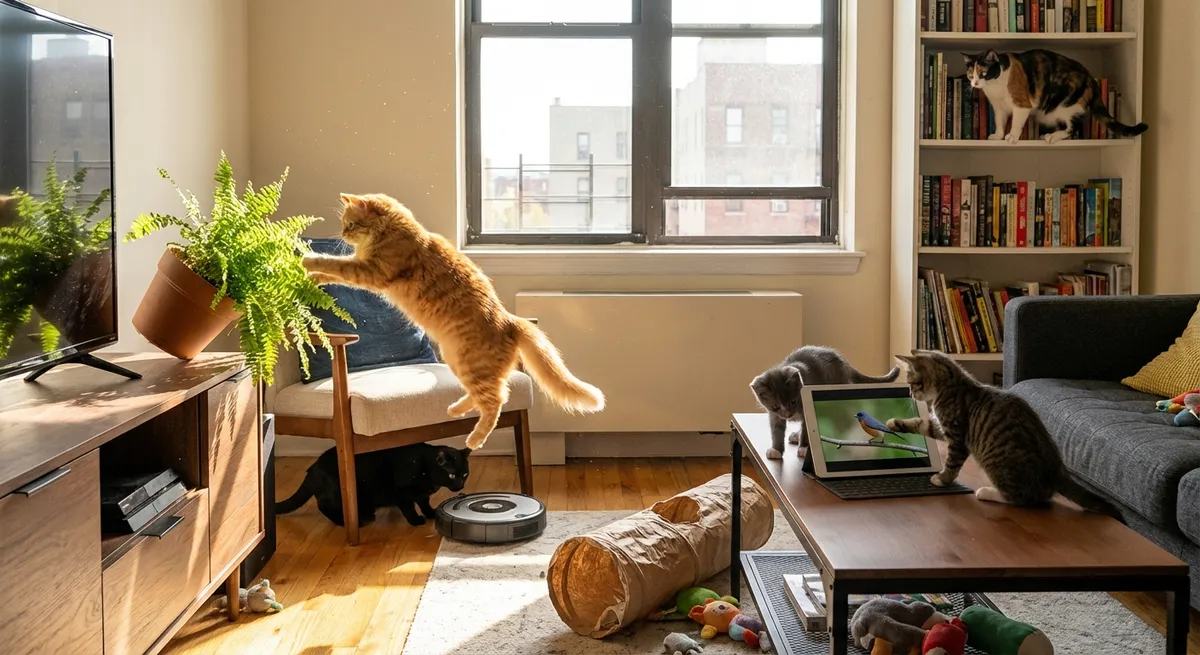
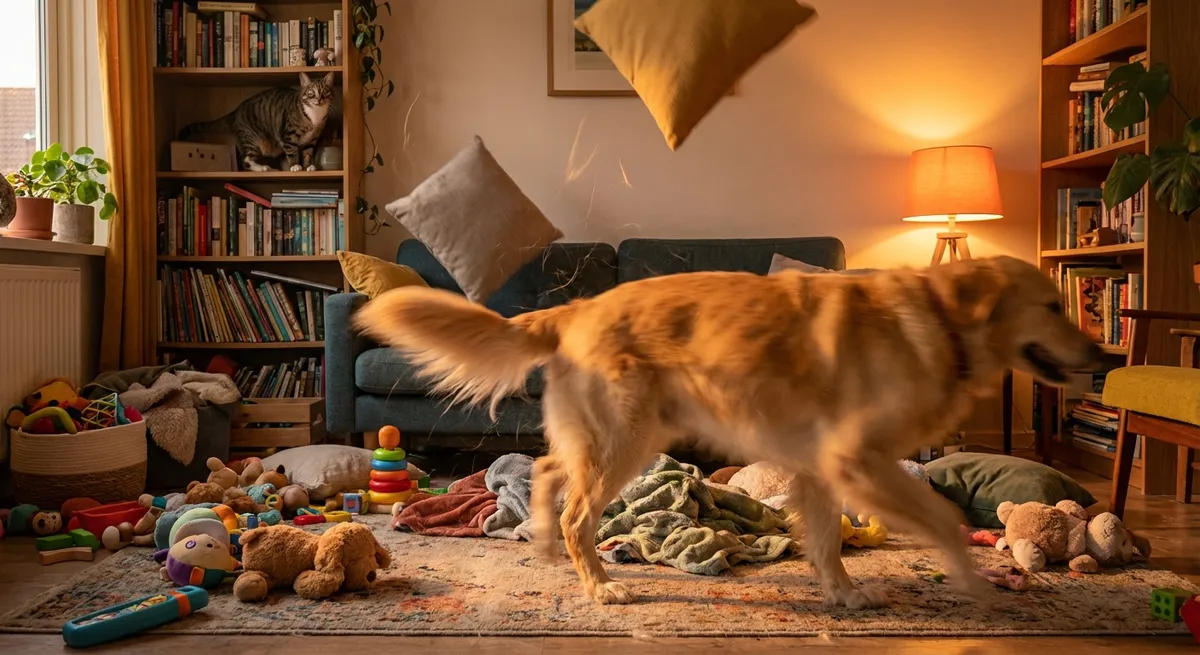
I used to think my dog was glitching. One second he’d be peacefully chewing a toy, and the next he’d blast off like a furry torpedo—tearing around the living room, skidding on the floor, eyes wide, tail doing helicopter rotations. If you’ve ever watched your dog or cat do a wild, chaotic sprint for no apparent reason, you’ve met the infamous “zoomies.”
I recently went down a deep rabbit hole (okay, more like a black hole) of vet articles, behavior research, and my own experiments at home to figure out what’s actually going on. Spoiler: zoomies aren’t random. They’re a message—and your pet’s body is basically yelling it.
Let’s decode it.
What Zoomies Actually Are (And Why They Hit Like a Tornado)
Behavior pros call zoomies “FRAPs” — Frenetic Random Activity Periods. That sounds like a fake medical term you’d use to get out of a meeting, but it’s legit. Vet behaviorists see this in healthy dogs and cats all the time.
When I started tracking my dog’s zoomies on my phone like a total nerd, some patterns jumped out:
- Right after a bath (wet dog chaos mode)
- Late evening, just when I was winding down
- After long periods of “forced chill” (like a rainy day indoors or crate rest)
In my experience, zoomies usually hit when there’s a build-up of physical energy and mental tension. It’s your pet hitting the emotional eject button.
Think of it like:
- A pressure release valve
- A full-system reboot
- A “my brain is overloaded; I must sprint now” moment
Researchers haven’t nailed one single cause, but many vets and behaviorists agree it’s tied to arousal and energy levels—kind of like kids going feral right before bedtime. The difference is your kid doesn’t run figure-eights around the coffee table at 30 mph. Probably.
Common Triggers: When Your Pet Is Most Likely to Go Full Goblin Mode
Once I started paying attention, I realized zoomies weren’t random chaos—they were predictable chaos.
Here are the big patterns I kept seeing, plus what the research and experts say:
1. Post-Bath Freedom
My dog’s wildest zoomies used to happen after a bath. I thought he just hated being clean, but it’s more layered than that.
From what I’ve read and seen:
- Baths can be overstimulating: new sensations, sounds, smells
- Many dogs are mildly stressed by grooming even if they look “fine”
- The towel comes off and boom: pressure release sprint
I tested this by turning bath time into a calmer event—slower movements, treats, shorter sessions. The post-bath zoomies dropped from full NASCAR to more like a joyful victory lap.
2. The Evening “Witching Hour”
Cats go full parkour at 3 a.m. Dogs suddenly sprint at 9 p.m. Meanwhile, you’re just trying to exist.
A lot of dogs and cats are crepuscular by nature—most active at dawn and dusk. When they spend the day snoozing while you’re at work, that energy piles up.
When I upped evening enrichment—snuffle mats, short training sessions, a quick walk before bed—the dramatic “I am a demon now” episodes got shorter and less chaotic.
3. After Long Restraint or Boredom
Anytime my dog had to be calm for too long—travel, crate rest, rainy days—zoomies were guaranteed.
Physical restriction + mental boredom = nuclear zoomies.
This is similar to what behaviorists see after vet visits or recovery periods. Once that leash pressure, cone, or stress is gone, boom: full-body reset.
4. Young Brains, Young Bodies
Puppies and young dogs? Zoomies are practically their hobby. Same for young cats.
Younger animals:
- Have less impulse control
- Get overstimulated faster
- Don’t know how to self-regulate (yet)
That tracks with what I saw: my dog’s zoomies between 6–18 months were wild. Now, as an adult, they’re more like short joyful bursts instead of couch-destroying chaos.
Are Zoomies Normal… Or a Red Flag?
When I first started researching, I was half-convinced my dog’s brain was short-circuiting. But the more I read, the more the pattern became clear.
Zoomies are usually:
- Normal
- Harmless
- Actually a sign your pet feels safe enough to let loose
In my experience, they’re like an emotional steam release. But there are times zoomies can hint at deeper issues.
Totally Normal Zoomies Look Like:
- Brief bursts (30 seconds to a few minutes)
- Crazy-fast running in loops, figure-eights, laps
- Playful body language: loose body, waggy tail, “play bow,” bright eyes
- Easy recovery—your pet flops down or casually walks it off
Zoomies That Deserve a Closer Look:
Based on what I’ve seen and what vets say, I get more curious when:
- Zoomies are constant, intense, and happen many times a day
- They look panicked or frantic instead of playful
- Your pet can’t be interrupted at all, even with calm redirection
- They’re triggered by specific stressors (loud noises, certain rooms, particular people)
- They lead to repeated self-injury (crashing into things, sliding hard, bloody paws)
One thing I learned the hard way: “crazy energy” can also be a sign of under-stimulation or even anxiety. My dog’s “he’s just a high-energy boy” turned out to be “he’s low-key stressed and needs more mental work.”
If you’re unsure, video the zoomies and show your vet or a certified behavior consultant. It’s way easier for them to evaluate when they can actually see what’s happening.
How to Handle Zoomies Without Destroying Your House (Or Knees)
Here’s the big mistake I used to make: trying to stop the zoomies.
Chasing, yelling, grabbing a collar—yeah, that just turned it into a game or escalated the chaos. When I shifted from “make it stop” to “redirect the chaos into something safer,” everything got easier.
Here’s what’s actually worked for me.
Step 1: Don’t Stand in the Blast Zone
If your dog does hallway sprints, do not stand in the middle like a traffic cone. I learned this when 60 pounds of pure momentum clipped my knees and I reconsidered all my life choices.
Instead:
- Move out of their direct path
- Clear obstacles fast: move chairs, close baby gates, pick up objects they’ll crash into
- Kids should be off the floor and not grabby—zoomies + toddlers = ER visit waiting to happen
For cats, the main goal is to avoid them using your ankles as launch pads. Been there. Wore the scars.
Step 2: Redirect, Don’t Wrestle
When I tested different methods, wrestling and shouting never helped. Calm redirection did.
Things that actually worked:
- Tossing a toy away from fragile zones so the sprints head into a safer area
- Opening the backyard door and letting my dog “take it outside”
- Grabbing a long tug toy so the chaos has a “target” instead of my furniture
For cats, a fast-moving wand toy or tossed crinkle toy can turn feral hallway zoomies into more structured “hunt” play.
The trick is to guide the energy, not squash it.
Step 3: Pre-Game the Zoomies
When I started preempting my dog’s witching-hour chaos, the intensity dropped like crazy.
Things that helped:
- A sniffy walk before his usual zoomie time
- 5–10 minutes of training: sits, downs, “find it” games
- Indoor nosework: hiding treats around a room
Mental work is ridiculously effective. On days I focused more on sniffing and puzzle toys than miles walked, his zoomies were shorter and happier, not desperate.
For my cat, scheduled play sessions right before her usual “dash across the apartment at 2 a.m.” window made a huge difference. Same zoomies, better timing.
When Zoomies Aren’t Just Zoomies: Boredom, Anxiety, or Something Else?
Here’s the uncomfortable thing I noticed with my own dog: the worst zoomies happened on days I was distracted and he got the “bare minimum” attention.
Zoomies by themselves aren’t bad. But constant, intense, or desperate-feeling ones can sometimes be a symptom, not just a quirk.
Patterns that made me pause:
- Zoomies + destructive behavior (chewing doors, constant digging)
- Zoomies mainly when I was leaving or just got home (separation-related stress)
- Zoomies only in specific environments (dog park, vet lobby, certain rooms)
In those cases, I started looking at the bigger picture:
- Is my pet getting enough daily exercise for their age/breed?
- Is there enough mental work—sniffing, problem-solving, training, play?
- Is there a pattern tied to something stressful (loud neighbors, being left alone, new pet, etc.)?
One time I realized my dog’s post-crate zoomies were actually a signal: he found the crate stressful as I was using it. Once I slowed down the crate training and made it more positive, the frantic “I’m FREEEEE” zoomies turned into normal, excited ones.
If your gut’s pinging you—trust it and loop in a vet or behavior pro.
Turning Zoomies Into Your Secret Training Superpower
The wild thing I didn’t expect: once I stopped treating zoomies like a problem and more like a signal, I could actually use them.
Here’s how I turned zoomies into an advantage:
1. Build a “Zoomie Zone”
I started using a specific word and location—“yard time!”—whenever my dog looked revved up. Over time, he learned: big energy goes there.
Now, when he starts to rev, I just say the cue, open the door, and he rockets outside instead of through my coffee table. Indoors, you can do something similar with a hallway or cleared room.
2. Sneak in Recall Training
My favorite little training hack:
- Let the zoomies start
- Wait for that micro-second when your pet naturally slows down or turns
- Call them then, with a happy voice and big reward
When I tested this, my recall (“come”) got way more reliable because he learned coming to me didn’t end the fun—it was part of the fun.
3. Use the Post-Zoomie Calm
Right after zoomies, my dog enters what I call “potato mode.” That’s prime time for:
- Nail trims
- Brushing
- Quick handling practice (checking ears, paws, teeth with treats)
For my cat, that’s the window she’ll actually tolerate being brushed without side-eyeing me like I ruined her life.
You’re basically riding the natural wave from high arousal to calm and getting useful stuff done while their brain is in recovery mode.
The Real Message Behind Zoomies
Once I stopped treating zoomies like my pet “losing it” and more like my pet communicating, everything about how I lived with them shifted.
Underneath the chaos, zoomies usually mean:
- “I’ve got energy and nowhere to put it.”
- “That thing we just did was kind of a lot for me.”
- “I finally feel safe enough to go full goblin.”
In my experience, the more I listened to those messages instead of just reacting, the more my dog—and my cat—settled into a healthier rhythm. Fewer destructive bursts, more joyful sprints. Less “oh no,” more “okay, let’s channel that.”
So the next time your pet tears across the room like they’ve been launched from a cannon, don’t just think, “They’re crazy.”
Think, “What are they telling me with this?”
Then, if you can, give them a safe runway and let them fly.
Sources
- American Kennel Club – Why Dogs Get the Zoomies – Explains FRAPs, when they’re normal, and safety tips from veterinary experts
- VCA Animal Hospitals – Dog Behavior and Training: Play and Exercise – Covers how exercise, arousal, and play impact dog behavior and energy bursts
- Cornell University College of Veterinary Medicine – Enrichment for Dogs – Breaks down mental and physical enrichment and how lack of it affects behavior
- ASPCA – Enriching Your Cat’s Life – Discusses normal feline activity patterns, play, and how to channel energy safely
- American Veterinary Medical Association – Selecting a Pet Behavior Expert – Guidance on when and how to seek professional help for behavior concerns