I Turned My Tiny Patio Into a Green Oasis (Without Annoying the Neighbors)
I used to think my small apartment patio was useless—a concrete shoebox with a railing and a sad plastic chair. Then one random Sunday, armed with cheap plants and an iced coffee, I tried an experiment: could I turn this boring space into something that actually felt like… a tiny garden?
Spoiler: yes. And it changed how I relax, work, and even sleep.
Here’s exactly what worked, what failed hilariously, and what I’d do again if I had to start from a blank balcony.
Step One: Staring at Your Space (Yes, This Actually Matters)
Before I bought a single plant, I spent a few days just watching my patio like a weirdo.
I literally timed the sun with my phone:
- Morning: bright but indirect light
- Midday: only half the space was blasted with full sun
- Late afternoon: mostly shade
This told me I had what gardeners call partial sun or bright indirect light for most of the day. That one detail saved me from killing a bunch of sun-loving plants that had no business being there.
In my experience, the biggest balcony mistake people make is skipping this “boring” observation step. They buy whatever looks pretty at the store, then wonder why everything turns crunchy or moldy two weeks later.
What I did instead:
- I checked the USDA Plant Hardiness Zone for my area (I’m Zone 7b).
- I made a quick list of plants that like containers and my light level—herbs, compact flowers, and a couple of shade-tolerant shrubs.
- I measured my space with a tape measure so I didn’t end up with a gigantic planter I couldn’t walk around. (I still misjudged one and had to do a ridiculous sideways shuffle for a week.)
If you’re in an apartment or condo, also check your lease or HOA rules. I found a line in mine that said: “No items may hang over the railing.” Goodbye, dreamy trailing planter fantasy. Hello, creative vertical setup.
Choosing Plants That Don’t Die on You in a Month
When I finally went plant shopping, I treated it like a mission, not a random wandering through pretty flowers.
I split my balcony into zones:
- Food corner (herbs and a couple of veggies)
- Chill corner (plants that look good and don’t need babysitting)
- Experiment corner (plants I wasn’t sure about but really wanted to try)
Here’s what surprised me when I tested different plants:
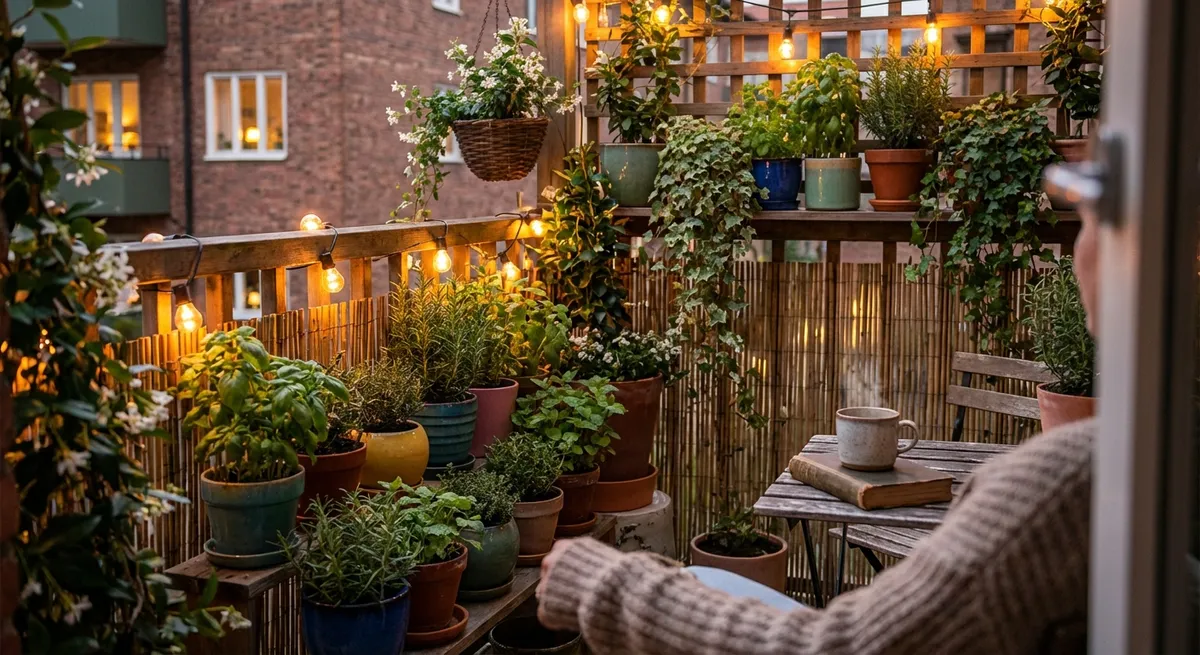
Herbs that thrived in containers for me:- Rosemary – Basically the tank of the herb world. Light drinker, loves sun, smells amazing.
- Mint – Grew like it was trying to take over the building. I kept it in its own pot so it wouldn’t invade everything.
- Chives & parsley – Super forgiving, bounced back even when I forgot to water them for a couple days.
- Cherry tomatoes in a 5-gallon pot – When I used a deep container and a tomato cage, they went wild. The flavor difference from store-bought? Ridiculous.
- Lettuce in a shallow box – Quick to grow, incredibly satisfying, but bolted fast during a hot week. I learned to seed small amounts every 2 weeks instead of all at once.
- Calibrachoa (mini petunias) – Constant color, loved my partial sun, looked like I knew what I was doing.
- Boston fern – Gave instant “lush jungle” vibes in a shady corner. Needed more water than I expected, though.
- Dwarf boxwood – Evergreen structure in a pot; it made the whole space feel more intentional.
What didn’t work for me:
- A hydrangea in a too-small pot. It got stressed, wilted a lot, and I ended up rehoming it.
- A lavender plant that clearly wanted more sun and drainage than my balcony would ever provide. It pouted all summer and eventually called it quits.
If you’re unsure, I’ve had great luck checking university extension plant lists and cross-referencing them with what local nurseries stock. If the local nursery doesn’t carry it, there’s often a reason.
Pots, Drainage, and the Time I Almost Flooded My Downstairs Neighbor
I learned this the terrifying way: your balcony doesn’t magically drink extra water. It has to go somewhere.
When I first set things up, I used pots with drainage holes… and no saucers. After a heavy watering, I noticed a small waterfall pouring off the edge of my balcony. Two minutes later, my downstairs neighbor was on her patio, looking very confused and very damp.
From that day on, drainage became my obsession.
Here’s what’s worked best for me:
- I only buy containers with drainage holes, or I drill my own using a masonry bit (for ceramic) or standard bit (for plastic).
- I add a thin layer of coarse material at the bottom—I used broken terracotta pieces and some large perlite chunks. Not the old “gravel layer” myth for drainage (research actually shows that can trap water higher up), but just enough to keep the hole from clogging with soil.
- Every pot sits on a deep saucer so excess water doesn’t run off the balcony. I empty them if they fill after heavy rain.
I also pay attention to pot material:
- Plastic/resin: Lightweight, affordable, don’t dry out as fast. Great for upper floors.
- Terracotta: Beautiful and breathable, but in my experience, plants in these dry out faster—perfect if you’re prone to overwatering, risky if you forget.
- Fabric grow bags: When I tested these for tomatoes and peppers, they grew insanely well. They do dry quickly, but the root systems looked fantastic.
One more thing I wish I’d known earlier: potting mix matters. I stopped using garden soil in containers altogether. Pre-mixed, peat or coir-based potting mix with perlite or bark chips gave my roots way more air and better drainage.
Creating Privacy Without Building a Fortress
My goal wasn’t to live in a green bunker, but I definitely didn’t want to feel like I was sitting in a fishbowl while scrolling on my phone.
What I tried:
1. Living “screens” with tall containersI planted:
- A dwarf bamboo (clumping, non-invasive variety) in a long, narrow planter along the railing
- A columnar shrub in a tall pot near the seating area
These created natural sight lines so I could sit outside in my pajamas without making awkward eye contact with the neighbor working at his desk.
Pros:- It feels softer and more natural than fabric screens.
- You can adjust height by pruning or raising the pot on a stand.
- Tall planters get heavy. Like, very heavy. I kept checking my building’s weight recommendations and tried to distribute weight toward the edges near supporting walls.
I tested a short, roll-up bamboo screen attached to the inside of the railing.
What I liked:- Instant privacy upgrade.
- It diffused harsh afternoon light really nicely.
- Easy to remove if management complained.
- Mine faded after a season and started shedding little pieces on windy days.
If you’re renting, I really recommend using zip ties or removable hooks for anything attached to the railing. I’ve moved once since setting mine up and was grateful I hadn’t drilled 400 holes into the wall.
Lighting and Furniture: Where It Finally Starts Feeling Like a Real Room
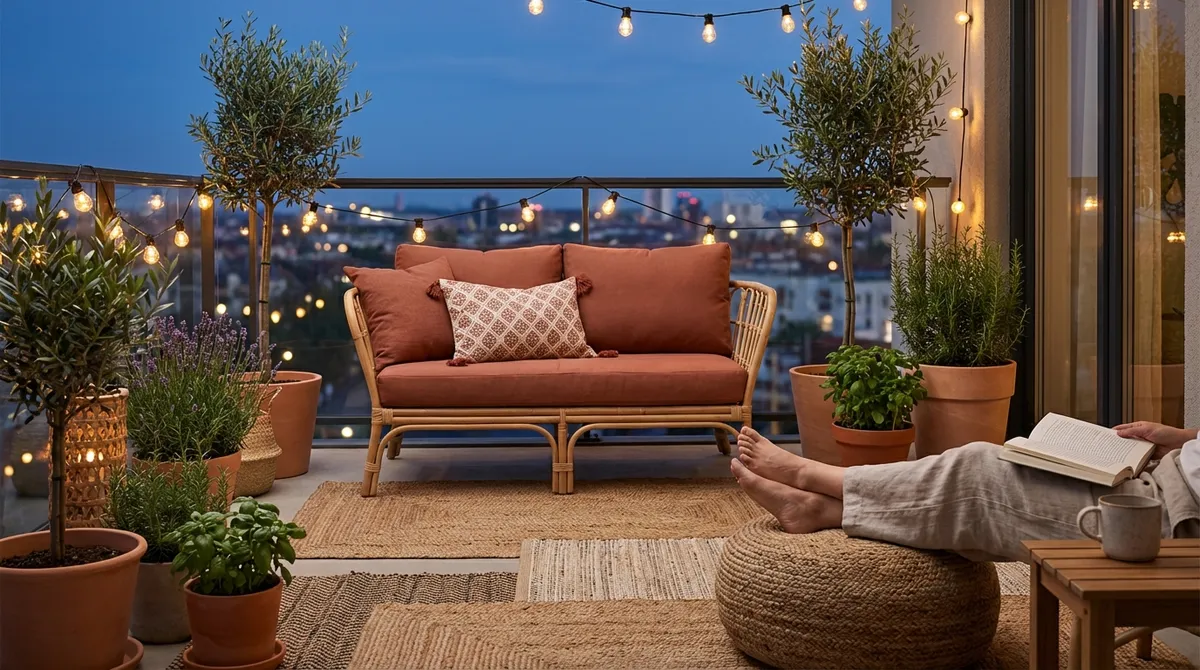
The turning point for my balcony was when I stopped treating it like an outdoor “extra” and started designing it like another room.
Lighting experiments that worked:- Solar string lights along the top rail and wall—soft, warm, and zero wiring hassle. I used a warm white color to avoid that cold “parking lot” vibe.
- A small, rechargeable LED lantern on the table—bright enough to read, dimmable enough to feel cozy.
- I tested candles once. The wind laughed and blew them out in 30 seconds. I switched to LED “candles” with timers.
What surprised me is how much good lighting changed my plant routine. I actually wanted to sit with my herbs at night, check leaves for pests, and do a little deadheading or harvesting because the space felt inviting.
Furniture choices that didn’t make the balcony feel cluttered:- A foldable bistro table and two chairs—compact, but big enough for a laptop and coffee mug.
- A narrow bench with storage under the seat where I hid potting mix, tools, and the inevitable mess.
- Thin-profile cushions that I could bring indoors when it rained, so they didn’t mildew.
I tried a big outdoor rug once. It looked great but trapped dirt and stayed damp for ages. I eventually switched to a smaller, washable rug that I can literally shake off over the railing and dry flat.
Keeping Plants Alive When You’re Busy, Lazy, or Both
My balcony looked incredible for about a month… then I traveled for 5 days and came home to a crime scene of wilted leaves and crispy soil.
Since then, I’ve tested a few low-effort strategies to keep everything alive:
Self-watering systems I actually liked:- Self-watering planters with a reservoir at the bottom. When I watered from the top and let the excess fill the reservoir, my plants lasted several hot days with no extra attention.
- Those simple glass watering globes did help a bit for thirsty plants, but in my experience, they’re more of a backup than a full solution.
This felt weird at first—mulch in pots? But adding a 1–2 inch layer of shredded bark or coco coir chips on top of the soil:
- Slowed evaporation
- Kept fungus gnats down
- Made the pots look more “finished”
I used to water lightly every day. Now I water deeply less often, letting water run through the drainage holes, then waiting until the top couple inches are dry. For most of my plants, that rhythm worked much better.
When heat waves hit, I moved a few more delicate plants (like lettuce and ferns) into deeper shade and misted their leaves in the morning. It’s not perfect, but it helps them survive the roughest stretches.
Bugs, Mildew, and Other Balcony Villains
The first summer, I assumed pests were more of a “big garden” problem. My aphids and spider mites were offended by that assumption and promptly showed up.
What I’ve learned works on a small patio, without turning it into a chemistry lab:
- Regular leaf-check days: Once or twice a week, I take a slow look under leaves and at new growth. When I catch things early, everything’s easier.
- Hand removal: Honestly, for light infestations of aphids or caterpillars, I just spray them off with water or squish them. It’s gross, but effective.
- Mild soap sprays: A few drops of unscented dish or castile soap in a spray bottle of water helped control mild spider mite and aphid spots for me. I always test on one leaf first. Some plants hate it.
- Air circulation: I had a bout of powdery mildew on one plant, and simply moving it to a spot with better airflow (and not watering at night) made a bigger difference than anything else.
I avoid heavy chemicals on the balcony, especially since I grow food there. When I’m unsure, I search plant and pest information from university extensions first—they’re shockingly practical and non-dramatic about it.
The Emotional Side: Why This Tiny Garden Was Weirdly Life-Changing
I didn’t expect this little concrete rectangle to affect my mood, but it did.
When I tested working outside for a week—just my laptop, coffee, and herbs around me—I noticed I was less twitchy and more focused. There’s some science behind that: exposure to plants and green spaces has been linked to reduced stress, better focus, and even improved sleep quality.
I also started a small ritual: every morning, I step outside, check what grew, snip a bit of mint for tea, and just stand there for 2–3 minutes. No phone, no scrolling, just me and the plants doing their silent thing.
Not everything is magical, of course:
- Wind still knocks things over on bad days.
- A squirrel once tried to bury a peanut in my lettuce and looked offended when I told him no.
- I still occasionally overwater something and have to apologize to it.
But my balcony doesn’t feel like wasted square footage anymore. It feels like a tiny, living room—literally.
If you’ve been staring at your patio or balcony thinking, “It’s too small to bother,” I’m telling you as someone who almost gave up: it’s not. Start with two pots and one comfy chair. See how it feels. Let it grow from there.
Sources
- University of Maryland Extension – Container Gardening – Detailed guidance on potting mixes, container sizes, drainage, and plant selection for small spaces
- Royal Horticultural Society – Gardening in Containers – Practical tips on choosing pots, watering efficiently, and maintaining healthy container plants
- USDA Plant Hardiness Zone Map – Official interactive map to find your zone and pick plants suited to your climate
- Environmental Protection Agency – Heat Island Effect: Trees and Vegetation – Explains how plants and greenery can cool spaces and improve comfort outdoors
- Harvard Health Publishing – A Prescription for Better Health: Go Alfresco – Summarizes research on how time outdoors and exposure to nature benefit mental and physical health