I Turned My Tiny Balcony Into a “Micro Backyard” — Here’s Exactly How
I used to treat my balcony like a glorified junk drawer. Foldable chair, dead plant, rogue Amazon box… you get the picture. Then one night, I was scrolling past yet another dreamy backyard makeover and thought, “Okay, but what about those of us with 38 inches of outdoor space and a neighbor who vapes at all hours?”
So I decided to turn my tiny, awkward balcony into a functional “micro backyard.” I’m talking seating, plants, mini dining, lighting—the whole vibe—on a footprint smaller than most bathtubs. When I tested different layouts, lighting tricks, and plants (including one that tried to actually stab me), I realized tiny outdoor spaces don’t need sympathy. They just need strategy.
Here’s exactly how I did it, what I’d do differently, and what actually worked in real life—not just on Pinterest.
Step One: Stop Calling It “Just a Balcony”
The biggest mental shift for me was this: my balcony isn’t “just” anything. It’s a room. It has a floor, walls, and a function—if I give it one.
I started by deciding what I wanted this mini backyard to do for me. When I asked myself that honestly, three things came up:
1) a place to drink coffee without checking Slack,
2) an evening “phone-free” zone, and
3) a tiny corner for herbs so my basil wouldn’t cost more than my rent.
That simple wish list changed every decision. Instead of browsing random “balcony decor inspo,” I designed around specific uses, like a real backyard but on a scale that wouldn’t trigger my building’s HOA.
When I measured my balcony, I had roughly 4 feet by 7 feet of usable space, minus the section I mentally designated as “do not lean unless you want to test gravity.” The moment I started treating those measurements like the floor plan of a micro studio, things got way easier. I even sketched it on paper with rough boxes for a chair, table, and plant zones. It looked like a five-year-old drew it. Still helped.
The underrated benefit of this mindset shift? I stopped feeling like my space was “less than” someone’s big yard. It became its own project, not a consolation prize.
Floor First: The Fastest Way to Fake a Backyard Feeling
I used to ignore the floor. Huge mistake. The floor is literally the “yard” in your micro backyard.
When I tested different options, the change that made the space feel instantly intentional was covering the harsh concrete. I tried three things over a month:
- an outdoor rug,
- interlocking deck tiles,
- and bare concrete with a scrub and seal.
The outdoor rug looked great but trapped water after rain, and I live in a humid area. Mold city. So that was a no for me for full coverage, though I kept a smaller washable mat.
The real game-changer was interlocking deck tiles made from acacia wood. They snap together like puzzle pieces; I installed them in about an hour with zero tools, just a box cutter to trim around edges. I followed basic maintenance recommendations—occasional sealing and making sure water can drain beneath—based on the manufacturer’s guidelines and what landscaping pros recommend to avoid rot and moisture issues.
Instantly, my balcony felt less like “apartment fire escape” and more like “tiny patio where you could confess secrets over wine.” I left a narrow strip near the edge uncovered so water could drain properly (and so I wasn’t blocking the weep holes in the concrete—something building safety guidelines warn about).
Pros of deck tiles: they’re removable (great for renters), look expensive, and feel cozy under bare feet. Cons: they’re not cheap, they need maintenance, and you do have to clean under them occasionally unless you’re interested in starting a bug Airbnb.
If you can’t do tiles, a medium-sized outdoor rug labeled as “quick-dry” can still upgrade the vibe—just roll it up after heavy rain if your balcony tends to stay damp.
Choosing Plants That Don’t Die on You (Or Attack You)
I love plants, but I also love being honest: I’ve killed more greenery than I’d like to admit. So when I built my micro backyard, I didn’t go for “aesthetic first.” I went for “what might actually survive my schedule and climate.”
Here’s what I did before buying a single pot:
I stood on my balcony at three different times—morning, noon, and late afternoon—to see how much direct sun it actually gets. Mine gets a couple of hours of morning light, then bright shade. That’s basically partial sun / partial shade in plant-speak.
Once I knew that, the plant shopping became less emotional and more strategic. I went for:
- Herbs like mint, chives, and parsley in a long railing planter. Basil worked for part of the season but got dramatic when we hit a heat wave.
- Compact flowers like calibrachoa (mini petunias) that handle containers well and don’t need a massive root system.
- A dwarf olive tree in a tall, narrow pot that made the corner feel lush without eating the floor.
I tested a small rose bush too. Beautiful… until the thorns kept catching my clothes. It basically tried to assassinate my sweatpants. I rehomed it to a friend with a proper yard.
I also learned quickly about drainage. Every single container I kept long-term has:
- A drainage hole
- A saucer or tray that doesn’t let water sit under the soil line
- A lightweight potting mix meant for containers, not dense garden soil
When I got lazy and skipped drainage (“This pot’s so cute, surely it’s fine”), the plants punished me. Overwatering + no drainage = root rot starter pack.
I now do a “finger test”: if the top inch of soil is dry, I water. If it’s damp, I don’t. Not a perfect system, but it’s saved more herbs than any fancy moisture meter.
Seating That Actually Fits (And Doesn’t Own the Whole Space)
My balcony is narrow, so a traditional patio set would’ve eaten the entire floor. I tried one secondhand bistro set and immediately felt like I was sitting inside a furniture catalog for ants.
What finally worked:
- A slim bench with storage against one wall. It doubles as seating and a mini outdoor “closet” for extra cushions, a folded blanket, and my embarrassingly large citronella candle. The bench is about 12 inches deep, which sounds tiny but actually feels fine for casual sitting.
- One comfy chair instead of two flimsy ones. I surrendered to reality: this wasn’t going to be my hosting zone for six people. I picked a single, deep, slightly reclined outdoor chair with a cushion I could bring in if rain was coming. It turned “balcony” into “reading deck.”
- A foldable side table. Huge fan of this. Holds coffee in the morning or a laptop if I’m trying to answer emails while pretending I’m in a café. Folds flat against the wall when I want more floor space.
In my experience, the trap with tiny balconies is buying “miniature” versions of big furniture instead of asking: what’s the one seat I’ll actually enjoy using? Once I stopped chasing the Instagram couple’s matching chairs dream and embraced the idea of a one-person sanctuary, things clicked.
A note for renters: I checked my lease and building rules for weight limits and balcony use. Not thrilling reading, but very necessary if you’re tempted to drag out a heavy daybed or planters filled with wet soil (which gets way heavier than you think).
Light: The Secret Ingredient That Makes It Feel Like a Real Room
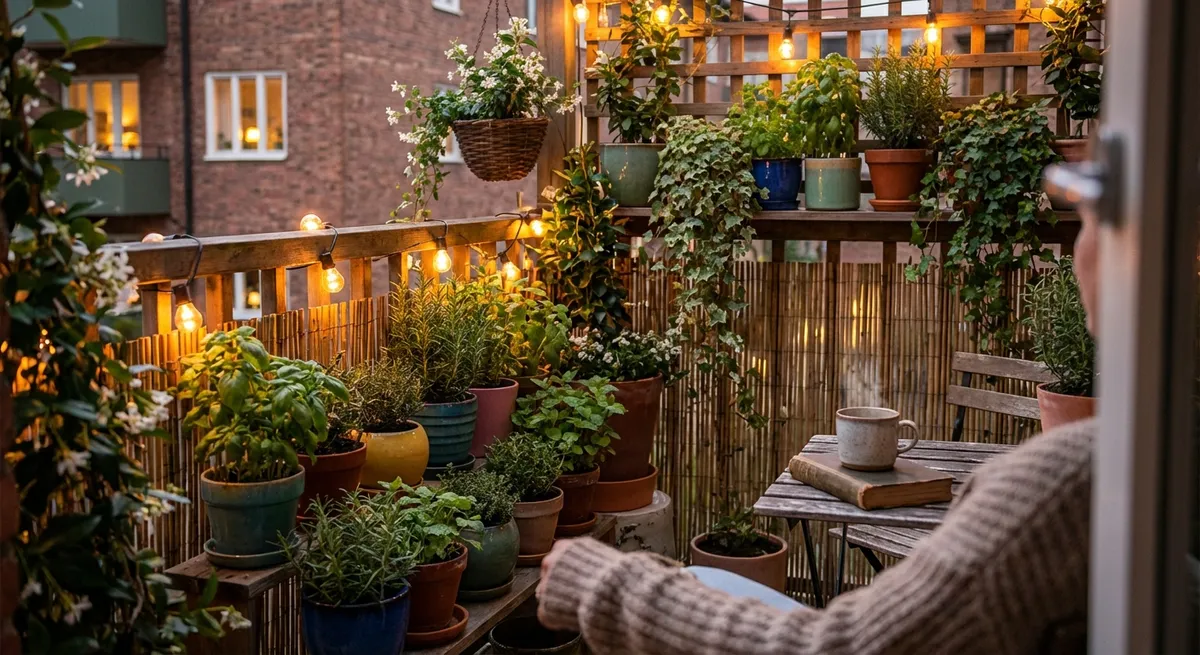
The first night I tested string lights on my balcony, I actually laughed out loud. It was such a small change, but the vibe went from “utility shelf” to “I could have deep conversations out here now.”
Here’s what finally looked good and felt safe:
- Warm white string lights, outdoor rated, with LED bulbs that don’t heat up much. I avoided those super bright, cool white ones that make everything feel like a gas station.
- I attached them with removable adhesive hooks along the wall and ceiling area, not the railing, so they wouldn’t flap around in the wind or annoy my downstairs neighbors.
- I plugged them into a smart plug scheduled to turn on at sunset and off around 11 p.m. so I wouldn’t accidentally light up the night like a runway at 2 a.m.
I added one small solar lantern in the corner. It charges during the day and gives off just enough glow to see my tea without feeling like I’m at a dentist.
The cons: string lights can attract bugs in some areas (especially where there’s a lot of standing water or warm, humid nights). I noticed slightly more insects on humid evenings, but not enough to cancel the coziness. If that’s an issue where you live, warmer-colored LEDs and positioning lights away from your seating zone can help.
Pro tip: skip open-flame candles if your balcony is small and exposed. I stick to battery-operated candles plus the occasional citronella candle in a stable holder. Wind + fabric cushions + real flames = anxiety I don’t need.
Zoning a Tiny Space So It Feels Bigger Than It Is
One thing I stole straight from interior designers: zoning. Even in a small space, creating “areas” makes it feel like more than a rectangle with stuff smashed into it.
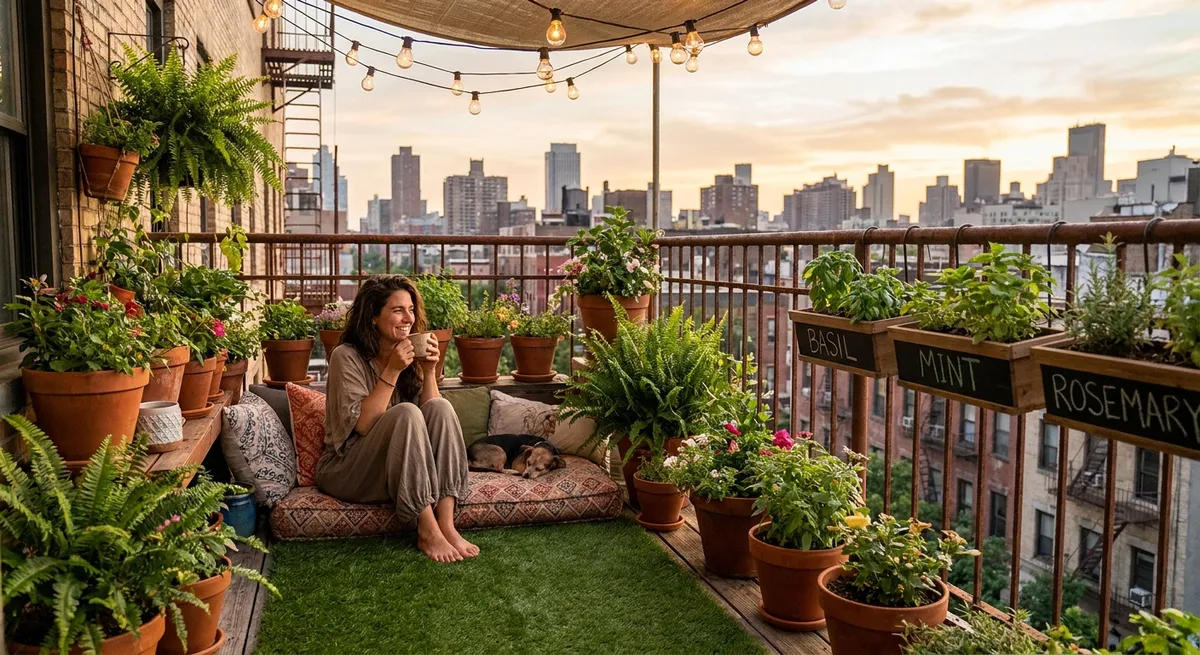
On my balcony, I ended up with three informal zones:
- Coffee + laptop corner
Chair + side table + small plant stand. That’s where I do emails or morning scrolls. The chair faces out towards the street, so it feels like a micro café.
- Mini “garden strip”
Along the railing, I have a long planter for herbs and a couple of taller pots in the corner. This creates a green “frame” without blocking my light or view. I left one section clear so I can still look out without feeling like I’m behind a hedge.
- Soft landing zone
The bench with cushions, blanket, and a small rug area. That’s my “I survived the day and now I just want to stare at the sky” spot.
I didn’t add physical dividers—no screens or walls. The flooring direction, furniture placement, and plant height did the job. I laid the deck tiles in a horizontal pattern and positioned the rug perpendicular, which subtly breaks up the space.
The interesting side effect: once it felt “zoned,” I used the balcony way more. I’d grab coffee in the morning, stretch there after working out, and sit out during light rain under the overhang just to smell the air. It stopped being a place I walked past and became a place I walked to.
The Stuff That Looked Great Online But Flopped in Real Life
Not everything was a win, and I think it’s fair to say so—especially if you’re on a budget and can’t afford to make five wrong decor purchases.
Here are my personal flops:
- Too many cushions. I started with a mountain of outdoor pillows because they looked cute. Then I realized I had nowhere dry to store them when it rained, and half of my time outdoors was spent moving, stacking, and rescuing soggy fabric. I downsized to two main cushions and one small lumbar pillow. Way more realistic.
- A big outdoor storage box. I tried to squeeze one in, thinking I’d keep all my tools and random stuff there. It ate half my floor space. Now I use a slim bench with storage and keep bulkier items inside my apartment.
- An outdoor rug that wasn’t actually outdoor-safe. It said “for patios” in the product description, but the care label told another story. The first storm turned it into a musty sponge. Now I look for rugs labeled specifically as “outdoor,” “mold-resistant,” and “quick-dry,” with clear cleaning instructions.
- Tall privacy screens. I tested a tall bamboo screen for privacy, which technically worked… and also blocked all my light and made the space feel claustrophobic. I compromised with partial-height plants and a short, breathable privacy panel. Less “fortress,” more “soft focus filter.”
If you’re unsure about something big (like a storage trunk or tall divider), my best tip is to tape out its footprint on the floor with painter’s tape first. I walked around my taped-out “fake furniture” for a week. It immediately told me what felt cramped.
The Real-Life Payoff (Beyond the Aesthetic)
The cutest part of this whole experiment wasn’t the lights or the plants. It was how much I actually started using the space.
I noticed a couple of specific changes once the “micro backyard” was done:
- My phone usage shifted. I created a loose rule: balcony = no mindless scrolling. I’m allowed music, podcasts, or reading on my phone, but no doomscrolling. Having a designated “calm zone” made it easier to step away from agitation.
- I got more sunlight, on purpose. Instead of accidentally spending all day under artificial light, I’d take 10–15 minutes in the morning outside with my coffee. That tiny ritual did more for my mood than any fancy supplement I’ve ever panic-bought.
- Meals felt more intentional. Even when I was just eating something basic (shoutout to leftover pasta), eating it outside occasionally made it feel… upgraded. Like I was on a miniature vacation.
Is a tiny balcony the same as a sprawling backyard with a grill and a fire pit? Of course not. But treating this small rectangle of outdoor air as a “micro backyard” instead of a forgotten ledge changed how my entire home feels.
And honestly, that’s the part I’d share with anyone: you don’t need a ton of square footage to get that “I have a little outdoor sanctuary” feeling. You just need a floor that feels good, one seat you love, a couple of plants that fit your light, and some glow at night.
Everything else is optional.
Sources
- Royal Horticultural Society – Container Gardening – Practical guidance on choosing pots, soil, and plants that thrive in containers and small spaces
- University of Minnesota Extension – Growing Plants in Containers – Evidence-based tips on drainage, soil mixes, watering, and light requirements for balcony and patio gardens
- EPA – Preventing Mold on Outdoor Surfaces – Information on moisture, mold growth, and cleaning practices relevant to outdoor rugs, deck tiles, and damp balconies
- Harvard Health Publishing – Health Benefits of Being Outdoors – Overview of how regular outdoor time can improve mood, stress levels, and overall well-being
- International Code Council – Balcony and Deck Safety Overview – General safety considerations for load limits and structural safety on decks and balconies