I Turned “Doing Nothing” Into a Hobby — How Intentional Boredom Rewired My Free Time
I used to treat free time like a productivity puzzle: if I wasn’t learning a skill, grinding a side hustle, or at least listening to a “smart” podcast, I felt guilty. Relaxing felt wrong, like I was failing some invisible hustle leaderboard.
Then I accidentally discovered something weird: doing nothing on purpose — like, literally scheduling boredom — became the most game‑changing hobby I’ve picked up as an adult. My evenings feel longer, my scrolling addiction calmed down, and my other hobbies (reading, drawing, gaming) quietly got better.
This isn’t about monk-level meditation or deleting every app on your phone. It’s about turning intentional boredom into a legit leisure activity — one that your brain is secretly begging for.
The Night My Brain Basically Rage‑Quit
The shift started on a random Tuesday. I’d just finished “catching up” on everything: email, Slack, three group chats, Instagram, TikTok, and a YouTube rabbit hole that began with “how to fix my posture” and ended with “guy lives in airport for 14 years.”
By 11:30 p.m., my eyes hurt, my jaw was clenched, and I had no idea what I’d actually done with my night. No book read. No real rest. Just… content.
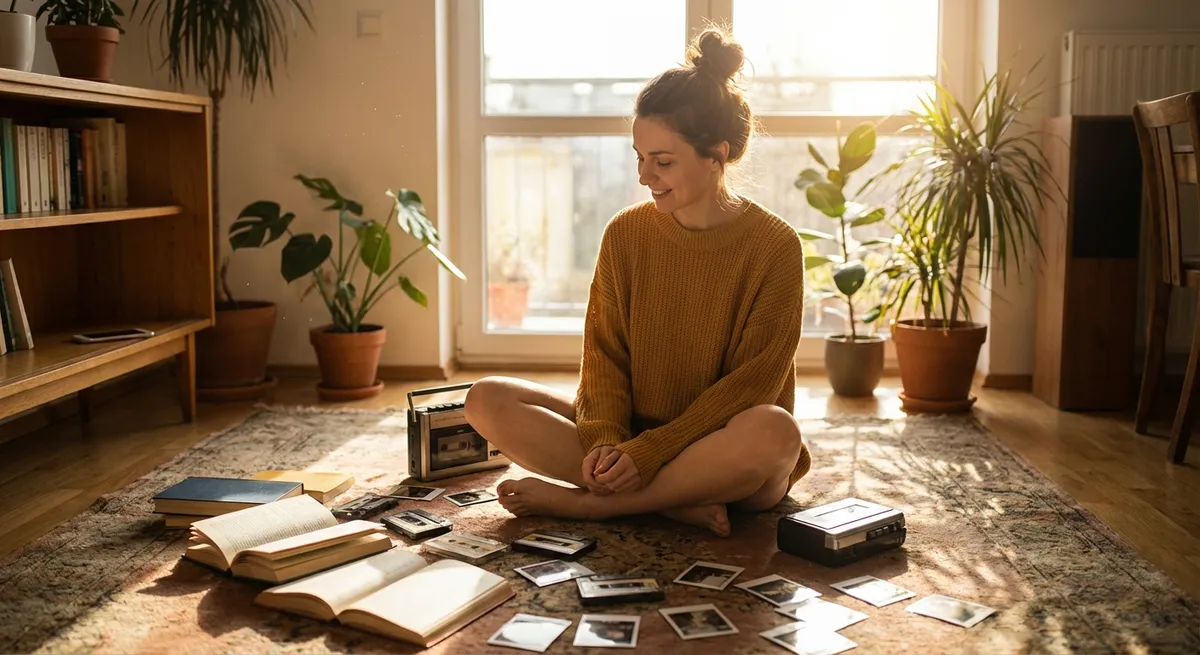
So I did something dumb and slightly dramatic: I put my phone in another room, sat on the couch with no TV, no music, no podcast — and just… sat there.
For the first five minutes, my brain screamed:
- “You’re wasting time.”
- “You should be learning something.”
- “At least stretch or something, my guy.”
Then, around minute ten, something clicked. I noticed how loud my fridge was. I realized my shoulders were basically up near my ears. I watched the way the streetlight moved across the ceiling.
It was bizarrely peaceful.
I didn’t have some mystical epiphany, but I did notice this: when I got up to go to bed, I felt done. Like my brain had actually landed, instead of crash‑scrolling until I passed out.
The next night, I tried it again. And then I started playing with it on purpose.
What “Intentional Boredom” Actually Looks Like (And What It’s Not)
When I say “boredom as a hobby,” I don’t mean sitting there spiraling about your taxes. I mean deliberately creating low‑stimulation pockets in your day — like you’re taking your brain to a quiet park with no agenda.
For me, intentional boredom has a few rules:
- No incoming information.
No phone, no TV, no podcast, no book, no “educational” anything. My brain is not allowed to consume.
- Low-effort environment.
Couch, park bench, floor, bathtub, bus window seat — anywhere I can just exist without needing to perform or interact.
- No multitasking allowed.
If I’m folding laundry or washing dishes, that’s “chore time,” not boredom time. True boredom is gloriously unproductive.
- Time‑boxed, like a real activity.
I usually set a timer: 5–20 minutes. Short enough that my inner productivity goblin doesn’t freak out, long enough for my brain to defrag a little.
The biggest mental shift? I started saying to myself, “I’m going to go be bored for a bit,” the same way I’d say, “I’m going to play a game” or “I’m going to the gym.”
Suddenly it wasn’t laziness. It was a hobby.
And no, this isn’t just a cute rebrand for meditation. I’ve tried meditation apps; they always made me feel like I was failing some invisible Zen exam. With boredom, there’s no “doing it right.” If my brain wants to wander, it wanders. If I stare at the ceiling fan and think about sandwiches, that counts.
Why Our Brains Secretly Crave This (Yes, Science Backs It Up)
Once I noticed how different I felt after these tiny “nothing sessions,” I went full nerd and started digging into what was actually happening.
Here’s what I found, and why it low‑key convinced me this might be one of the most underrated hobbies we’ve got:
1. Boredom gives your “default mode network” a chance to do its thing.Neuroscientists talk about something called the default mode network (DMN) — the system in your brain that switches on when you’re not actively focused on a task. That’s when mind‑wandering, daydreaming, and self‑reflection happen.
Research from Washington University and others shows the DMN is linked to creativity, memory consolidation, and figuring out your sense of self. When you’re constantly blasting your brain with content, that network gets way less time to do its quiet background work.
2. Constant stimulation fries your attention span.The American Psychological Association has written about how attention is a limited resource; every “quick check” drains it. Social media platforms are literally engineered to keep you hooked with variable reward loops — think: maybe the next scroll will be The Good One.
When I cut just 15–20 minutes of nightly noise, I noticed something wild: reading a physical book stopped feeling like a workout. My brain could actually stay with a page instead of bouncing off every sentence.
3. Boredom can boost creativity and idea generation.There’s a 2013 study from the University of Central Lancashire where participants who did a boring task (copying phone numbers) actually performed better on a creative challenge afterward than those who didn’t [study often gets summarized as “boredom sparks creativity”].
When I tested this on myself — doing a 10‑minute boredom session before brainstorming content ideas — I wasn’t suddenly Picasso, but I did notice my ideas came out less forced and more… weird, in a good way.
4. It’s free nervous system regulation.We talk a lot about “self‑care,” but intentional under‑stimulation might be one of the most accessible tools. Low‑input time lets your nervous system downshift from a constant mild fight‑or‑flight buzz into something closer to rest‑and‑digest. I slept deeper on nights when I “did nothing” before bed compared to nights when I doom‑scrolled until sleep hit me like a brick.
Is boredom a cure‑all? Absolutely not. But as a micro‑habit, it’s surprisingly backed by what cognitive scientists, psychologists, and even creativity researchers have been saying for years: your brain needs white space.
How I Turned “Doing Nothing” Into a Repeatable Hobby (Without Going Off the Grid)
I didn’t become some analog monk living in a cabin. I still have TikTok, I still binge shows, I definitely still fall into midnight scroll holes sometimes. But I built tiny boredom rituals that are realistic for a modern, overstimulated human.
Here’s what actually stuck for me — and where it got messy:
My Daily “Boredom Slots”
I tested a bunch of different times and discovered three windows where intentional boredom felt natural instead of forced.
- The commute / transition moments
On the bus or in an Uber, my default was always: headphones in, podcast on, or scroll. I started experimenting with just… looking out the window. No audio. No apps.
At first I felt weirdly naked, like people were going to judge me for “doing nothing.” No one cared. Obviously. Within a week, I was using that time to mentally rehearse the day or decompress on the ride home without even trying.
- The “post‑work black hole”
That 30–60 minutes after work where you’re too fried to be productive but too wired to actually rest? Prime boredom real estate. I’d drop my bag, put my phone somewhere slightly inconvenient (like not in my pocket), flop on the couch and stare at literally anything. Ceiling. Tree outside. Cat.
Sometimes I’d get bored enough that I naturally reached for a book or sketchpad, instead of forcing it. My hobbies stopped feeling like side quests for Future Impressive Me and more like things Present Me actually wanted to do.
- The pre‑bed “landing strip”
I set a 10–15 minute “no screens” buffer before sleep. No productivity, no cleaning, no reading self‑help. Just teeth brushing, maybe dim lights, and then: bed, darkness, brain allowed to wander.
Honestly, this one was the hardest — scrolling in bed is such a baked‑in ritual. But on nights I stuck with it, I fell asleep faster and woke up fewer times. My sleep tracker app even showed more deep sleep across a few weeks.
The Weird Side Effects I Didn’t Expect
When I made boredom feel like a legitimate pastime instead of an accident, some surprising stuff happened:
- My hobbies shifted from performative to genuine.
I realized I didn’t actually like some things I thought I “should” enjoy (looking at you, dense productivity books). In the boredom space, my brain drifted toward stuff I genuinely liked: doodling nonsense, replaying cozy video games, rewatching comforting shows instead of “prestige TV” homework.
- My tolerance for “meh” entertainment dropped.
When your brain gets regular low‑stimulation time, you weirdly become less willing to waste attention on boring-but-loud content. I closed apps faster. I bailed on shows after two episodes instead of doom‑finishing them.
- I remembered old ideas I’d completely buried.
During one boredom session, my brain suddenly reminded me of a story idea I’d had five years ago and never wrote down. Another time, I randomly got the urge to message a friend I hadn’t talked to in months. It felt like my mind finally had enough silence to pull old files out of the archive.
The Downsides & Awkward Bits No One Romanticizes
I’m not going to pretend this is some perfectly aesthetic lifestyle hack where you just sip tea and gaze out the window like a moody poet. Boredom as a hobby has rough edges.
1. The first few sessions are genuinely uncomfortable.Your brain is used to micro‑hits of dopamine from every notification and scroll. When you pull the plug, you might get:
- Phantom phone reach (you’ll swear it buzzed, it didn’t)
- Anxiety thoughts getting louder
- An intense urge to just “quickly check” something
In my experience, this usually settles around the 5–7 minute mark. But yeah, the initial withdrawal can feel itchy.
2. If you’re prone to rumination, you need guardrails.Intentional boredom is not the same as giving your anxious brain a free‑for‑all. On nights when my thoughts started spiraling into doom territory, I gave myself a very gentle rule: once I noticed I was stuck in a worry loop, I’d switch to something low‑effort but grounding — like stretching or making tea — instead of just stewing in the dark.
Sometimes true stillness isn’t the move, and that’s okay. This is a tool, not a moral achievement.
3. People might low‑key judge it — or just not get it.Telling someone “My new hobby is doing nothing” is a fast track to raised eyebrows. I usually phrase it like, “I’ve been blocking out time to be offline and unstimulated — it’s done more for my creativity than any productivity hack.” That lands better and is also true.
4. It won’t magically fix burnout or mental health issues.If you’re deeply burned out or dealing with depression or anxiety, boredom sessions might help a little, but they’re not a replacement for therapy, rest, or systemic change. For me, they were a useful addition, not a cure.
How to Try This for Yourself Without Hating It
If you’re curious but skeptical, here’s the low‑pressure version of what worked for me. No app, no journal, no 30‑day challenge — just tiny, testable experiments.
Start microscopic.Don’t go for 30 minutes on day one. Aim for 3–5 minutes. Sit or lie down somewhere semi‑comfortable, put your phone in another room, and tell yourself: “For the next five minutes, I am allowed to be spectacularly unproductive.”
Pick a “container.”Tie your boredom session to something you already do:
- After you park your car, sit for 5 minutes before going inside.
- After dinner, before dishes, just sit at the table and zone out.
- When you get into bed, lie there with no phone until your timer goes off.
Attaching it to an existing habit makes it feel less like a weird extra task.
Let your brain wander without judging it.If you start planning tomorrow, replaying a conversation, or imagining absurd scenarios, that’s not “failing.” That is the hobby. The only thing you’re not allowed to do is reach for external stimulation.
Notice the downstream effects, not the moment itself.Sometimes the session itself feels boring (shockingly, yes), but pay attention to:
- Whether you feel less jittery afterward
- Whether you fall asleep faster
- Whether another hobby suddenly feels more appealing
- Whether ideas pop up in the shower or on walks more often
That’s where the payoff lives.
Adjust if it backfires.If stillness spikes your anxiety, try:
- Doing “moving boredom”: slow walking in circles in your home, no phone, no audio
- Staring out a window while lightly stretching
- Sitting in a public place (cafe, park) where there’s ambient life but no direct input
You’re not chasing perfection. You’re just experimenting with giving your brain more white space than the algorithm wants you to have.
Why I’m Weirdly Protective of My “Nothing Time” Now
I used to think my free time only had value if I could point to a skill, achievement, or finished thing. Now, some of my most valuable minutes are the ones where I have absolutely nothing to show — no screenshot, no playlist, no progress bar.
Since treating boredom like a real hobby, here’s what changed for me:
- My nights feel longer and less like a glitchy blur.
- My other hobbies feel chosen, not obligatory.
- I’m less yanked around by every notification.
- I’ve had more “oh wait, that’s actually a cool idea” moments than I’ve had in years.
It’s not aesthetic, it’s not impressive, and it’s definitely not something you can flex on LinkedIn. But if your brain feels permanently “online,” deliberately doing nothing might be the most radically underrated leisure activity you can try.
Block five minutes on your calendar this week and label it something ridiculous — “Brain Nap,” “Void Time,” “Ceiling Appreciation Session.” Treat it like you would any other hobby: worth protecting, worth repeating, even if no one else really understands why you love it.
Your attention is basically the rarest currency you’ve got. Boredom is how you occasionally take it back.
Sources
- American Psychological Association – The science of attention – Overview of how attention works and how it’s depleted by constant demands
- University of Central Lancashire – Study on boredom and creativity (via British Psychological Society) – Research summary showing that boring tasks can enhance performance on creative tasks
- Harvard Medical School – Sleep and the brain – Discussion of how pre‑bed screen time affects sleep quality
- National Institutes of Health (NIH) – Default mode network – Review paper describing the brain’s default mode network and its role in self‑referential thought and mind‑wandering
- American Psychological Association – Is social media bad for you? – Explores the psychological impact of social media and constant digital engagement