
I Filed a Public Records Request on My City — Here’s What I Actually Got Back
I used to think “transparency” was just a word politicians said right before doing the exact opposite. Then I discovered public records laws and realized: oh, I actually can ask my government questions — in writing — and they legally have to answer (or at least try).
So I tested it.
I filed real public records requests about stuff happening in my city: policing data, contracts, and emails about a controversial new development. What came back was… chaotic, enlightening, and occasionally hilarious. But it also changed how I see power, secrecy, and who really gets listened to.
Here’s what happened, what I learned, and how you can do it too without being a lawyer, journalist, or full-time government nerd.
How I Stumbled Into the “Right to Know” (And Why It Felt Illegal at First)
I recently discovered that in the U.S., there’s an entire legal framework saying regular people can request government records just by asking — no special status needed. At the federal level, it’s called the Freedom of Information Act (FOIA). Every state has its own version for state and local governments.
The wild part? Nobody really tells you this growing up. I’d heard of reporters filing FOIA requests about scandals in D.C., but it never clicked that I could do the same thing about stuff down my street — like school budgets, zoning decisions, or how many complaints a landlord had.
My gateway moment: a city council meeting on YouTube where everyone argued about funding license plate readers. Councilmembers kept saying “according to the data,” but they never showed that data. I remember sitting there thinking, “Okay, where is this data? Who gets to see it?”
A quick search led me to my city’s website, where buried three clicks deep was a “Public Records Request” form. It looked like something from 2004 and gave off “this is for serious legal people only” vibes. My imposter syndrome screamed: you’re going to get in trouble for this.
But here’s the thing I wish someone had told me earlier: these laws were literally written on the assumption that people like you and me would use them. Agencies don’t always love that in practice, but legally, you’re not being annoying — you’re exercising a right.
So I decided to stop just yelling at news articles and actually ask my government questions… on paper.
My First Records Request: Vibes, Delays, and 312 Pages of “Wait, We Do What?!”
My first request was about a specific thing: automated license plate readers (ALPRs) our police department had quietly started using. I wanted three things:
- The contract with the vendor
- Any policies for how long they store the data
- A log of how often the system was used over the last year
I didn’t overthink the wording. I wrote something like:
> “I’m requesting copies of the contract(s) and agreement(s) between [City] Police Department and [Vendor Name], any policies or guidelines regarding retention and sharing of ALPR data, and any usage reports or logs showing total searches or scans in the last 12 months.”
Hit submit. Half expected the FBI to show up. Instead, I got:
- An automated email confirming receipt
- A polite note a week later saying they needed more time
- Then… silence
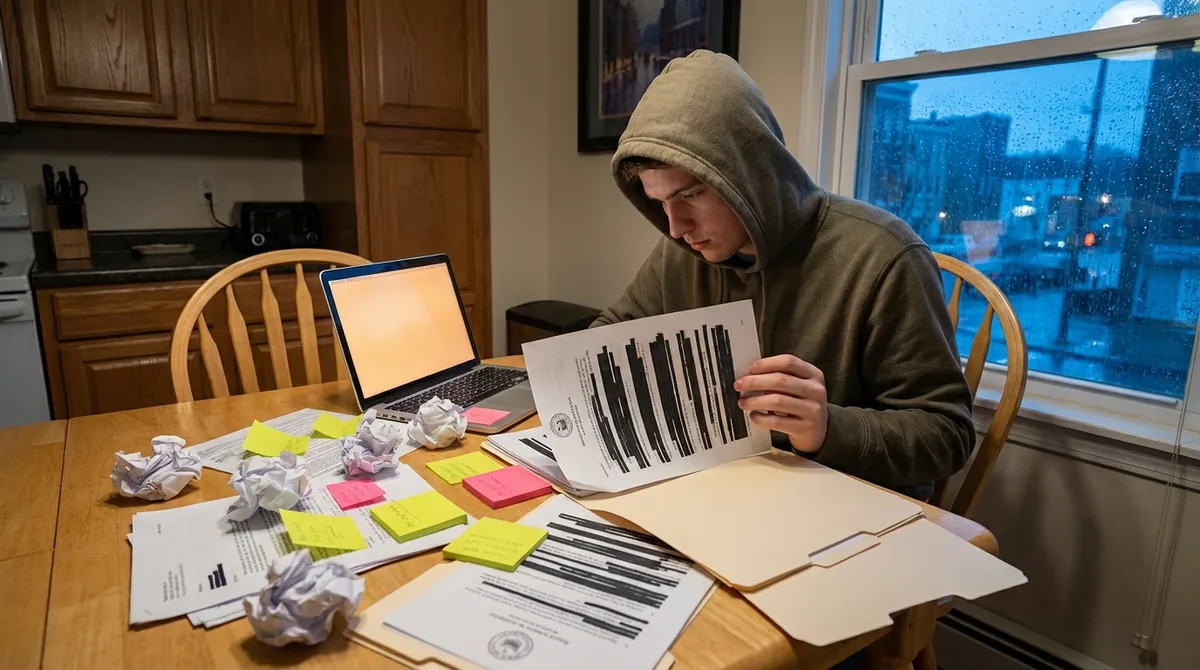
When I followed up, they finally sent a link to a zip file. Inside: 312 pages. Contracts, redacted emails, policy memos, and a giant spreadsheet of how many license plates had been scanned.
A few things jumped out:
- The contract had an automatic renewal clause I’d never heard mentioned at meetings.
- The retention policy for plate data was way longer than what one councilmember had publicly claimed.
- There were internal emails from staff genuinely raising privacy concerns and asking good questions — and then being told the system was already in motion.
Seeing all of that in black and white was… sobering. It wasn’t some cartoon villain situation. It was regular people, moving fast, not wanting to slow down for public debate.
When I posted a breakdown thread with screenshots (with sensitive details blurred) on social media, it sort of blew up locally. People were tagging councilmembers, linking the policy doc, and asking, “Did you all know about this?” That was the first time I really felt the weight of: oh, this is why records laws matter.
Not because they magically fix policy — but because they shift who gets to see the receipts.
Okay, But Is This Just for Journalists? (Spoiler: No)
When I told a friend I’d filed a records request, she immediately replied, “Wait, are you like… allowed to just do that?” I get it. Government paperwork has a way of making you feel like you need a professional escort.
Here’s what I’ve learned the hard way:
- You don’t have to explain why you want the records. In most cases, they’re not allowed to ask your motive, and you don’t need to justify yourself.
- You don’t need fancy legal phrasing. Clarity beats drama. “All emails between X and Y from [date range] about [project name]” works.
- You can narrow your request to avoid a \$500+ invoice. Vague “everything about policing” requests are how you get a quote that looks like rent. Specifics save money.
- You can ask for a fee waiver. Especially if you’re planning to share the information publicly or it benefits the broader community. Sometimes they say no, but I’ve had waivers approved just for promising to publish a summary online.
On one request, I asked for “all emails about the proposed homeless shelter” between the city manager and councilmembers over a three-month period. The clerk wrote back (very kindly) and said: this will be thousands of messages and cost a lot to review. Could I limit it?
We went back and forth and narrowed it to:
- Just emails with the subject line including “Shelter” or the project code name
- Only between the city manager and two specific councilmembers
- Only during the three weeks leading up to the final vote
That negotiation turned a potentially unusable request into a manageable set of documents — and a surprisingly raw window into how decisions were being framed.
The most revealing line wasn’t some evil conspiracy; it was a message saying, essentially, “Let’s push the public hearing later in the evening when turnout will be lower.” Legal? Probably. Gross? Also yes.
That kind of thing doesn’t show up in glossy press releases.
What I Learned About Power, Spin, and the “Official Story”
After a few requests, a pattern emerged that I didn’t expect.
On the outside, government often talks in polished narratives: “We’re balancing safety with privacy,” “We’re being fiscally responsible,” “We’ve listened to the community.” When you read the internal records, those lines still exist — but you also see the mess underneath.
In my experience, records reveal three big things:
- How decisions really get made.
You see who emails whom first. You see which departments push back and which quietly comply. Sometimes the strongest memos never get mentioned in public.
- What trade-offs they admit privately.
I read one internal memo on a cost-cutting measure that flat-out said it would “likely reduce response times and service quality,” even though the public talking point was, “This will streamline operations.” Both statements can be “true,” but only one made it into the press release.
- Who gets taken seriously.
You start noticing whose comments are forwarded with “please address this” versus “lol.” Residents with certain titles or connections get fast, thoughtful responses. Others get sent form links. Seeing that in writing hit me harder than any thinkpiece on inequality.
I want to be fair here: the people answering these requests are often overworked, underpaid staff who did not personally design the system. I’ve had city clerks go out of their way to help me refine a request so it cost less or came back faster. I’ve also seen how laws sometimes put them in the position of being yelled at for decisions they didn’t make.
But when you zoom out, records requests turn the volume down on spin. They let you see the drafts, the doubts, the parts that didn’t make the cut. And once you’ve seen that, it’s almost impossible to go back to taking “official statements” at face value.
How to File a Request Without Losing Your Mind (Or Your Wallet)
If you’re tempted to try this yourself, here’s what actually helped me, beyond the “just file a FOIA” memes.
First, I used the websites that exist to make this less miserable. MuckRock and FOIA Machine are two that walk you through crafting a request and sometimes even send it for you. On one federal request, I used FOIA.gov’s online portal, which felt shockingly modern by government standards.
My basic personal checklist now looks like this:
- Figure out who actually has what you want.
School board? Police department? State agency? Federal department? Records laws usually only apply to government entities, not private companies, unless there’s a contract trail.
- Write like you’re leaving instructions for a tired coworker.
Specific subject, dates, and people. “All complaints filed against [Officer Name] between Jan 1, 2022 and Dec 31, 2023” is better than “all misconduct records ever.”
- Ask for electronic records.
PDFs, spreadsheets, emails. Paper copies cost more and are harder to analyze or share.
- Include a line about fees and public interest.
I usually say I’m a local resident planning to share the results publicly and request a fee waiver or at least notification before any fees over \$25. Some agencies cut or reduce charges when they know you’re not a corporation mining data.
- Calendar the legal deadline — and nudge politely.
Agencies often have set timelines (like 10 or 20 business days) to respond, though that doesn’t always mean they’ll produce everything that fast. When they miss the deadline, a polite “checking in on status” email referencing the law helps.
Do you always win? Absolutely not.
I’ve had:
- Requests denied for “security” reasons, some legitimately, some questionably.
- Heavily redacted documents that looked like CIA mission files.
- Agencies claim they had “no responsive records” to something I was 99% sure existed.
But even the failures teach you something: where the walls are, what counts as a “record,” and how agencies interpret disclosure obligations.
And sometimes, if you appeal (yes, you can appeal denials), they back down and release more. I once filed a simple one-paragraph appeal pointing out that another city in the same state had released similar records, and suddenly, two weeks later, I had the documents.
Why This Matters Beyond Internet Drama
It’s easy to turn all this into content — screenshots of weird emails, eye-roll moments from bureaucrats, the occasional spicy internal commentary. And yeah, that can go viral. But the part that’s stayed with me isn’t the drama; it’s the shift in who gets to be “in the loop.”
When only journalists, lobbyists, and big nonprofits use records laws, the conversation skews toward what they think matters. When residents, students, neighborhood groups, and very-online weirdos start filing smart requests, the agenda broadens.
In my city alone, I’ve seen records requests used to:
- Uncover how a landlord with tons of code violations kept getting inspections delayed
- Reveal the real costs of a “cheap” privatization deal once hidden subsidies showed up
- Show racial disparities in traffic stops that had never been made public before
None of those stories happened because someone “leaked” a secret memo. They happened because someone sat down, wrote a boring-sounding request, and waited.
There are real limits. Records laws can be used to harass public employees, or to drag out disclosure until it’s too late to matter. National security and privacy exemptions can be overused. And not everyone has the time, money, or energy to wrestle with government paperwork.
But in my experience, once a few people in a community start learning how to do this, the knowledge spreads. Templates get shared. Fee waiver language gets copy-pasted. People learn which departments respond quickly and which ones need public pressure.
Suddenly, the phrase “according to internal documents” doesn’t just belong to investigative reporters — it belongs to your group chat.
Conclusion
I went into this thinking I’d file a request, get stonewalled, and confirm my cynical belief that transparency is a PR word. Instead, I got something more complicated — and more hopeful.
Yes, parts of the system are opaque on purpose. Yes, some officials absolutely lean on complexity and delay to dodge scrutiny. But I’ve also met city clerks who treated my weirdly specific questions with total professionalism, staffers who wrote blunt internal memos that made me respect them more, and neighbors who took raw records and turned them into real, local change.
Filing a records request won’t magically fix corruption or instantly transform bad policy. But it does something quieter and weirder: it makes your government feel less like a black box and more like a very messy, very human machine you’re allowed to inspect.
If you’ve ever watched a press conference or scrolled a headline and thought, “Okay, but what’s the actual story behind this?” — this is your way in.
You don’t need a press badge.
You just need to ask.
Sources
- FOIA.gov – Freedom of Information Act – Official U.S. government overview of how FOIA works, who it applies to, and how to file federal requests
- Reporters Committee for Freedom of the Press – Open Government Guide – Detailed state-by-state breakdown of public records and open meetings laws
- National Freedom of Information Coalition – Resources, best practices, and tools for using public records laws at the state and local level
- MuckRock – Public records request platform with real examples, templates, and guides for filing and tracking requests
- Brennan Center for Justice – Government Transparency – Research and analysis on transparency, FOIA, and how access to information affects democracy