Why Pickleball Is Everywhere Right Now (And How I Actually Got Hooked)
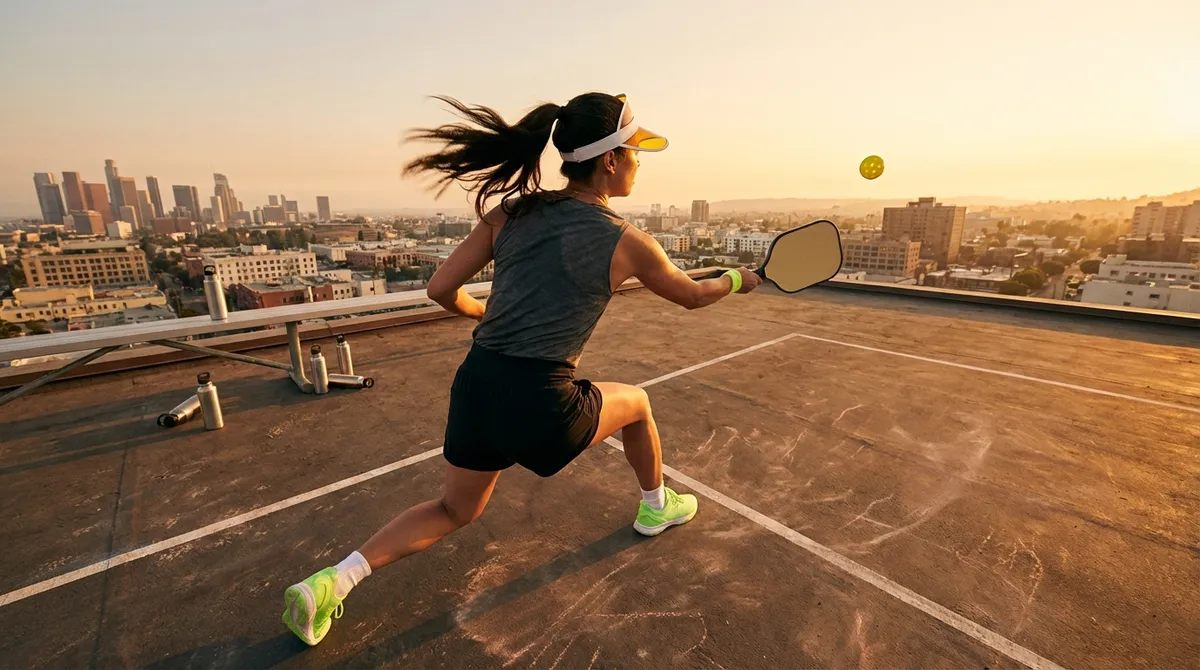
I used to roll my eyes at pickleball. I thought it was “tennis for people who don’t want to run” and a fad that would fade faster than my New Year’s resolutions. Then a friend dragged me to a local rec center, put a paddle in my hand, and two hours later I was drenched in sweat, trash-talking strangers, and Googling where to buy my own paddle.
Since then, I’ve played in crowded public parks, packed gymnasiums, and even a converted parking lot behind a brewery. Everywhere I go, more courts, more people, more “pop” sounds of the ball off the paddle. The thing is…there’s a real reason this sport exploded, and it’s not just hype.
Let me walk you through what I’ve learned actually playing this game, talking to coaches, and digging into the numbers behind the pickleball takeover.
How Pickleball Quietly Turned Into a Sports Tsunami
The first time I realized pickleball wasn’t just a quirky hobby was when I showed up at my local park on a random Tuesday morning. Every court was full. People were waiting. At 9 a.m. On a weekday.
When I looked into it later, the data backed up what I was seeing. According to the Sports & Fitness Industry Association (SFIA), pickleball was the fastest‑growing sport in the United States for three straight years, with participation jumping to an estimated 13.6 million players in 2023. That’s not niche anymore—that’s bigger than some traditional sports leagues dream of.
What shocked me most was how wide the age range was. I’d grown up hearing pickleball was “for retirees,” but now I’m seeing high schoolers, twenty‑somethings, and competitive former tennis players all sharing the same courts. A neighbor of mine, who played Division I tennis, told me he switched most of his casual matches to pickleball because it’s “less pounding on the knees but still gives me that competitive hit of adrenaline.”
Part of the boom comes from how cheap and flexible it is. You don’t need a country club membership or fancy gear. When I started, I spent under $40 on a beginner paddle and shared balls with whoever brought extras. Courts can be taped onto a gym floor, painted over unused tennis courts, or dropped into random community spaces.
Also, the level of media and celebrity interest is wild. The Professional Pickleball Association (PPA) and Major League Pickleball (MLP) have popped up, ESPN and other networks are airing tournaments, and investors like LeBron James, Tom Brady, and Kevin Durant have stakes in pro teams. I’ve watched matches where stadiums were packed, people chanting over a sport I didn’t even know existed five years ago.
From the outside, it might look like a trendy wave. From inside the courts, it feels more like a new recreational default that people are building social lives around.
What It Actually Feels Like to Play (From Someone Who Thought They’d Hate It)
When I tested pickleball for the first time, I expected a chill, slow game where I’d barely break a sweat. That lasted…maybe five minutes.
Here’s how it really feels from the court:
The court itself is smaller than a tennis court—44 feet long and 20 feet wide. That means the ball is always in your space faster than you expect. The paddle is solid (no strings), which gives every shot a satisfying “pop,” but it also punishes sloppy timing. The ball is a perforated plastic one, like a wiffle ball, which floats a bit in the air. At first, I kept swinging too hard and sending it into the fence.
The magic happens at the “kitchen,” the non‑volley zone—a 7‑foot area on each side of the net where you’re not allowed to smash volleys while standing in it. I didn’t understand that rule until I played. What it creates is this intense, chess‑like battle at the net. Soft “dinks” back and forth, each player trying to angle a shot that forces a mistake or sets up a put‑away.
My first real kitchen rally, I remember my heart rate spiking even though I’d barely moved two steps. All my focus narrowed to the ball, the angles, reading the paddle face of the person across from me. It’s weirdly meditative and chaotic at the same time.
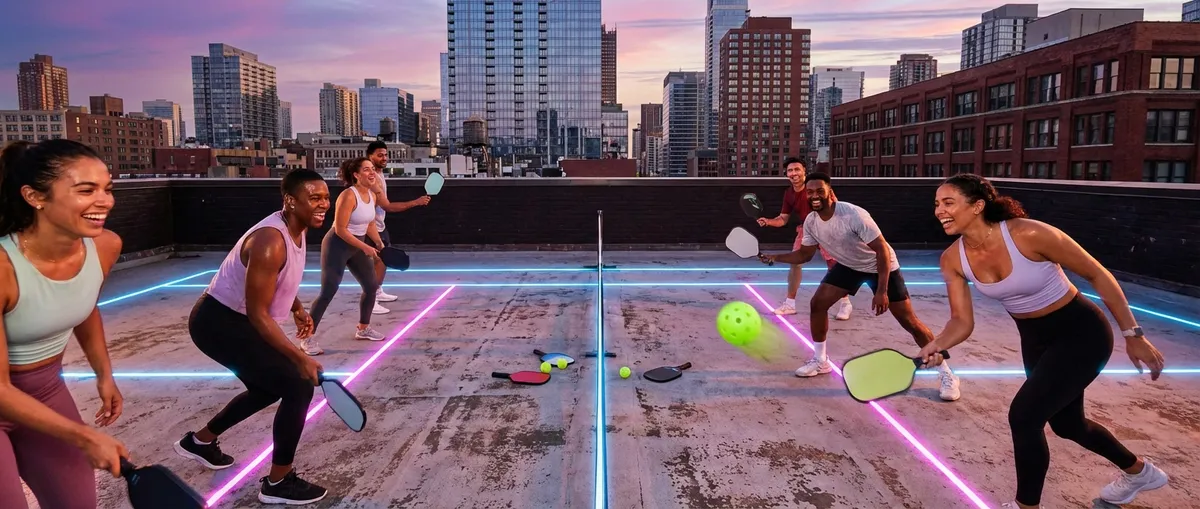
Because doubles is the most common format, the social aspect is huge. I’ve jumped into “open play” sessions where you rotate partners and opponents every game. Within an hour, I’d gone from awkward stranger to joking around with people about blown smashes and miracle saves.
Here’s the balance I actually felt on court:
- Beginner‑friendly: I was having real rallies within my first session. Not pretty rallies, but real ones.
- Skill ceiling is higher than it looks: After a few weeks, I hit a wall. That’s when I started noticing things like spin, third‑shot drops, stacking formations, and more advanced positioning.
- Cardio that sneaks up on you: It doesn’t feel like distance running, but after an intense session, my legs, shoulders, and forearms are definitely cooked.
I underestimated it badly. Once I treated it like a “real” sport instead of a casual lawn game, my enjoyment level doubled.
The Real Health Upside (And Downsides People Don’t Talk About Enough)
I’m not a doctor, but I’m the type of nerd who skims studies after a good workout. I wanted to know: was I just having fun, or was this legitimately good exercise?
There’s some solid evidence that pickleball does more than just get you out of the house. A small study from Western State Colorado University found that older adults who played pickleball three times per week for six weeks improved cardiorespiratory fitness and experienced benefits in blood pressure and cholesterol markers. Other research suggests the sport supports balance, reaction time, and overall physical function in older adults—all things that matter as we age.
From my own experience wearing a fitness watch, a 90‑minute doubles session lands me in the moderate to vigorous activity zone most of the time. I’ve burned 500–800 calories depending on how competitive the games get. It’s not a substitute for strength training, but as a regular cardio and agility workout, it’s legit.
There are also real mental health perks I didn’t expect. On days when my brain is fried from work, stepping onto a court forces me to be present. You simply can’t be doom‑scrolling or stressing about emails when a yellow plastic ball is screaming toward your feet. Add the social factor, and it hits that combination of community + movement a lot of people are missing.
But it’s not all upside, and I’ve felt some of the drawbacks:
- Injury risk is real. I’ve seen rolled ankles from sudden direction changes, shoulder issues from serving and overheads, and a couple of nasty falls on hard courts. A 2023 analysis in The Wall Street Journal echoed reports that pickleball‑related injuries—especially among older adults—are adding measurable costs to the healthcare system.
- It can be deceptively intense. Because the court is small and the ball looks “friendly,” some people push harder than their current fitness level can handle.
- Overuse kicks in fast. When I played five times a week for a month, my elbow started yelling at me. Had to cut back, stretch more, and add some strength work.
If anyone’s jumping in, my honest advice from experience: warm up properly (even just 5–10 minutes), learn basic footwork, and treat it like a real sport, not a backyard toss.
Why Pickleball Is Creating Drama in Parks, Gyms, and Old Tennis Clubs
Here’s the part you don’t always see on the highlight reels: pickleball is causing turf wars. Literal ones.
One Saturday, I watched a group of longtime tennis players argue with a pickleball crew over shared court time. Nobody was screaming, but it was tense. Tennis players complained about the constant “pop‑pop‑pop” noise. Pickleball players pointed out the courts had been empty before they showed up.
Noise is one of the biggest friction points. That plasticky “pop” actually travels farther than you’d think, and some neighborhoods have pushed back hard. In a few cities, there’ve been local hearings and even restrictions placed on new pickleball courts near residential areas because of noise complaints.
Facility space is another headache. Converting one tennis court into two, three, or even four pickleball courts makes economic sense for rec centers—more players, more fees, more programming. But for tennis communities that already feel squeezed, it can look like their sport is being carved up. I’ve talked to tennis friends who feel like they’re being “evicted” from their own spaces.
On the flip side, I’ve seen public parks that were ghost towns after 6 p.m. suddenly turn into thriving hubs because of pickleball lines. Lights on, people out, families watching, local food trucks setting up nearby. One city official I chatted with during an open‑play event told me pickleball programs had boosted participation numbers and made it easier to justify upgrades to old facilities.
The reality is somewhere in the middle:
- Pickleball brings energy, participation, and revenue.
- It also brings noise, scheduling pressure, and crowding.
The communities that seem to handle it best are the ones creating clear rules: dedicated hours for each sport, separate pickleball pods when possible, and honest noise assessments before dropping courts under someone’s bedroom window.
How to Start Playing Without Looking Totally Lost
When I first walked onto a pickleball court, the scoring system fried my brain more than any spin shot. “Why does the score have three numbers? Why am I suddenly ‘server two’? What do you mean we only score on serve?”
So if you’re curious and don’t want to repeat my confused mumbling, here’s what actually helped me get over the awkward beginner phase fast—no gatekeeping, just what worked (and what didn’t):
What made a huge difference for me:- Taking a single beginner clinic. One 60‑minute intro class at my local rec center explained scoring, basic rules (like the kitchen and double‑bounce rule), and simple footwork. That one session saved me weeks of confusion.
- Starting at true beginner open play. Many places separate “beginner,” “intermediate,” and “advanced” times. When I jumped into intermediate too early, I slowed everyone down and felt miserable. Beginner sessions are where you find patient people who remember what it’s like to whiff serves.
- Using a basic, mid‑weight paddle. I initially bought a super‑cheap paddle online and regretted it. When I upgraded to a mid‑price composite paddle (nothing crazy, around $60), my control and feel improved instantly.
- Watching actual match footage, not just highlight clips. Seeing full points with commentary helped me understand strategy: where players stand, why they drop instead of drive, when they speed the ball up.
- Obsessing over gear reviews instead of actually playing.
- Standing too upright and flat‑footed—once I got in a low, ready stance, my reaction time changed overnight.
- Trying to “win” on every shot instead of just keeping the ball in play and waiting for good opportunities.
One thing I love: the community tends to be shockingly welcoming. I’ve had complete strangers lend me paddles, gently correct my positioning, cheer my good shots, and invite me into rotation. If you show up open, ask questions, and don’t pretend to be better than you are, you’ll usually find your people fast.
Where I Think This Sport Is Really Headed
After getting pulled into this pickleball whirlwind, I don’t buy the “fad that’ll vanish in two years” narrative anymore. I also don’t think it’s going to completely replace tennis, basketball, or any other established sport.
What I see—and feel on the ground—is pickleball becoming a default social sport. The same way so many friend groups casually meet up for pickup basketball or beer‑league softball, I’m already seeing “Thursday night pickle” become a thing among coworkers, neighborhood groups, and even families that span three generations.
At higher levels, the pro tours are still figuring themselves out: prize money, format, TV vs. streaming, rankings. There will be growing pains. Some investors will probably lose money. Some early leagues might merge or disappear. But recreationally? The genie’s out of the bottle. Cities are painting more lines, brands are building more gear, and people—like me, who didn’t think they needed another sport—are carving time out of their week for it.
If you’re pickleball‑curious, my honest suggestion is simple: borrow a paddle, find a beginners’ session at a local park or rec center, and give it two or three tries. The first time might feel awkward. By the third time, you might be the one texting your group chat:
“Hey, who’s free for a quick game tonight?”
Sources
- Sports & Fitness Industry Association – 2024 Pickleball Report (coverage via CNBC) – Overview of participation numbers and growth trends in pickleball
- USA Pickleball – Official Rules and Resources – Explains rules, court dimensions, and basic structure of the game
- Western Colorado University Study on Pickleball and Health – Research on cardiovascular and fitness benefits for older adults playing pickleball regularly
- U.S. Consumer Product Safety Commission – NEISS Data – Injury surveillance system used in multiple analyses of sports‑related injuries, including pickleball
- NPR – Pickleball Is Booming, and So Are the Noise Complaints – Reporting on community conflicts, noise issues, and public space challenges related to pickleball’s growth