I Joined a Recreational Soccer Team as an Adult—Here’s How It Actually Went
I’d been doom‑scrolling “healthy habits” for months when a friend texted: “Our rec soccer team needs bodies. You breathing? You’re in.” I hadn’t played since high school, my cardio was... let’s call it “aspirational,” and I was one YouTube workout away from deleting my fitness apps forever.
So I said yes.
What followed was a very sweaty crash course in adult rec sports: the awkward sign‑ups, the first game panic, the surprisingly deep friendships, and the very real injuries you don’t bounce back from in 24 hours anymore. If you’ve ever thought, “Could I actually join a team again?”—this is the play‑by‑play from someone who just did.
Why I Decided to Gamble My Knees on Rec League Soccer
I didn’t wake up one day with a burning desire to sprint after a ball for 60 minutes. I more or less stumbled into it after realizing my “workout routine” was just walking to my fridge between Zoom calls. My fitness tracker politely told me I’d hit “record‑low activity” three weeks in a row. Rude, but fair.
When I finally said yes to the team invite, I had three reasons:
- Cardio with a purpose. Running on a treadmill felt like punishment. Chasing a ball? Somehow less miserable. There’s a concept in exercise psychology called “task orientation”—when movement is tied to a clear, immediate goal, like scoring or defending, you tend to push yourself harder without overthinking it. I wanted that.
- Built‑in social time. My group chats were alive, but my actual social life? Ghost town. I missed the weird camaraderie of being bad at something together.
- Structured chaos. I knew if I didn’t schedule movement, Netflix would win every time. Having a set game time forced my calendar to play along.
Still, I had real fears: what if I was the slowest one? What if everyone was secretly trying out for the Premier League? What if I pulled something just walking from my car to the field?
Spoiler: I was slower, no one cared, and I did in fact pull something—but not the way I expected.
Signing Up: The Awkward Part No One Talks About
The actual logistics surprised me. I thought joining a team would be this official, intimidating process. In reality, it was:
- My friend sending me a link to our local adult sports league site
- Me filling out a very dramatic health waiver that basically said, “If you’re out of shape, that’s on you”
- Choosing my skill level, which felt like clicking “I agree I’m mid”
Most cities quietly have these leagues running year‑round—coed, women’s, men’s, beginners, over‑30, over‑40—through private organizations or local parks departments. I’d honestly never noticed until I went looking.
When I got the welcome email, it included:
- Season schedule (one game a week, 8‑week season)
- Our division level (low‑intermediate, which sounded kinder than “rusty but trying”)
- A loud reminder that shin guards are not optional
I bought cheap cleats, actual shin guards, and a water bottle big enough to hydrate a small village. When I tested the cleats in my living room, I almost rolled my ankle just turning too fast. Off to a strong start.
The First Game: Chaos, Cramping, and a Weird Amount of Joy
Game one, I showed up 25 minutes early because I was terrified of walking into an already‑playing game like the late kid in PE class. The field was packed with teams warming up. There were people in matching sponsored jerseys…and us, in random T‑shirts, stretching like we’d never touched our toes before.
The first five minutes of play were pure survival. My lungs were in open revolt. Every sprint felt like a personal attack. But something interesting happened: instead of hyper‑fixating on how out of shape I was, my brain latched onto the game itself.
I remember three specific moments:
- The first time I touched the ball. My inner monologue went: “Don’t mess this up don’t mess this up—oh cool, I passed it without falling.” That tiny success lit up my competitive side I thought I’d left in college intramurals.
- The first sub. When the captain yelled, “Sub in!” I sprinted to the sideline like I’d just been called to the big leagues. In reality, I just needed to not throw up.
- The first goal our team scored. I wasn’t even involved in the play, but I yelled so loud the ref side‑eyed me. I’d forgotten how good collective celebration feels—when everyone’s high‑fiving and yelling nonsense and your heart’s pounding for a reason other than existential dread.
Physically, though? Brutal. The American Heart Association recommends 150 minutes of moderate aerobic activity or 75 minutes of vigorous activity per week. I’m pretty sure I hit the 75 “vigorous” minutes in one game and then needed three days to walk like a normal human again.
That night, I fell asleep with my legs on a pillow and an ice pack balanced on my calf, googling “how long does DOMS last” (delayed onset muscle soreness, if you’re lucky enough not to know).
What Happened to My Fitness After a Few Weeks
By week three, something shifted. I still got tired, but not “my soul is leaving my body” tired. When I tested my pace using a simple run‑walk on a local track, I realized I’d shaved almost 40 seconds off my average kilometer without really training outside of games.
Here’s what I noticed in my own body and performance:
- Better baseline cardio. I could climb stairs without giving myself a TED Talk halfway up. This lines up with what sports medicine folks say: high‑intensity intervals (like sprint‑recover‑sprint in soccer) are insanely efficient for improving VO₂ max—the fancy term for your maximum oxygen uptake.
- Improved change of direction. My cuts and turns didn’t feel like a car with the steering wheel yanked too hard. Soccer forces constant lateral movement and acceleration/deceleration, which research shows can boost functional fitness more than straight‑line jogging.
- My legs got louder, then stronger. Quads, hamstrings, calves—all sore in rotation. But by week five, post‑game soreness dropped from “stairs are my enemy” to “I’m a little creaky, but functional.”
That said, there were downsides:
- My old ankle injury remembered it existed. After one awkward landing, my right ankle buzzed for days. I learned the hard way that adult rec sports don’t erase old issues—they amplify them if you’re not proactive.
- Recovery took way longer than it used to. In college, I could play, grab a slice, and be fine the next day. Now I needed hydration, stretching, sleep, and the emotional support of a foam roller.
Once I accepted that “more recovery” wasn’t a moral failing but a biological fact, everything got easier. I stopped comparing myself to my 19‑year‑old self and started comparing each week to the last one.
The Unexpected Social Side: Trash Talk, Group Chats, and Actual Friendship
I did not expect a text thread about soccer to become one of my favorite corners of my phone. By week two, our team group chat looked like this:
- Links to $12 shin guards on sale
- Meme wars about who missed the most open shots
- “Who’s bringing oranges?” messages that turned into someone showing up with bakery cookies instead
When we lost (which we did, a lot at first), nobody spiraled. We just dragged ourselves in the parking lot, re‑labeled it a “character‑building season,” and made vague plans to “definitely practice next week” (we almost never did).
From a mental health perspective, this part hit me hard. There’s decent research showing that socially connected exercise—like team sports—can reduce anxiety and depressive symptoms more effectively than solo training for some people. I didn’t need a study to tell me that, though. I could feel it.
After games, no matter how badly I’d played, I walked away with:
- At least one new inside joke
- A sense that my body had done something useful
- Less mental static than I’d had all day
On nights I almost bailed (rain, long workday, existential dread), I’d force myself to go because I knew I wasn’t just showing up for cardio—I was showing up for the people who’d already started trash‑talking the imaginary “rivals” in our division.
The Not‑So‑Instagrammable Parts No One Posts
Let me be brutally honest for a second, because the Instagram version of “joined a rec team!” looks a lot cuter than reality.
Here’s what kinda sucked:
- Injuries are very real. Our league had at least one player limp off every couple of games. Sprained ankles, pulled hamstrings, one nasty collision that left someone with a mild concussion. Even FIFA and major sports medicine groups warn that “small‑sided” adult soccer has injury rates that are not trivial. Warm‑ups aren’t optional; they’re self‑preservation.
- Skill gaps can feel awkward. One game, we played a team that clearly used to be competitive club players. Their passing was so clean it felt like we were chasing shadows. It would’ve been easy to spiral into “I don’t belong here” thinking.
- Time commitment is real. On paper, it’s just one game a week. In reality, it’s commute, warm‑up, cooldown, post‑game hang. Factor in family, work, and other obligations and it is a chunk of your life.
- Weather doesn’t care about your feelings. My coldest game was in icy wind that turned my face into a popsicle. My hottest game? I drank my entire water bottle by halftime and seriously considered lying down in the shade and accepting my fate.
The upside is that none of these were deal‑breakers—they just forced me to grow up about how I approached “fun” sports. Stretching stopped feeling optional. Good cleats stopped feeling like a splurge. Listening to my body went from a slogan to a necessity.
How I’d Join a Rec Team Smarter If I Were Starting Over
If I rewind to before my first season and give myself actual useful advice (instead of “you’ll be fine, probably”), it would sound like this:
1. Be honest about your current fitness—and choose level accordingly.Most leagues have at least three tiers. If you haven’t sprinted since the pre‑pandemic era, pick beginner or low‑intermediate. There’s zero shame in not dying on day one.
2. Warm up like you mean it.The sports medicine folks aren’t joking about dynamic warm‑ups reducing muscle strains and ligament injuries. What worked for me:
- 5–7 minutes of light jogging or brisk walking
- Leg swings, hip circles, walking lunges
- A few short accelerations (like 20–30 meters) before the game
Static stretching (the classic hold‑and‑reach stuff) felt better after games, not before.
3. Cross‑train just a little.I didn’t love this advice when I read it, but it made sense once my hamstrings started screaming. Two non‑consecutive days a week of basic strength work—bodyweight squats, lunges, glute bridges, core—made the stop‑start chaos of soccer way more manageable.
4. Set experience goals, not just performance goals.My best goals weren’t “score twice this season” but “play an entire half without needing a sub” or “call for the ball at least three times instead of hiding in space.” The performance stuff followed.
5. Communicate with your team.Telling my teammates, “I’m still building back fitness, sub me out if I look dead” made it easier for everyone. No one’s a mind‑reader, but in rec leagues, most people are pretty kind if you’re honest.
If you’re dealing with old injuries or chronic issues, this is also where I’d wave a big “talk to an actual doctor or physical therapist” flag. Sports are fun; blowing out your knee in week two is very much not.
Who Rec Soccer Is and Isn’t Good For (From What I’ve Seen)
From a few seasons in, here’s my non‑scientific but very real take.
Rec soccer usually works well for:
- People who get bored easily in the gym
- Former athletes who miss competition but not the full‑time training grind
- Anyone craving structured social time that isn’t just drinks or dinner
- People who work well with external accountability (if others are expecting you, you’ll show up)
It’s less ideal if:
- You absolutely hate chaos—soccer is 90% chaos
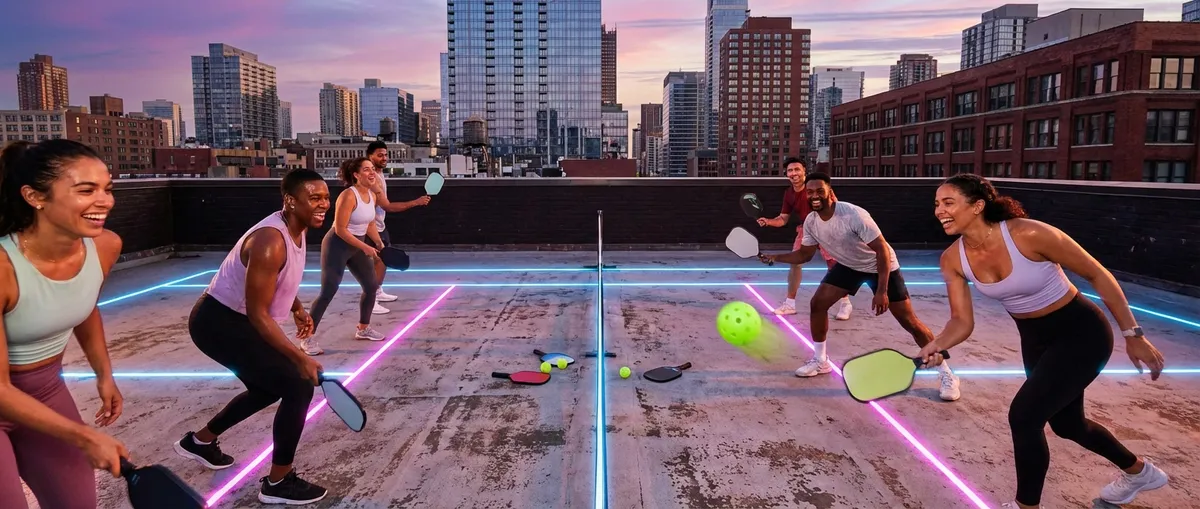
- High‑impact, stop‑start movement flares your joints or injuries (there are great low‑impact team options like volleyball, pickleball, or even non‑contact ultimate)
- Your schedule is wildly unpredictable and you’d be bailing every other week
- You need precise control over intensity—games can go from chill to wild in seconds
For me, the social return and psychological boost made the tired legs and Sunday‑morning stiffness worth it. But that calculation is personal, and it can shift season to season.
What Stuck With Me Long After the Final Whistle
The trophy at the end of our season was hilariously tiny. We didn’t even win the league; we got some half‑ironic “most improved” comment from the ref and a blurry team picture in questionable lighting.
But weeks later, what sticks in my head isn’t the scores. It’s:
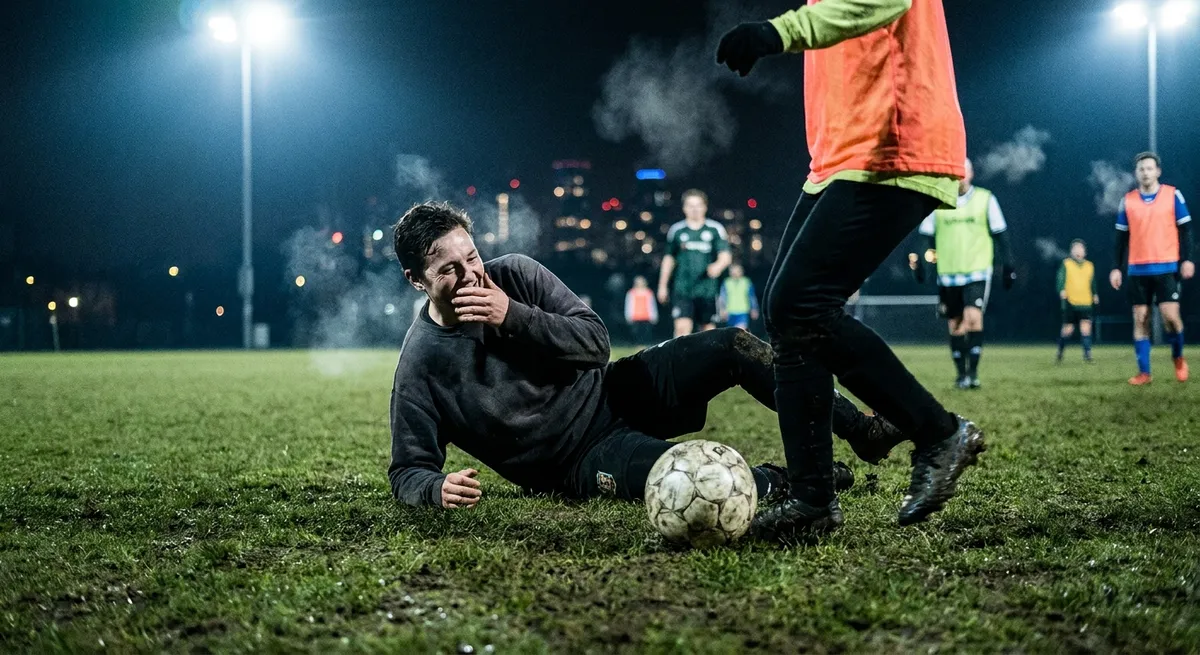
- The night we played under the lights in a light drizzle and everything felt movie‑scene dramatic
- The random moment a teammate yelled, “You’ve got time!” and I actually believed them long enough to make a decent pass
- Realizing I’d just played 50 minutes without checking my phone once
I joined for fitness, I stayed for the feeling of being part of something—however small, however amateur, however chaotic. The experience reminded me that “being sporty” isn’t a binary trait you either have or lose after high school. It’s just a muscle you can rebuild, one badly‑timed slide tackle and one surprise assist at a time.
If some part of you misses competing, collaborating, or just running around like a kid with slightly more expensive shoes, that part is not gone. It just might be waiting on a random local field at 8:30 p.m., under sketchy floodlights, with a team that’s desperate for one more sub.
And if you do show up? Bring shin guards. Trust me on that one.
Sources
- American Heart Association – Recommendations for Physical Activity in Adults – Overview of evidence‑based exercise guidelines that frame how much weekly activity supports cardiovascular health.
- FIFA – FIFA 11+ Injury Prevention Program – Details on a science‑backed warm‑up routine shown to reduce soccer‑related injuries in both amateur and professional players.
- National Library of Medicine (NIH) – Health Benefits of Soccer: A Systematic Review – Research summary on how recreational soccer affects VO₂ max, cardiovascular health, and body composition.
- Mayo Clinic – Exercise and Stress: Get Moving to Manage Stress – Explains the mental health and stress‑relief benefits of physical activity, including group sports.
- Mental Health Foundation (UK) – Physical Activity and Your Mental Health – Discusses how social, enjoyable forms of exercise can support mood, anxiety, and overall wellbeing.