I Swapped My Usual Workouts for Pickleball—Here’s What No One Tells You
I kept seeing people on my feed with paddles and neon balls, grinning like they’d just hacked fitness. So I finally caved. I swapped my usual runs and gym sessions for pickleball for a full month. Spoiler: my legs loved it, my ego did not. But the way this sport blends social chaos, strategy, and low-key cardio? I get why it’s blowing up faster than any fitness trend I’ve seen in years.
This isn’t a “pickleball is perfect” love letter. It’s what actually happened when I treated it like my main workout—and what you should know before you dive in, whether you’re a total beginner or that intense person already Googling “pro paddle tech.”
How I Accidentally Ended Up on a Pickleball Court
I’d been ignoring pickleball for months. It felt like a sport invented by HOA boards and those couple-friends who wear matching visors. Then I read that the Sports & Fitness Industry Association called it the fastest-growing sport in America for multiple years in a row, with participation jumping over 150% between 2020–2023. That’s not a fad; that’s a movement.
I recently discovered there were taped pickleball lines on the far side of my local tennis courts, and one Saturday morning I watched a group of retirees absolutely destroy two athletic 20-somethings. The older guy in a bucket hat barely moved his feet and still won every rally. That was the exact moment I thought: “Okay, there’s something going on here.”
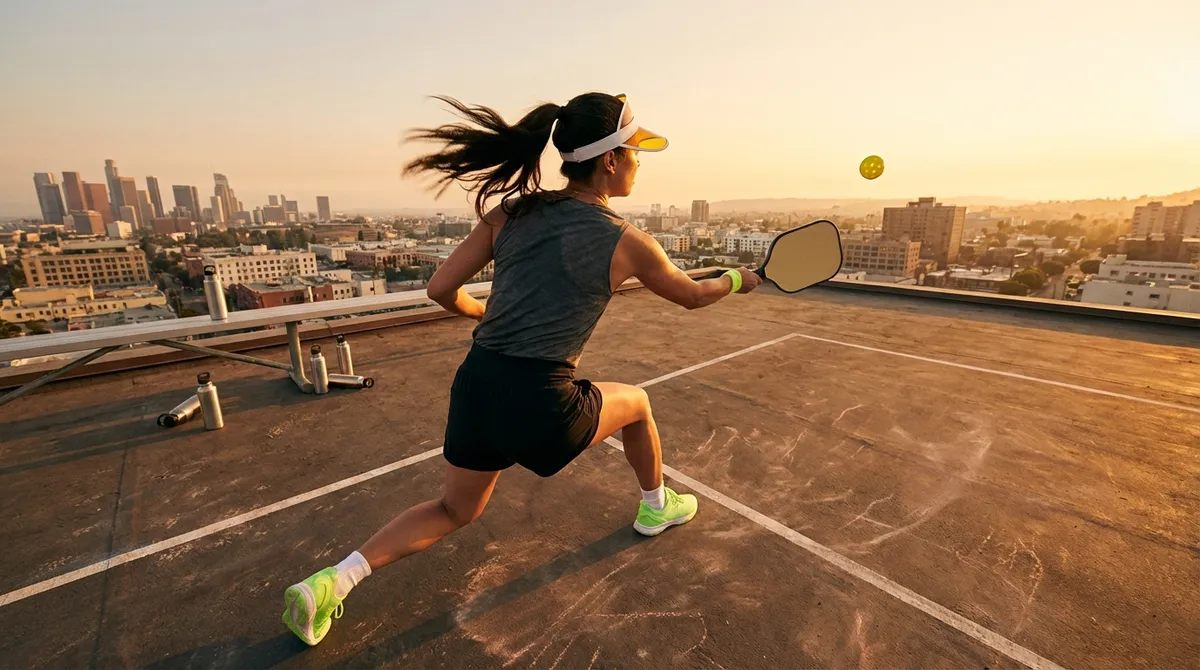
When I tested it for the first time, I made the classic rookie mistake: I tried to play it like tennis. I over-swing, I slice, I aim for big winners. Instead, my shots sailed past the baseline, straight into someone’s parked SUV. A woman in her 60s, who later told me she plays five times a week, leaned over the net and said: “You’re working way too hard. This game’s about touch, not power.”
By the second week, I was borrowing paddles, watching YouTube breakdowns of “the kitchen” (that mysterious no-volley zone), and timing my work schedule around drop-in sessions. By the end of the month, I had new calluses, new friends, and a new understanding of why pickleball is so addictive—and also why it’s not a magic fitness bullet.
What Playing Pickleball Really Does to Your Body
When I replaced my usual 30–40 minute runs with 90-minute pickleball sessions three times a week, my body noticed the change fast—but not quite how I expected.
Instead of that burning-lung, “why do I have a heartbeat in my ears?” feeling I get from interval runs, pickleball gave me this rolling, moderate cardio burn. My smartwatch consistently showed I was hanging in that Zone 2–3 heart rate range, with spikes during long rallies. For my sessions, I was averaging:
- Heart rate: 120–145 bpm for most of the game
- Calories burned: Roughly 400–600 calories in a 90-minute session (similar to a brisk hike or moderate run for me)
That lines up pretty well with research on moderate-intensity exercise and heart health. The American Heart Association recommends 150 minutes per week of moderate-intensity activity, and honestly, hitting that with pickleball feels a lot less miserable than grinding on a treadmill.
But it wasn’t just cardio. I noticed very specific muscle groups waking up:
- My calves and glutes felt sore from all the little lunges and short sprints.
- My forearm and shoulder on my paddle side got a low-key repetitive workout.
- My core was more tired than I expected from all the twisting and reaching, especially at the net.
Here’s the catch: while I felt fitter and more springy, I didn’t get the same “maxed-out engine” feeling I get from high-intensity intervals or heavy lifts. Pickleball is excellent for overall movement, agility, and joint-friendly cardio—but if you’re chasing serious strength gains or elite-level conditioning, it’s not a complete solution on its own.
I eventually added back two short strength sessions per week to keep my knees and shoulders happy. That combo—pickleball for most of my cardio, strength for durability—felt like the sweet spot.
The Weirdly Deep Strategy That Got Me Hooked
At first glance, pickleball looks like oversized ping-pong with retirees. Then you step on the court and realize it’s basically chess… but in gym shoes.
When I stopped trying to be a highlight reel and started paying attention, a few things clicked:
1. The “Kitchen” Is Where Games Are WonThe no-volley zone (aka “the kitchen”) is this 7-foot strip near the net you’re not allowed to step into while volleying. In my experience, your entire strategy revolves around getting yourself—and trapping your opponents—just behind that line.
Once I learned to “dink” (those soft, controlled shots that barely clear the net), I stopped spraying balls long and started winning rallies on patience alone. A more advanced player told me: “If you’re trying to hit winners from the baseline, you’ve already lost the point in your head.”
2. Power Is Overrated, Precision Is EverythingI watched a guy built like a linebacker lose to a couple who looked like they’d just left book club. Why? They put the ball exactly where it forced the big guy to move his feet. Cross-court dinks, shots at his backhand, slow balls to his shoelaces—no hero shots, just constant discomfort.
When I tested this “annoy them, don’t amaze them” strategy in my own games, my win rate went way up, even against more athletic players. It’s almost unsettling how effective it is.
3. Communication Might Be the Real Secret WeaponIn doubles (which is how most people play), quiet teams lose. The best partners I played with were constantly talking: “Mine,” “Yours,” “Out,” “Short,” “Switch.” My worst games? When both of us were shy and silently second-guessing.
Once, I played with a guy who called out “Nope!” loudly right as I was about to go for a ball that was clearly flying out. I stopped, let it go, and it missed the baseline by an inch. He just shrugged and said: “We don’t pay you to do free cardio.” I still use that line.
The more I leaned into the mental side—reading opponents, setting patterns, changing pace—the less I relied on raw speed. That’s part of the magic: it feels accessible at every age because brains can beat brawn here.
The Social Side: Why People Get Obsessed (and a Little Territorial)
If you’re thinking pickleball is just a workout, you’re underestimating how intense the social gravity is.
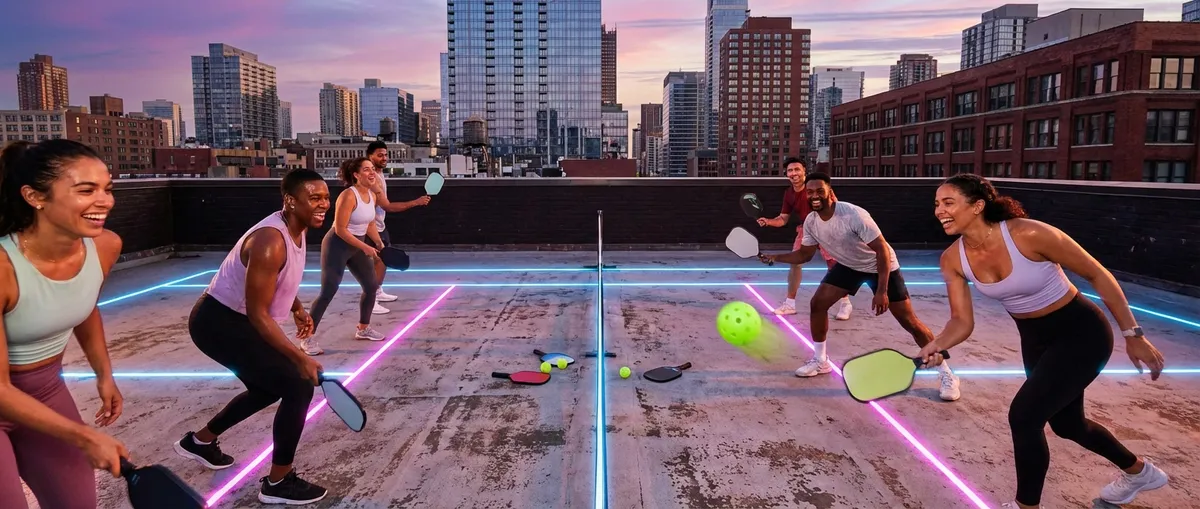
When I showed up alone to my first drop-in session, I was nervous I’d just hover awkwardly. Instead, I was swept into a rotation: winners stay on, losers rotate off, paddles lined up on the fence like a queue. Within an hour I knew people’s names, had been coached by strangers, and had been gently roasted for going for wild shots.
There’s something about the shorter courts and slower ball that makes it way easier to talk between points. You joke, you complain about the wind, you celebrate lucky net-cords together. It feels less like “going to work out” and more like showing up at a regular social event where everyone just happens to be sweating.
But there’s a flip side.
Because it’s become so popular, courts are crowded. I’ve seen territorial behavior, unspoken “skill level cliques,” and even little civil wars between tennis players and pickleball players over court noise and space. Noise complaints from neighbors have literally become a policy issue in some cities.
From a mental health angle though? For me, it was incredibly positive. Those days when I felt too drained to do a solo workout, I could still convince myself to show up because I knew I’d see familiar faces. That social accountability quietly became one of the biggest reasons I stuck with it.
If you’re someone who struggles with motivation, this might be the sneaky hack: pick a sport where ghosting it means ghosting friends, not just your own workout plan.
The Downsides Nobody Brags About (But You Should Know)
I love pickleball, but I’d be lying if I pretended it was all low-impact sunshine.
1. Overuse Injuries Are Very RealBecause it feels lighter than tennis, it’s easy to overdo it. I met multiple players nursing:
- Pickleball elbow (similar to tennis elbow)
- Achilles tendon pain from constant stop-start movement
- Shoulder irritation from overhead slams and serves
I got a mild case of wrist soreness after playing five days in a row. A sports physio I spoke to said the usual culprits are: no warm-up, old or unsupportive shoes, and jumping straight into long sessions if you’re not used to lateral movement.
2. It Doesn’t Replace All Types of TrainingWhen I relied on pickleball as my only workout, I slowly realized my max strength was dropping. My pull-ups got harder. My heavy squats didn’t feel as snappy. Pickleball gives you coordination, agility, and cardio—but it’s not structured strength training.
My personal fix: 2 short (20–30 minute) strength sessions a week focusing on hips, glutes, quads, and shoulders. Stuff like split squats, hip thrusts, rows, and light overhead presses. It made my joints feel much more resilient.
3. The Skill Gap Can Be… HumblingThere’s no gentle way to say this: you will get smoked by people twice your age when you’re starting out. It’s both inspiring and absolutely ego-shattering.
I watched a woman in her 70s hit the same annoying, perfect cross-court dink to me ten points in a row. I knew it was coming; I still couldn’t beat it consistently. She smiled and said: “You’ll get there. Try using your legs more than your arm.” Free coaching. Mild psychological damage. Worth it.
How to Start Without Embarrassing Yourself (Too Much)
After a month of trial, error, and a few “did I just pull something tying my shoes?” moments, here’s what I’d tell anyone trying pickleball for the first time:
Start with a Beginner-Friendly Session, Not Open Play ChaosMany parks and rec centers label specific time slots as “Beginner” or “Social.” Those are gold. My first truly fun experience came at a level-based session where I wasn’t constantly getting targeted as the weak link.
Borrow Before You BuyI went down a rabbit hole of $200 paddles with carbon fiber faces and thermoformed cores that promised “insane spin.” Honestly? As a beginner, the loaner paddle at my court worked fine. Once I knew I was hooked, I looked for a mid-range paddle with a polymer core and decent grip, not a pro-spec weapon I didn’t know how to use.
Warm Up Like You Actually Want Your Knees in 10 YearsWhen I rushed on cold, I felt stiff and clumsy. When I did a 5-minute warm-up (hip circles, ankle rolls, light jogging, a few shadow swings), the game felt smoother and my joints were quieter the next day. It’s boring—but it’s the boring stuff that lets you keep playing.
Expect to Suck at First—and Say That Out LoudTelling my first partners “Hey, I’m new—totally open to tips” immediately relaxed the vibe. People were way more kind and helpful once they knew I wasn’t pretending to be better than I was. And honestly, the little micro-coaching moments from more experienced players were more useful than any tutorial I watched online.
Why I’m Still Playing—Even After Going Back to the Gym
After my month-long experiment, I didn’t stay “pickleball only.” I brought back two gym days and the occasional run. But pickleball stayed. It went from “weird trending sport” to a core part of how I stay active, social, and vaguely sane during stressful weeks.
Here’s my honest summary after living it:
- If you want a fun, sustainable way to hit your weekly cardio goals without dreading every minute, pickleball is an absolute win.
- If you want a full, balanced fitness program, you’ll probably want to stack it with some strength training and occasional higher-intensity work.
- If you want community—people who actually notice when you don’t show up—this might be the most powerful part of the whole thing.
The thing that surprised me most wasn’t my improved footwork or my better dinks. It was how much I started looking forward to playing. On days I’d normally bail on a solo workout, I still showed up because it felt less like “training” and more like “hanging out while accidentally getting in shape.”
And that, in my experience, is the kind of habit that actually sticks.
Sources
- Sports & Fitness Industry Association – 2023 Pickleball Report (via The Washington Post) – Overview of pickleball’s rapid participation growth and demographics
- American Heart Association – Recommendations for Physical Activity in Adults – Evidence-based guidelines on weekly exercise targets and intensity zones
- Mayo Clinic – Exercise: How Much Do You Need? – Explains moderate vs vigorous activity, heart rate zones, and health benefits
- Hospital for Special Surgery – Pickleball Injuries: Prevention Tips – Sports medicine perspective on common pickleball injuries and how to reduce risk
- USA Pickleball – Official Rules & Resources – Official rulebook, court layout, and beginner information from the national governing body