The “Ugly House” Strategy: How I Turned Overlooked Homes Into Real Estate Gold
I used to scroll past certain listings without a second glance—the dark, badly photographed, strangely painted homes that looked like a headache wrapped in siding. Then I accidentally bought one. That “oops” turned into the fastest equity jump I’ve ever seen. Since then, I’ve leaned hard into what I call the “Ugly House Strategy,” and it completely changed how I hunt for real estate deals.
This isn’t about flipping mansions or gambling on massive renovations. It’s about finding properties that look terrible but are structurally solid, then unlocking value other buyers ignore.
Let me walk you through how I actually do this—what worked, what almost blew up in my face, and what I’d absolutely do again.
Why “Ugly” Houses Can Be Beautiful Investments
The first time I realized the power of ugly, I was standing in a living room with orange shag carpet, three different wallpapers, and a smell I can only describe as “wet basement meets old fries.” The agent literally apologized before opening the door.
But here’s what I saw instead: straight walls, no major cracks, newer windows, and a roof that had at least 10 years left. The chaos was all cosmetic.
When a house looks bad in photos, most buyers swipe away emotionally before they even analyze the numbers. That’s your opening.
In my experience, these properties:
- Sit longer on the market, which means more negotiating room
- Attract fewer competing offers, sometimes none
- Scare off buyers who can’t see past cosmetics
- Often belong to owners who just want out—fast
I cross-check this with data from the National Association of Realtors, which consistently finds that simple cosmetic improvements like paint and flooring significantly affect buyer perception and sale price. They’re not talking about “ugly houses” specifically, but the numbers back up what I’ve seen: buyers overreact to visual flaws and underreact to solid bones.
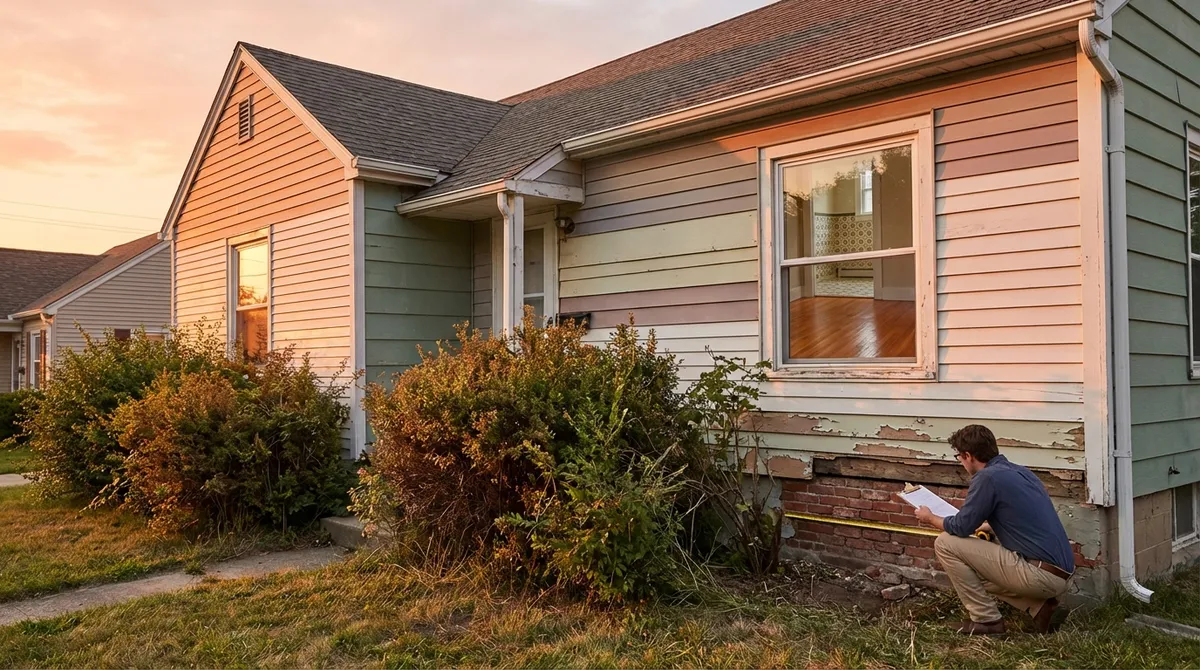
The trick is learning to separate “ugly and scary” (foundation issues, mold everywhere, structural damage) from “ugly and safe” (brown cabinets, ancient carpet, weird curtains).
My Step‑By‑Step Playbook for Spotting a Good “Ugly” Deal
When I’m scrolling listings, I’m actually hoping to find the worst-looking photos in the best location. Here’s how I screen them.
1. I start where demand is already strong.I pull recent sold data for the neighborhood first. If nearby renovated homes are selling quickly and at higher prices, then an ugly house in that area becomes extremely interesting. I’ll check average days on market and median sale prices on sites like Redfin or Zillow, then verify trends with local MLS data (via my agent).
2. I compare the listing price to fixed-up comps.Say the ugly house is listed at $260,000. Fully updated homes on the same street are going for $340,000–$360,000. Right away, I’m asking: “Can I make this thing look like that for less than the difference?” In my experience, once the spread is at least $60,000–$80,000, there might be real opportunity.
3. I zoom past the mess and look for clues in the photos.I’m ignoring the clown-colored walls and focusing on:
- Ceiling lines: any sagging, big cracks, or stains?
- Floors: visible slopes, big transitions, or soft spots?
- Windows: double-pane or single? Rot on frames?
- Basement pics: are there foundation cracks, water stains, or efflorescence (that white chalky stuff on concrete)?
Most people fixate on the decor. I’m hunting for signs the structure is either fine—or a money pit.
4. I schedule a showing quickly, even if I’m not 100% sold.The longer you wait, the more likely someone else sees what you see. When I walk in, I try to ignore the smell, the clutter, and the chaos, and I do a fast “systems scan”: electrical panel, HVAC age, plumbing material, water heater label, and roof from the yard.
On one property, the kitchen was so outdated it looked like a sitcom set from 1978, but the furnace was only three years old and the panel had been fully upgraded. That’s value I can’t see in a listing picture.
Cosmetic vs. Catastrophic: Lessons From My Inspection Disasters
Here’s where I almost learned an expensive lesson.
I once fell in love with an ugly little brick ranch that checked every box: great school district, small but efficient layout, price way below all the comps. It smelled terrible, the paint was a crime, and the flooring was half ripped up. Perfect.
Then the inspection report landed in my inbox.
We found:
- Active water seepage in the basement
- A horizontal foundation crack that had been “patched” badly
- Evidence the sellers had painted over old water stains
That’s the moment the “ugly strategy” gets serious. There’s a big difference between:
- Cosmetic ugly: paint, flooring, old fixtures, clutter, outdated kitchens and baths, weird color choices
- Catastrophic ugly: foundation movement, serious roof rot, extensive termite damage, widespread mold, ancient electrical that isn’t up to code
According to the U.S. Federal Trade Commission and various state real estate commissions, sellers are supposed to disclose known major defects—but I’ve seen plenty conveniently “forgotten.” That’s why I will never skip a professional inspection. The $500–$800 fee has saved me tens of thousands more than once.
I walked away from that brick ranch, even though I loved the upside. Sometimes the best deals are the ones you don’t close.
How I Actually Budget the Makeover (With Real Numbers)
I’ve learned the hard way: if your numbers are fantasy, your “deal” will punish you.
On a recent ugly-but-solid house I bought as a long-term rental, here’s how I ran the math before making an offer:
- Purchase price: $245,000
- After-repair value (based on comps): ~$320,000
- Target total renovation budget (cosmetic only): $25,000–$30,000
- All-in target (purchase + closing + reno): under $280,000
To stay honest, I use rough but realistic cost ranges I’ve tested in the field:
- Full interior repaint: usually $3,000–$7,000 depending on size and labor rates
- Replace flooring in most of a small house: $5,000–$10,000
- Light kitchen update (new counters, painting cabinets, hardware, midrange appliances): $7,000–$15,000
- Basic bathroom refresh (new vanity, toilet, fixtures, maybe tub surround): $3,000–$8,000
For this specific place, I ended up:
- Painting every surface
- Swapping carpets for LVP (luxury vinyl plank)
- Painting the cabinets and adding new hardware
- Updating light fixtures and faucets
- Doing a deep, borderline extreme clean
My total out-of-pocket renovation cost came to around $27,500. Six months later, an appraisal for a refinance came back at $323,000. We essentially “created” roughly $45,000–$50,000 in equity without touching a single wall.
The key is being brutally conservative on costs. I add at least 15–20% on top of my first estimate to cover surprises. There are always surprises.
Financing Tricks I’ve Used to Make Ugly Houses Affordable
Ugly houses don’t just challenge your vision—they challenge your funding.
I’ve used a few different strategies, each with pros and cons.
Conventional loan + cash for repairsThis is the simplest if the house is habitable. If the plumbing works, the roof isn’t caving in, and there’s functional heat, most lenders don’t care that it’s hideous.
Pros:
- Lower rates than hard money
- Longer terms
- Good for “light ugly”
Cons:
- You need the cash for repairs upfront or from savings
- Appraisals can be harsh if the place is too rough
I’ve personally used a 203(k) once. These wrap purchase + renovation costs into a single loan. The lender bases the loan amount on the after-improvement value, which is perfect for ugly strategies.
Pros:
- Lower down payment (especially with FHA 203(k))
- Renovation cost is financed, not just your purchase
- Great for owner-occupants willing to live through a remodel
Cons:
- More paperwork than you think you can tolerate
- Renovation must use approved contractors—DIY doesn’t usually fly
- Strict timelines and inspections
The U.S. Department of Housing and Urban Development (HUD) has clear guidelines on these programs, and I re-read them before each project because rules do evolve.
Hard money or private lendersI’ve used this route only when the property was too rough for conventional financing. The rates are higher, the timelines shorter, and the pressure very real.
Pros:
- Fast approvals
- Flexible on property condition
- Can fund 100% of rehab in some cases
Cons:
- Higher interest rates and fees
- Short payback windows
- Not great for newbies who don’t have a clear exit plan
For most people starting out, I’ve found the sweet spot is: live-in renovation with a conventional or FHA renovation loan, or buy a mildly ugly but livable place with a standard mortgage, then upgrade it room by room.
The Emotional Roller Coaster Nobody Warned Me About
Real talk: ugly houses don’t just test your budget—they test your patience and your ego.
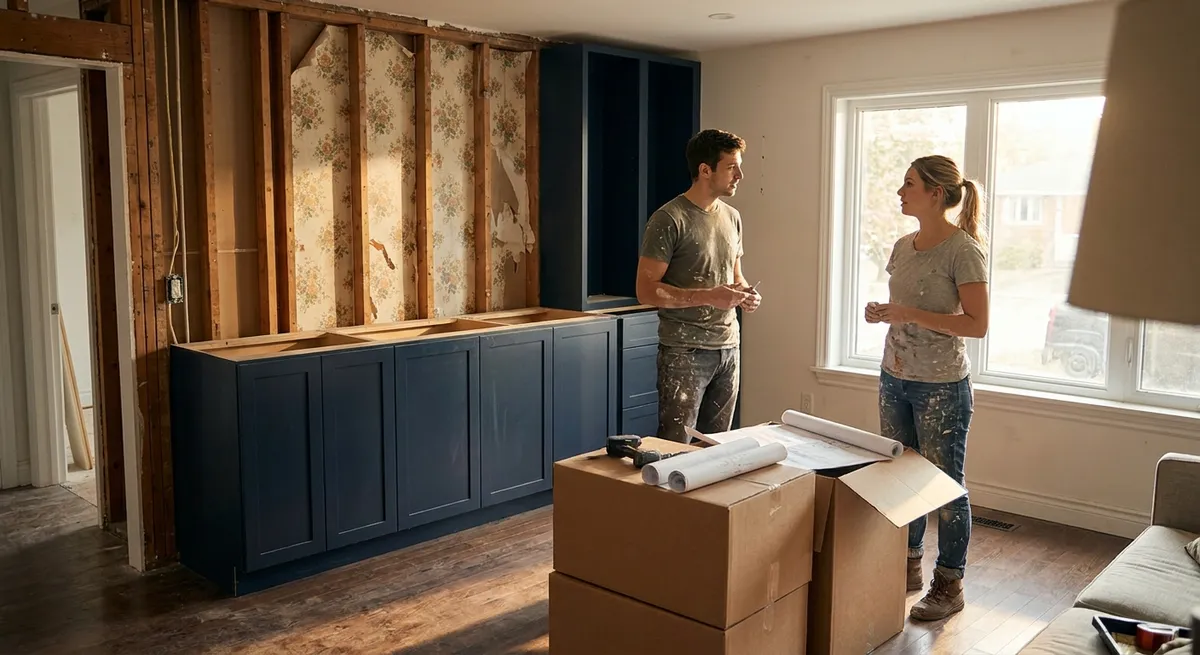
When I tested this strategy on my first live-in flip, I spent months living in a half-finished house with plastic on doors, bare subfloors in one room, and cabinets without doors in the kitchen. Friends came over and tried to be polite. One of them actually said, “You sure this is going to work out?”
Meanwhile, I was staring at every crooked line of caulk like it was a personal attack.
What’s kept me sane is:
- Creating a renovation order: systems first (HVAC, electrical, plumbing), then surfaces (floors, walls), then pretty stuff (fixtures, decor).
- Setting non-negotiable timelines for key milestones, like “floors done before we move in” or “kitchen functional by X date.”
- Accepting that some “temporary” solutions might stick around for a year.
The upside? When I eventually sold that house, the profit I walked away with became the down payment for two more properties. Every miserable weekend painting trim suddenly felt worth it.
But there’s zero shame in realizing you hate living in a construction zone. If you’re not into DIY or disruption, you can absolutely outsource most of it—just expect tighter margins.
Who This Strategy Really Works For (And Who Should Skip It)
From what I’ve seen—both in my deals and watching friends crash or crush it—this approach isn’t for everyone.
It tends to work well if you:
- Can tolerate temporary chaos and mess
- Have at least some cushion for surprise expenses
- Enjoy (or at least don’t hate) managing projects and contractors
- Are willing to learn basic repair language so contractors don’t steamroll you
- Think in terms of “value-add,” not just “move-in ready pretty”
You should be very cautious if you:
- Have zero extra cash beyond your down payment
- Need everything to be perfect right away
- Get overwhelmed by decisions like “which white paint is the right white”
- Don’t have the time or energy to oversee a project
Real estate isn’t automatically safe just because it’s real estate. The wrong ugly house, at the wrong price, with the wrong scope, can absolutely sink your finances.
But a carefully chosen ugly house, bought at the right discount, with a clear plan? In my experience, that’s where some of the best returns hide.
Conclusion
I used to chase the “nicest” homes my budget could reach. The shift happened when I realized I was competing with everyone else for the same cute listings—and losing. Once I started targeting the properties nobody wanted because of their looks, my odds of finding real value shot up.
The formula I keep coming back to is simple but strict:
Ugly + solid bones + right neighborhood + realistic reno budget = serious potential.
If you’re willing to look past the mess, lean on professional inspections, and be ruthless with your numbers, the “ugly house” might be the most beautiful strategy in your real estate toolkit.
Sources
- National Association of Realtors – 2023 Remodeling Impact Report – Data on how specific upgrades affect home value and buyer perception
- U.S. Department of Housing and Urban Development – FHA 203(k) Rehab Mortgage Insurance – Official overview of FHA renovation loan requirements and structure
- Consumer Financial Protection Bureau – Mortgages – Guidance on different mortgage types, closing costs, and how lending works
- Federal Trade Commission – Facts for Consumers About Home Inspections – What home inspections cover, why they matter, and consumer protection information
- U.S. Census Bureau – Characteristics of New Housing – Data on housing characteristics and trends that help contextualize renovation and value-add strategies