The “Third Place” Comeback: How Hanging Out Saved My Sanity
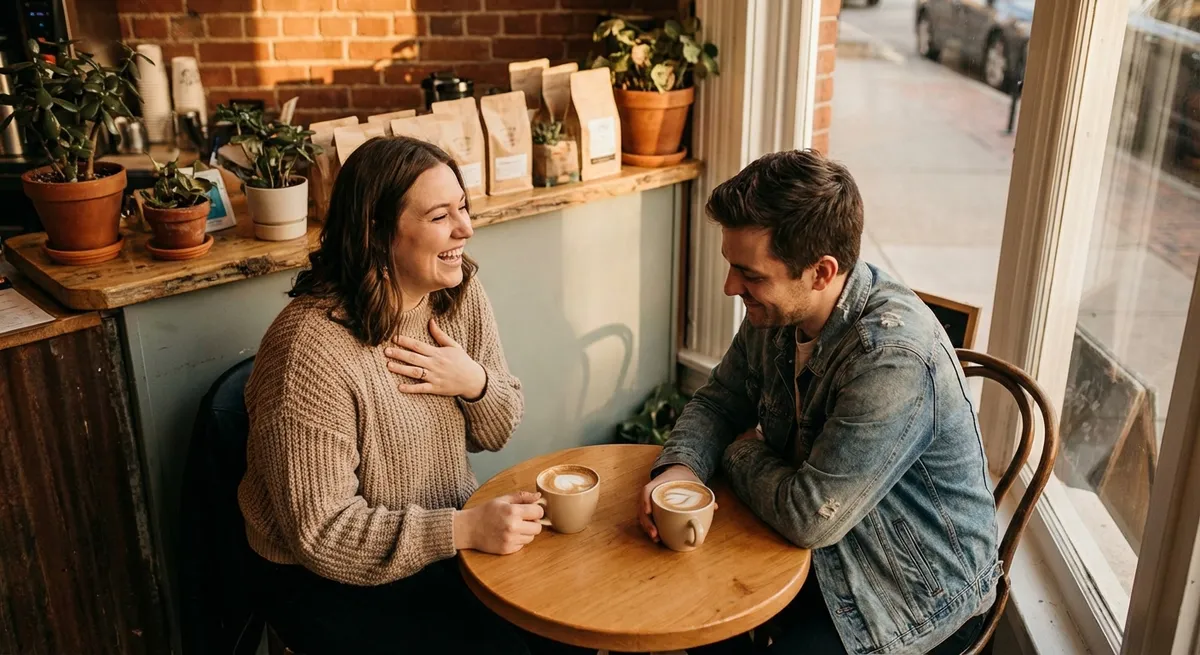
I didn’t realize how lonely I was until a barista remembered my name before my own coworkers did.
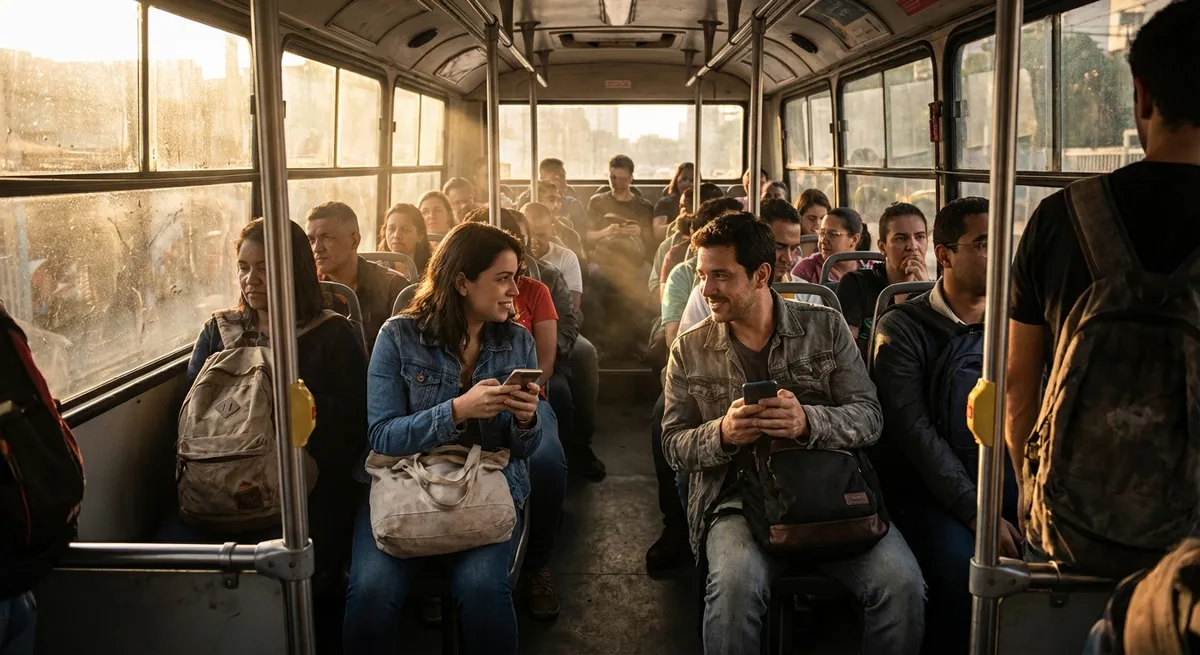
I’d been “living online” for years—Slack pings, group chats, endless scrolling—yet I couldn’t shake the feeling that no one actually knew me offline. Then I stumbled into a tiny community pottery studio near my apartment, looking for something to do on a Thursday night. Two months later, I knew the names of people’s pets, who’d just broken up, and whose sourdough starter had died. I’d accidentally found what sociologists call a third place—and it quietly rewired how I relate to people.
This is the story of how I tested the “third place” theory on my own life, why it matters way more than we think, and how you can build your own hangout—no artistic talent, social skills, or massive friend group required.
What I Didn’t Realize About “Third Places” Until I Actually Needed One
The first time I read about “third places,” I shrugged it off as sociology jargon. Home is your first place. Work (or school) is your second. And the third place is that casual, consistent spot you go where people know you—but don’t live or work with you. Think: diner, barber shop, church basement, climbing gym, neighborhood library corner.
When I tested this out myself, the difference in my day-to-day mood was borderline shocking.
Before I had a third place:
- My social life was 90% DMs and “we should totally grab coffee sometime” that never happened.
- I treated my neighborhood like a backdrop, not a community.
- I felt weirdly interchangeable—like if I moved tomorrow, nothing would change for anyone.
After I started going to that pottery studio every Thursday:
- I had low-pressure, face-to-face conversations that weren’t about work or my phone.
- I started recognizing people on the street and in the grocery store.
- I felt anchored—like my life had chapters, not just one long screen glow.
Sociologist Ray Oldenburg coined the term “third place” back in 1989, and when I finally read his work, I felt personally called out. He talks about how these places keep democracy and community alive: casual, neutral spaces where you don’t have to buy a ticket, wear a suit, or perform for an algorithm. And I realized something: my third place wasn’t “nice to have”; it was quietly protecting my mental health from spiraling.
Why Third Places Hit Different in an Age of Infinite Scrolling
I used to assume my online communities were enough. Group chats, Discord servers, subreddit regulars—that’s a social life, right? So I decided to treat “third places” like an experiment and compare IRL vs URL.
Here’s what I noticed when I actually paid attention:
1. Face-to-face tiny interactions are like social vitaminsI’d walk into the studio and someone would casually say, “Oh, you’re back—how did that presentation go?” That microscopic memory? It landed harder than 50 Instagram likes.
Psychologist Barbara Fredrickson’s research on “micro-moments of connection” calls this positivity resonance: those brief, shared emotional highs you get when you’re physically present with someone. It doesn’t require deep intimacy, just shared attention and a hint of warmth. Online, I mostly got delayed responses and misread tones. Offline, I walked out feeling physically lighter.
2. The body doesn’t know your followers; it only knows your heartbeatWhen I stayed purely online, my anxiety felt like background radiation. After a couple months of regular in-person hangouts, my sleep improved and I wasn’t doomscrolling until 2 a.m. anymore. And I’m not special—there’s data behind this.
A 2023 advisory from U.S. Surgeon General Dr. Vivek Murthy compared prolonged social disconnection to smoking up to 15 cigarettes a day in terms of health impact. That sounds dramatic until you realize loneliness spikes stress hormones, increases inflammation, and messes with your cardiovascular system. My phone had never made my resting heart rate go down. The walk to my third place did.
3. In real life, people get the full you, not the edited reelOnline, I could edit my messages, craft takes, delete awkward photos. Offline, people saw clay all over my jeans, my bad jokes, my unfinished mugs, and the way I nervously over-explain things. And weirdly—that’s where deeper connection hid.
I noticed how quickly people opened up in that space. Someone would casually say, “I bombed my exam,” or “My mom’s in the hospital,” in ways that would sound dramatic online but landed gently across a shared table. My third place made vulnerability feel like background noise, not a content strategy.
How I Accidentally Built a “Social Gym” (No Membership Required)
The biggest lie I believed was: “I’ll find a third place when I magically become more social.” That day never came. So I reverse-engineered it.
Here’s the exact playbook I used, without pretending it wasn’t awkward at first.
Step 1: I stopped searching for friends and started searching for rooms
I made a simple rule: any place I’d willingly return to even if I didn’t talk to anyone was a candidate.
My short list:
- The pottery studio with late-night hours and cheap memberships
- A used bookstore with a little reading nook and free events
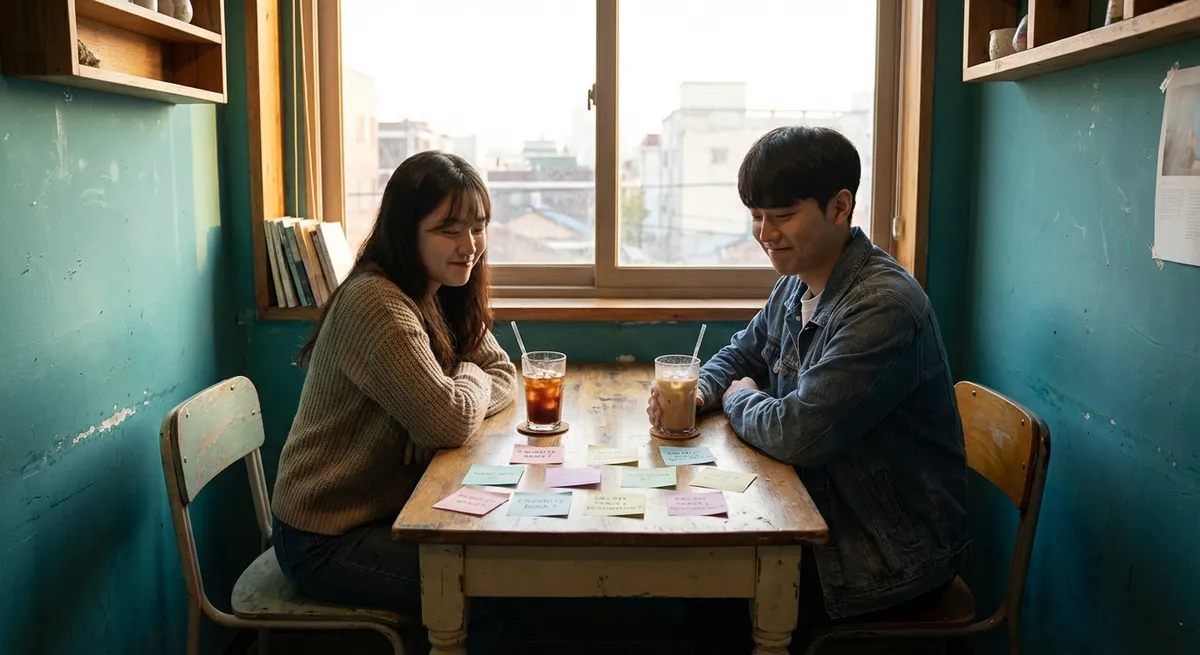
- A café that didn’t blast music like a club and had a big communal table
- A community center that hosted language exchanges on Tuesdays
I wasn’t hunting for “best friends.” I was hunting for repeated context—somewhere the same faces would naturally reappear.
Step 2: I manufactured consistency like it was a habit, not a vibe
I committed to one block of time: Thursdays, 7–9 p.m., pottery studio. For a month. No overthinking.
The first week, I felt like the new kid at a lunch table. By week three, the staff greeted me with, “Hey, you’re back!” By week six, someone slid over extra tools without me asking. I didn’t “break into” a friend group; I just became part of the furniture.
Honestly, it felt like going to the gym. The first few times were mostly me fighting excuses. But third places work on frequency, not intensity. You don’t need deep talks every time; you just need to show up often enough to become part of the mental landscape.
Step 3: I embraced “micro-bravery”
I’m not a natural extrovert. I made a tiny rule for myself: one micro-brave act per visit. That was it.
Some examples:
- Asking, “Hey, what are you working on?” when I sat next to someone
- Complimenting a mug shape and asking how they did the handle
- Admitting, “This is my third time here—I still have no idea how to center clay”
The key wasn’t being smooth; it was being honest. I didn’t need pickup lines for friendship. I just needed one genuine question or shared struggle per visit. Over time, these stacked into actual relationships.
The Dark Side No One Mentions: When Third Places Get Weird
To be fair, it wasn’t all wholesome indie-movie moments.
1. Not every “third place” is actually healthyI tested a few options. One was a trendy bar that seemed like a third place. Regulars, familiar bartenders, inside jokes. But after a couple weeks, I realized my sleep and spending were quietly wrecked. The vibe was connection, but the outcome was hangovers and shallow banter I forgot the next day.
Third places can absolutely be bars, but I had to ask myself:
- Do I feel better leaving than arriving?
- Would I come here and enjoy it without alcohol?
- Are the conversations evolving or just endlessly looping?
When the answer stayed “no,” I tapped out.
2. Familiarity can turn into pressureAround month three at the studio, I noticed a subtle shift: if I skipped a week, people noticed. “Where were you?” sounded friendly, but my anxiety heard, “You’re letting people down.”
I had to set gentle boundaries: “Hey, I might miss a few weeks—work’s wild, but I’ll be back.” Most people just nodded and went back to their clay. The pressure was 90% in my own head.
3. You won’t click with everyone—and that’s fineThere was one guy who monologued about crypto every chance he got. Another person low-key negged everyone’s work like a competitive reality show judge. For a while, I thought, “If this is a community, I have to like everyone, right?” Absolutely not.
I started treating my third place like a buffet: I could appreciate the table without putting everything on my plate. I gravitated toward the people whose energy felt grounding and let the rest fade into background characters.
How to Find Your Third Place (Even If Your City Feels Cold and Expensive)
When I shared my third-place experiment on social media, the most common reply was: “That sounds great, but my city is too spread out / expensive / unfriendly.”
So I started mapping out realistic options and testing them when I traveled. Here’s what consistently worked—not hypothetically, but in my actual life.
Look for “low-stakes, high-repeat” spaces
The best third places I’ve found tend to have:
- Low cost of entry: Free or cheap to exist there (library, park meetup, community class, rec league).
- Loose structure: There’s something to do (game, craft, sport, discussion), but tons of room for side conversations.
- No single host: Not dependent on one charismatic organizer who might burn out or move away.
- Visible regulars: You can spot people who clearly come often.
Examples I’ve either joined or watched work for friends:
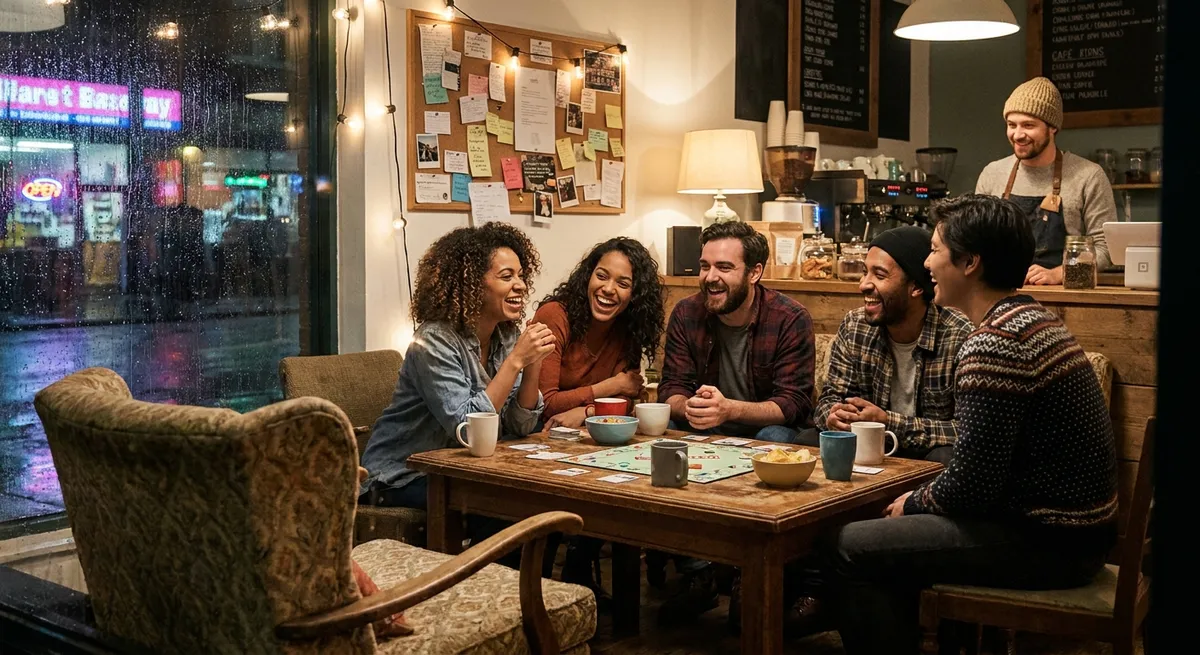
- Board game nights at local game shops
- Weekly pick-up basketball or soccer at the same park
- Knitting/crochet circles at libraries or yarn stores
- Language exchanges in cafés
- Open mic nights where people don’t take themselves too seriously
- Volunteer shifts at food banks or mutual aid groups
I’ve also seen third places form in unexpected spots—like the same park bench every Sunday dog-walkers stop at, or a laundromat where people always fold clothes at the same table and chat about their week.
If you’re shy: play the “third-person in” role
When I felt too awkward to approach strangers, I would:
- Join conversations that were already happening near me.
- Ask questions about whatever people were doing (“How do you even start that pattern?”).
- Offer small help (handing someone a tool, saving their seat, watching their stuff).
What worked best wasn’t being fascinating—it was being quietly useful and genuinely curious. People remember how you made the room feel, not how impressive your story was.
When you can’t find one… build the 1.0 version
In one neighborhood, I couldn’t find a single space that felt right. So I hacked a starter version:
- Picked a café with lots of tables and decent lighting.
- Posted online: “I’ll be at [café] every Sunday at 3 p.m. co-working / reading. Come say hi if you want a chill, no-pressure hang.”
- Committed to show up for 4 weeks even if no one came.
Week one: just me and my laptop. Week two: one friend. Week four: that friend brought someone, and someone from Instagram DMs shyly waved at me from another table. It never became a massive group, but after a while, I knew two of the baristas and three regulars by name. That alone changed how rooted I felt.
You don’t have to “launch a community.” You just have to be predictably somewhere.
What Changed When I Had a Place Where Nothing Was Expected of Me
The wildest part of this experiment is how much it bled into the rest of my life.
- Work stress shrank to its actual size. When my boss’s email wasn’t the only thing on my calendar, it stopped feeling like the entire plot of my week.
- My phone addiction loosened. I still scroll, obviously. But my best stories now start with “So there’s this woman at the studio…” instead of “So I saw this TikTok…”
- I became braver in tiny ways. Once you’ve asked a stranger how long they’ve been throwing clay, sending that email or speaking up in a meeting feels less terrifying.
- My sense of “home” got rewired. It stopped being just my apartment and became this web of places where people would notice if I disappeared for a while.
There are still weeks I skip. There are days I’m too peopled-out to talk to anyone. I’m not suddenly an extroverted main character who floats into rooms lighting them up. But I’ve seen, up close, how one consistent, low-key hangout can be the difference between feeling like a browser tab in someone’s life and feeling like a chapter.
If you’re reading this and your social world feels scattered, shallow, or overly digital, here’s my unofficial challenge: for four weeks, pick a place and a time and keep showing up. Don’t aim for best friends. Aim for familiarity.
You might walk out one day, clay under your fingernails or coffee on your sleeve, realizing that someone just saved a seat for you without asking.
That’s when you’ll know: you’ve found your third place.
Sources
- The Great Good Place – Ray Oldenburg (summary via Project for Public Spaces) – Overview of Oldenburg’s “third place” concept and why informal public gathering spots matter
- U.S. Surgeon General Advisory on the Epidemic of Loneliness and Isolation (2023) – Official report detailing health impacts of social disconnection and benefits of social ties
- Harvard Health – How Social Isolation Affects Health – Explains the physical and psychological consequences of loneliness and lack of in-person contact
- Greater Good Science Center – Barbara Fredrickson on “Micro-Moments” of Love – Discusses positivity resonance and small moments of connection
- Pew Research Center – The State of Social Connections in the Digital Age – Data on how people used online vs. offline connections, especially during and after the pandemic