
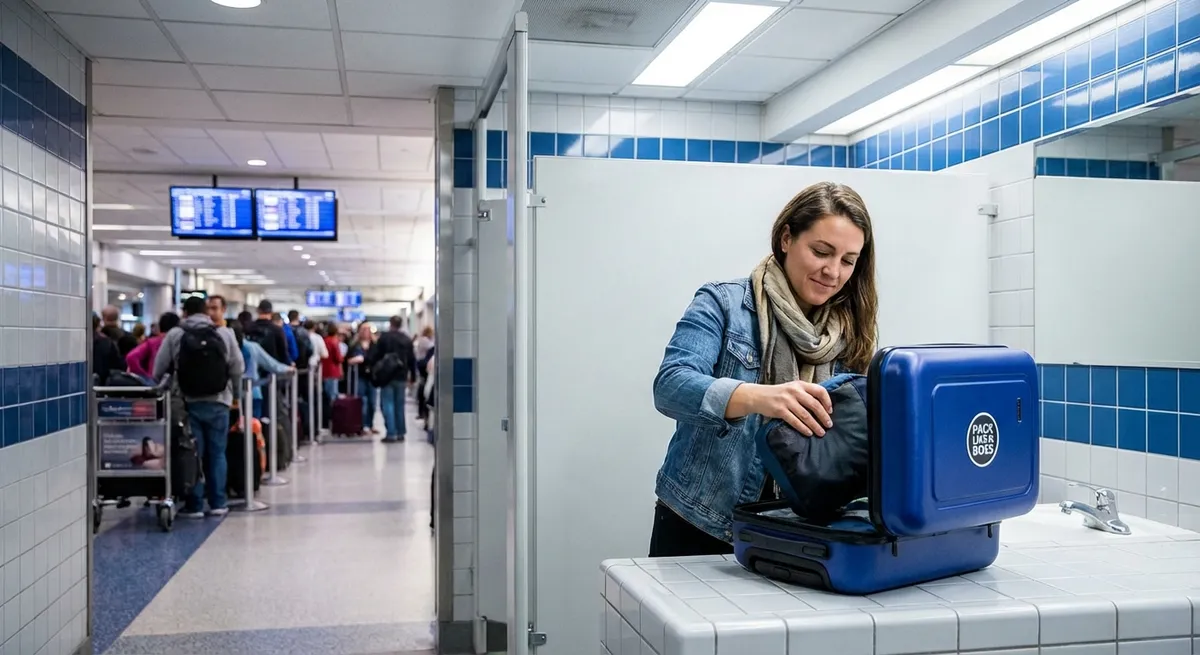
The Carry-On Only Playbook: How I Stopped Checking Bags and Still Traveled Like a Boss
I used to be that person standing at baggage claim, watching the same sad suitcase circle for the 12th time and wondering if my bag decided to start a new life in Denver. Then one brutal trip with three layovers and a lost suitcase finally broke me. I swore I’d figure out how to travel with only a carry-on—without living in the same T‑shirt all week.
Fast forward: I’ve now done multi-week trips through Europe, Asia, and across the U.S. with nothing but a carry-on suitcase and a personal item. No checked bags, no drama, no extra fees. Friends kept asking how I pulled it off, so here’s the full breakdown—no gate-check fairy tales, just what actually worked (and what didn’t) when I tested it in real airports with real airline chaos.
Why I Ditched Checked Bags for Good
The turning point for me was a flight from New York to Madrid with a connection in Paris. My checked bag didn’t make it. I did. For two days I had one T‑shirt, jeans, and a desperate reliance on airport deodorant. That trip taught me three hard truths:
First, checked bags are basically risk machines. The U.S. Department of Transportation reported that in 2023, U.S. airlines handled millions of bags every month—and mis-handled a noticeable chunk of them. Delays, damage, lost luggage… it’s not rare; it just doesn’t always make your Instagram story.
Second, checked bags eat your time. I timed this on three trips: from plane door to airport exit, I saved between 18 and 35 minutes just by walking off the plane and leaving. No carousel, no crowd, no “Did it miss the connection?” anxiety. When I landed in Chicago for a tight conference schedule, that half hour meant I actually made the opening keynote instead of watching the replay later in my hotel room.
Third, airlines are quietly turning luggage into a revenue stream. Many basic economy fares don’t include a checked bag at all. When I did the math for a Europe trip—one checked bag on a long-haul flight plus two short-haul hops—it was cheaper to upgrade slightly and bring a larger carry-on than to keep paying bag fees.
So I went all-in: one carry-on suitcase, one personal item, and a borderline obsessive interest in packing systems.
Choosing the Right Carry-On: What Actually Matters at the Gate
When I tested different bags, I realized that the biggest mistake travelers make is shopping for the inside of the suitcase (pockets! lining! colors!) instead of the outside specs that gate agents actually care about.
Most major airlines follow similar ranges for carry-on size. You’ll usually see something like 22 x 14 x 9 inches (including wheels and handles) for U.S. carriers. European budget airlines can be stricter. I’ve stood at a Ryanair gate in Milan and watched three people repack their lives on the floor because their bags didn’t fit the sizer.
Here’s what made the difference for me when I tested four different carry-ons across multiple trips:
- Hard-shell vs. soft-shell: My hard-shell polycarbonate bag (think Away/Rimowa-style, mine’s a cheaper dupe) was better for overpacking without bursting seams, but my soft-shell bag squeezed into tough overhead bins more easily. When I flew on older regional jets, the soft-shell won every time.
- Spinner wheels vs. two wheels: Spinners (four wheels) glide like a dream on smooth airport floors. Two-wheel bags handle curbs, cobblestones, and random sidewalk cracks way better. Dragging a four-wheeler over broken pavement in Lisbon made me deeply aware that wheels aren’t all the same.
- External pocket or no? I loved the front laptop pocket on my soft bag… right up until a gate agent in London made me shove the whole suitcase into a metal sizer. That overstuffed front pocket nearly doomed me. Slim laptop sleeve in my personal item turned out safer.
- Weight actually matters: It’s not just about what you pack. Some international airlines have carry-on weight limits (often 7–10 kg / 15–22 lbs). My heavy “luxury” suitcase ate up a chunk of that allowance empty. When I switched to a lighter case, I had almost 4 extra pounds to play with.
In my experience, the sweet spot is a lightweight, hard-shell carry-on that’s within 21–22 inches tall, and a soft personal item (like a backpack or underseat bag) that can squish if they get strict.
My Real-World Packing System: How I Fit Two Weeks in One Bag
On my first attempt at carry-on only, I failed so badly I had to sit on my suitcase to close it—and still ended up checking it. I was packing based on outfits instead of systems. When I switched to a system, everything changed.
Here’s what I actually do now before each trip:
I start with a strict color palette. Two neutrals, one accent. For example: black + beige + olive, or navy + white + rust. That way almost every top works with almost every bottom, and I can re-wear things without it screaming “same outfit, different day” in photos.
Then I use packing cubes—but only after I ruthlessly edit. I tried the “stuff everything into cubes, force it to fit” strategy. Huge mistake. The cubes are for organization, not compression miracles.
A typical 10–14 day trip wardrobe for me (adjusted for climate) looks like this:
- 3–4 tops (mix of casual and slightly dressy)
- 2 pants / 1 shorts or skirt (depending on weather)
- 1 lightweight dress or jumpsuit (it’s my secret MVP)
- 1 thin sweater or cardigan
- 1 packable jacket or shell
- 5–7 pairs of underwear, 3–4 pairs of socks
- 1–2 pairs of shoes total (I wear one, pack one)
When I tested this setup in Japan for 12 days, I did laundry twice—once at a coin laundry and once in the hotel sink. Was it glamorous? No. Did I regret not bringing five extra shirts? Not once.
I also learned to respect the “shoe tax.” Shoes eat space. Every time I thought “Maybe I’ll want those dress boots,” I’d lay them in the suitcase, see how much room I was sacrificing, and ask myself, “Are these boots worth three T‑shirts and a pair of jeans?” The answer was almost always no.
One practical trick that surprised me: I started rolling some clothes and folding others. Rolled: soft T‑shirts, leggings, underwear. Folded flat: stiffer fabrics like jeans and button-down shirts. That weird hybrid method fit better in my bag than committing to one technique.
Beating Airline Rules: What I Learned at Actual Boarding Gates
I used to think airline baggage rules were just annoying fine print. After enough flights, I realized they’re a game—and once you understand the rules, you can bend them without breaking them.
When I flew budget airlines in Europe—like easyJet and Ryanair—I saw strict enforcement. They checked sizes more than weights. In Asia, I had the opposite: some carriers practically ignored the bag size but weighed everything, including my backpack.
What helped me the most:
- Wear the bulky stuff: On one brutally early flight to Berlin, I wore my heaviest shoes, my thickest sweater, and stuffed my pockets with small items. Did I look like I was hiding snacks from airport security? Absolutely. Did my bag pass the weight check? Yes.
- Use your “personal item” cleverly: Airlines usually allow a smaller item that fits under the seat. I treat this like extra cargo space. Mine carries my laptop, chargers, meds, a change of underwear, and one extra T‑shirt. On a delayed flight out of LAX where overhead bins were full and they gate-checked half the carry-ons, I felt strangely calm. I knew anything I’d panic about losing was with me under the seat.
- Check the specific airline, not just Google: I once trusted a generic “carry-on size” result for a flight to Lisbon and almost got nailed at check-in. Now I always check the actual airline’s website for updated rules. Policies change, especially with low-cost carriers.
One thing I learned the hard way: “guaranteed carry-on” on some fare classes just means they intend to let you keep it. On full flights, they can and will still gate-check it. If there’s anything you truly can’t risk losing or smashing—medications, cameras, laptops—those stay in the personal item, not the suitcase.
Tech, Toiletries, and Security: Streamlining the Pain Points
The first time I tried carry-on only on a long trip, security nearly wrecked my mood. I had liquids in three different pockets and a tangle of cables that looked, frankly, suspicious. TSA pulled my bag aside, unpacked half my life, and my perfect packing job evaporated in 30 seconds.
Since then, I’ve built a dedicated “airport layer” to my bag:
I use a clear, reusable quart-size bag for toiletries and keep it right at the top of my suitcase or in an outer pocket of my personal item. Nothing bigger than 3.4 ounces, no exceptions (that’s around 100 ml—the standard limit many airports use). On one trip through Heathrow, security was pulling endless people aside for oversized liquids. My bag went straight through.
For tech, I travel with a tiny, ruthless kit:
- One universal travel adapter (with USB ports)
- One short USB-C cable, one Lightning or USB-A depending on devices
- One slim power bank that meets airline regulations (under the watt-hour limit)
- Noise-canceling headphones (I finally caved—worth it on 9+ hour flights)
- Laptop or tablet only if I actually need it
When I stopped carrying three “just in case” chargers and random gadgets, my personal item got lighter and easier to manage. On a trip to Montreal, I realized I’d used all the same 3 things the entire time and none of my backup tech.
Going through airport security smoothed out a lot once I prepped for it. Shoes that slip on and off. No belts or chunky metal jewelry on flight days. Laptop and liquids right on top. Whenever TSA or a security officer waved me through with a “You’re good,” I mentally high-fived my past self.
The Real Downsides of Carry-On Only (And How I Work Around Them)
I’m not going to pretend carry-on only is magical and perfect. There are real trade-offs, and I noticed them especially on longer or more specialized trips.
When I went to Norway in winter, for example, my normal minimalist packing strategy almost collapsed. Bulky sweaters, thick socks, insulated boots—it all adds up. I had to make some choices that weren’t ideal:
- I wore my heaviest coat and boots every travel day, even if I was sweating bullets in the airport.
- I picked thinner base layers and relied on layering instead of packing my coziest (but giant) sweaters.
- I accepted that I’d be repeating outfits in almost every photo. My Instagram took a hit. My actual comfort didn’t.
There are also times when carry-on only doesn’t make sense. If I’m traveling for a wedding with formal clothes, or bringing specialized gear like hiking equipment or work samples, I’ll check a bag without guilt. The trick is that now it’s a conscious decision, not just my default.
Another downside is shopping on the road. On a trip to Seoul, I absolutely wanted to bring home more than my carry-on could reasonably handle. I had three options:
- Ship items home (expensive, but sometimes worth it for special purchases)
- Stop buying things I couldn’t fit (my wallet liked this, my impulse brain did not)
- Buy a cheap extra bag and check it on the way back only
I’ve done all three now. Honestly, checking a bag just for the return flight feels like a pretty good compromise. You’re not stressed about delays because if your bag gets back a day after you do… well, you’re already home.
Why I’m Still Team Carry-On (Most of the Time)
After dozens of flights with just a carry-on and personal item, I’ve noticed my entire travel vibe has changed.
I move faster through airports. I’m more relaxed during crazy connections. I’ve stopped sprinting back to airline counters praying my bag made it. I know that when I land, I can walk straight out, catch the train or rideshare, and actually start the trip instead of babysitting a carousel.
I also discovered something I didn’t expect: traveling lighter made decisions on the road easier. I don’t stand in front of my suitcase for 10 minutes trying to pick from 15 outfits. I don’t drag heavy bags up stairs in older hotels or metro stations. I feel just a little freer.
Carry-on only isn’t a moral high ground, and it’s not a one-size-fits-all solution. It’s a tool. On trips where it fits—city-hopping, business travel, shorter vacations—it’s made my travel smoother, cheaper, and a lot less stressful.
If you’ve been tempted to try it, my honest suggestion is: test it on a 4–5 day trip first. Pretend you have to live out of that one bag. See what you miss, what you didn’t need, and what drove you crazy. Then tweak.
That’s exactly how I started: one “let’s see if this is possible” trip. Now, every time I walk past baggage claim without stopping, I’m quietly grateful for that one nightmare lost-bag flight that pushed me to change.
Sources
- U.S. Department of Transportation – Air Travel Consumer Reports – Official stats on mishandled baggage, delays, and airline performance
- Transportation Security Administration (TSA) – What Can I Bring? – Current rules on liquids, electronics, and carry-on security requirements in the U.S.
- Federal Aviation Administration (FAA) – Portable Electronic Devices – Guidance on batteries, power banks, and electronic devices allowed on aircraft
- Ryanair – Cabin Baggage Policy – Example of stricter low-cost airline carry-on size and weight rules
- British Airways – Baggage Allowances – Major carrier policy showing typical international hand luggage limits and personal item rules