I Planned an Entire European Trip Using Only Trains — Here’s What No One Tells You
I thought booking my first “no-planes” Europe trip would be this romantic, cinematic experience. You know — croissant in hand, train gliding past vineyards, journaling about “finding myself.”
What I actually got was: missed connections, surprise first-class upgrades, a crash course in rail passes, and one 2 a.m. panic session about seat reservations in Italian.
But when I tested a trains-only route across five countries, I realized something: long-distance rail travel in Europe isn’t just scenic. It completely changes how you experience a trip — for better and worse. Here’s exactly what happened, what I’d do differently, and how to pull it off without losing your mind (or your luggage).
Why I Ditched Planes and Committed to Trains
I recently discovered how much of my “travel time” on short flights is just… airport time. You know the drill: 45 minutes to the airport, 2 hours early for security, 40 minutes waiting to board, 30 minutes taxiing, 20 minutes waiting for bags.
When I actually did the math for a “quick” flight from Paris to Amsterdam vs. the high-speed train, the train won — not on sheer speed, but on door-to-door sanity.
Here’s what pushed me over the edge into full train mode:
I was planning a loop: London → Paris → Basel → Milan → Florence → Munich → Amsterdam → back to London. Normally, that would be 3–4 flights plus some local trains. Instead, I decided: no planes, just rail.
I liked that:
- Train stations are usually in the center of the city, not 45 minutes outside.
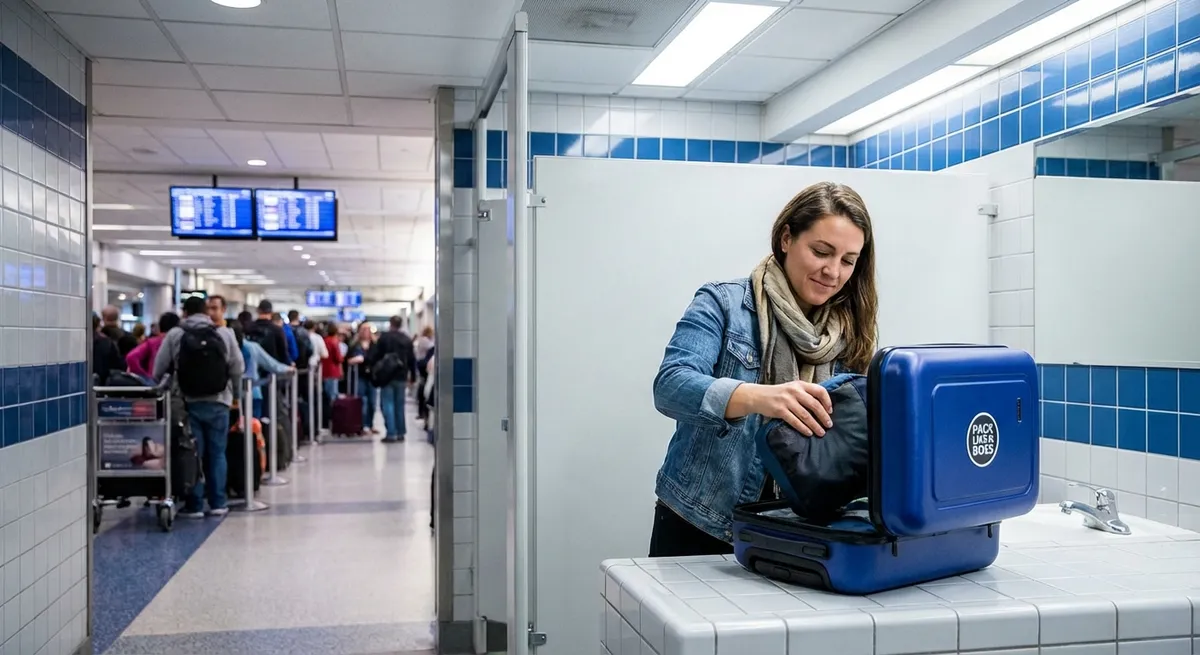
- There’s no 100ml liquids drama. My full-size sunscreen came along like a VIP.
- I could actually see the countries I was “visiting,” not just clouds and aisle 17B.
There’s also a not-tiny climate angle. The European Environment Agency estimates that domestic flights can emit several times more CO₂ per passenger kilometer than trains on comparable routes.¹ I’m not pretending my one trip “saved the planet,” but it felt good to pick the lower-emission option when it was practical.
But romanticism aside, I ran into some very real “no one tells you this” issues once I actually tried to pull it off.
The Rail Pass Rabbit Hole: What I Got Wrong (And Finally Right)
When I first opened the Eurail/Interrail website, I felt like I’d accidentally enrolled in a statistics course. Flexi passes, continuous passes, travel days, peak pricing… it was a lot.
I originally thought, “Easy, I’ll just grab a Eurail Global Pass and wing it.” That was naive.
Here’s what happened when I tested different approaches:
Attempt #1: Piecing together point-to-point ticketsI tried booking every leg separately: Eurostar, TGV, Italian Frecciarossa, German ICE. It looked cheaper… until I started hitting dynamic pricing. That Paris → Basel high-speed train I checked early? It went from reasonable to “are they selling the train?” just because I waited.
Attempt #2: Overbuying a rail pass “for flexibility”Then I swung too far the other way and almost bought a high-day-count Eurail pass “just in case.” After reading way too many forums and using the Rail Europe fare finder, I realized I’d be overpaying on days I wasn’t even traveling.
What finally worked:
- I used a Eurail Global Pass specifically for the big, expensive cross-border days (London–Paris, Paris–Basel, Milan–Florence, Munich–Amsterdam).
- I bought separate cheap regional tickets inside each country for shorter hops and day trips — often from local operators’ websites like Trenitalia and Deutsche Bahn.
The big “gotcha” I didn’t fully appreciate:
A rail pass is not a golden ticket. On many high-speed trains (Eurostar, TGV, Frecciarossa, some ICE), your pass gets you on paper, but you still need a paid seat reservation — and those are capacity-controlled. Once they’re sold out, your pass doesn’t help you.
In my experience, this is where people get burned. They assume “I have a pass, I can board any time,” and then end up stuck in Paris because every TGV seat reservation to Switzerland is booked for the next two days.
If you go the pass route, treat it like a framework, not a free-for-all:
- Lock in reservations for the popular routes and peak times at least 2–3 weeks ahead.
- Leave unreserved “wiggle days” for regional trains that don’t require reservations.
It’s less spontaneous than the Instagram fantasy, but a lot less stressful than sleeping on a station bench in Milan.
What Long-Haul Train Days Actually Feel Like
On paper, “7 hours on a train” sounds rough. In reality? It was often the most relaxed part of the trip.
Here’s how one of my longer days went: Munich → Amsterdam in about 7 hours, with one change.
I boarded with:
- A real coffee (not airport-price coffee)
- A bag full of snacks I didn’t have to hide from security
- A full water bottle like a rebellious king
What surprised me:
- Wifi is wildly inconsistent. On my German ICE train, the wifi was decent until we crossed into the Netherlands, then it basically tapped out. I’d planned to work all day; instead, I watched cows and re-organized my camera roll like it was 2013.
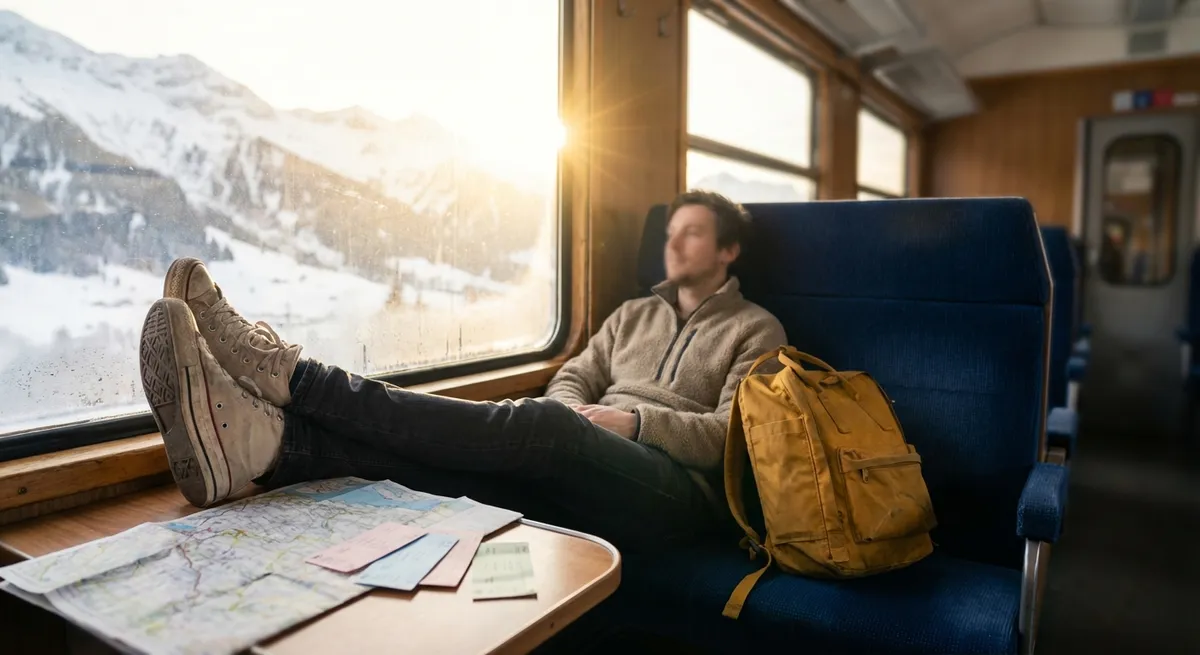
- The scenery helps your brain reset. There’s something weirdly meditative about watching landscapes morph: Bavarian fields → industrial zones → Dutch canals. It made me feel the actual distance between places instead of just teleporting between airports.
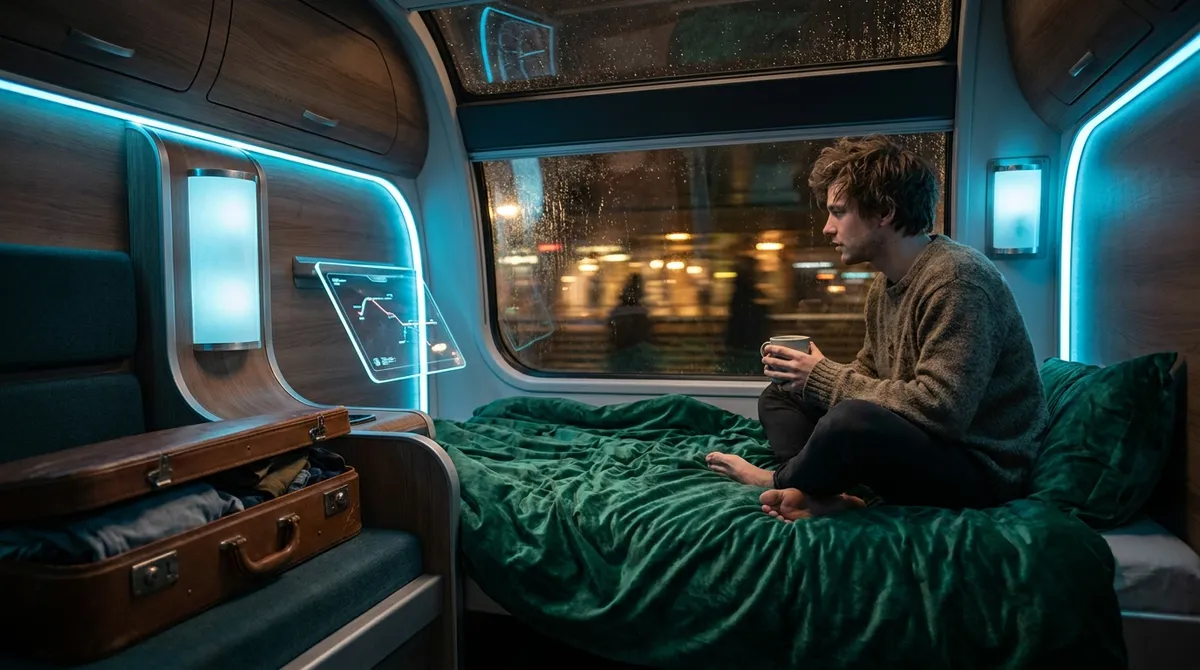
- Night trains are not for everyone. I tested one night train (Milan → Munich). I had a proper sleeper compartment, not a seat, and still: the rocking, the occasional station announcements, the vague paranoia about my bag — it meant I got maybe 4 hours of real sleep. It saved me a night of hotel cost, but I would not stack multiple night trains back-to-back unless you enjoy being a functioning zombie.
The biggest shift was mental. On a plane, I feel like I’m in transit limbo. On a train, I felt like the trip hadn’t paused; it had just slowed down.
That said, there are downsides.
- If timing matters (early check-in, events, tours), rail delays can be real. When I rode in France, my TGV was delayed by 50 minutes because of signalling issues. SNCF was efficient about updates, but my perfectly timed “arrive, metro, check-in, dinner” plan evaporated.
- You’re lugging your stuff. There’s no check-in (which I like), but if your suitcase is heavy and the train is crowded, you’ll get intimate with the overhead racks.
The romance is real — but it’s layered on top of very practical logistics.
The Reality of Train Logistics Nobody Puts in the Instagram Caption
When I was planning, I saw all these gorgeous TikToks of train windows and quiet carriages. What I didn’t see: the panicked dash across a station because your platform changed in a language you barely understand.
A few very real, very unsexy truths from my own trip:
1. Big stations are organized chaos.Paris Gare du Nord, Milano Centrale, Amsterdam Centraal — these are small cities disguised as train stations. When I first arrived at Milan’s station, I spent 10 minutes just figuring out which departures board was for my train.
What helped:
- Arriving 30–40 minutes early for big intercity trains.
- Learning the word for “platform” in each language (binario, voie, Gleis).
- Using apps from the local rail operators (like Deutsche Bahn’s DB Navigator) which often updated platform changes faster than the physical boards.
On one Italian train, my carriage had digital seat displays that actually told you which segments your seat was reserved for (“Reserved from Bologna → Florence”). On another, there were just paper slips above random seats. On a German ICE, my reserved seat was taken by a guy who shrugged and said, “It’s not showing as reserved.” Technically he was wrong, but realistically, I wasn’t about to start a seat war in three languages.
I learned to:
- Screenshot my reservation with wagon number (Wg) and seat number (Platz).
- Board early enough to sort it out calmly, not frantically.
- Be a little flexible and talk to the conductor if something was genuinely off.
On my best day, I had a full hot meal from a dining car, complete with metal cutlery and a decent glass of wine while slicing through the Alps. On my worst day, the bistro was “temporarily closed,” and I was that person eating dry crackers at 3 p.m. like a raccoon.
Expert move: treat train food as a bonus, not a guarantee. I started pre-loading with a station bakery run and refilling my bottle at the station fountains where possible.
4. Accessibility is better, but not perfect.Many European stations and trains have solid accessibility features — elevators, ramps, dedicated spaces — but the reality on the ground can differ. On one leg in Italy, the accessible coach was at the very end of a long platform with less clear signage. On another, an elevator at a German station was out of service, and I watched a family struggle with a stroller and bags.
If accessibility is a priority for you or your travel partner, it’s worth checking operators’ accessibility pages and even calling ahead for assistance — most national railways offer that option.
When Trains Beat Planes… And When They Don’t
After all the experimentation, I noticed clear patterns in when trains absolutely win and when a short flight honestly makes more sense.
Where trains absolutely destroyed planes for me:- City-center to city-center routes under ~7 hours total.
London–Paris, Paris–Amsterdam, Milan–Florence, Munich–Zurich — by the time you factor in airport transfers and check-in, the train usually wins on overall time and definitely on comfort.
- Scenic routes.
Paris → Basel along the Rhine, Milan → Zurich through the Alps, or anything that threads lakes and mountains — these are basically moving viewpoints. Switzerland in particular feels like a country designed by a train lover. The official Swiss Travel System even markets rail as the way to see the country.
- Multi-country trips with luggage.
Being able to board with a big bag, no questions, no extra fees, was a breathing-out moment. No weigh-ins, no panic at the check-in counter.
Where I’d still take a plane next time:- Very long, straight-line hauls.
If I’d tried Barcelona → Berlin in one shot, I’d have been traveling all day and then some. At that distance, unless you break it up into stops you want to see, a 2–3 hour flight is just more practical.
- Ultra-tight schedules.
If I had a conference or wedding where being late wasn’t an option, I’d be more nervous relying on multiple rail connections than a direct flight, especially across borders.
- Price-sensitive one-off hops.
Budget airlines in Europe can be absurdly cheap on specific days. I saw flights selling for less than some seat reservations alone. If your trip is short and simple, those can still make sense — just don’t forget to add luggage and airport transfer costs when comparing.
I also cross-checked my experience with official data later: the International Energy Agency and the European Commission both highlight that, on many intra-European routes, trains are competitive not just on emissions but on actual travel time and convenience — especially under 800–1000 km.² ³
So my gut feeling on the ground wasn’t completely off.
What I’d Do Differently Next Time (So You Don’t Have to Learn the Hard Way)
By the end of the trip, I’d quietly built myself a mental playbook — all the tiny adjustments that took the stress level from “chaotic YouTube vlog” to “easy Instagram story.”
If I were starting over, here’s exactly how I’d plan it:
I’d pick an “anchor route” first, not the cities.
Instead of randomly picking cities and then wrestling the timetable, I’d start with one or two iconic train corridors — like Paris → Zurich → Milan or Amsterdam → Cologne → Munich → Vienna — then build my destinations around those. High-speed and scenic routes are the backbone; everything else is a branch.
I’d commit to fewer bases, more day trips.
Moving between hotels is exhausting. Trains make day trips ridiculously easy. From Florence, I hopped to Bologna for a day. From Munich, I could’ve done Salzburg. It’s cheaper, calmer, and you don’t have to re-pack your bag every 48 hours.
I’d book key reservations early… but leave oxygen in the schedule.
The sweet spot for me:
- Lock in: any Eurostar, TGV, and popular international trains at least a couple of weeks ahead.
- Keep open: shorter regional segments, which can often be decided the night before.
I’d also start a tiny offline system on my phone:
- Screenshots of every reservation (QR code + wagon/seat).
- Offline maps of stations and walking routes to my stay.
- A pinned note with each train’s departure time, platform once known, and backup later trains.
And I’d remind myself that part of the magic is letting the journey feel like part of the destination. The hours staring out of a window at landscapes I can’t name ended up being some of my favorite memories — not just the photos I took at the “must-see” spots.
Conclusion
Going all-in on trains across Europe wasn’t perfectly smooth or hyper-optimized. I got lost in stations, almost boarded the wrong train once in Basel, and ate emergency gummy bears for lunch on a delayed route through Germany.
But it also gave me something air travel hasn’t in a long time: a sense of connection between all the places on the map. I could feel the distance from Paris to Milan as rolling hills, from Milan to Munich as mountains and tunnels, from Munich to Amsterdam as rivers and flat fields and slow, gray skies.
If you’re even a little bit train-curious, building your next Europe trip around rail isn’t just doable — it can be the thing that quietly upgrades your entire experience. Just go in with eyes open, reservations booked, snacks stocked, and a healthy tolerance for the occasional delay.
The Instagram views out the window are real. So is the chaos at platform 12. Both are part of the story — and honestly, that’s what makes it worth sharing.
Sources
- European Environment Agency – Greenhouse gas emissions from transport – Data on emissions from different modes of transport, including rail vs. air
- European Commission – Rail transport in the EU – Overview of rail’s role, advantages, and policy context in European travel
- Eurail Official Site – How Eurail Passes Work – Details on pass types, reservations, and country coverage
- Deutsche Bahn – DB Navigator App & Long-Distance Travel – Information on timetables, reservations, and digital tickets used for cross-border routes
- Swiss Travel System – Scenic Train Routes – Highlights of iconic scenic rail journeys in Switzerland and how they’re structured