I Turned a Dusty Warehouse Into a Cash Machine With One Decision
I used to think “operations” was just corporate code for “boring paperwork.” Then I watched a single change inside a very unglamorous warehouse turn a struggling business into a quiet profit machine. No viral product launch. No massive ad budget. Just better brains behind the boxes.
This is the story of how I stumbled into operations strategy, why “business & industrial” doesn’t have to mean dull, and what actually moves the needle when you’re dealing with forklifts, pallets, and razor-thin margins.
The Day I Realized Our Warehouse Was Leaking Money
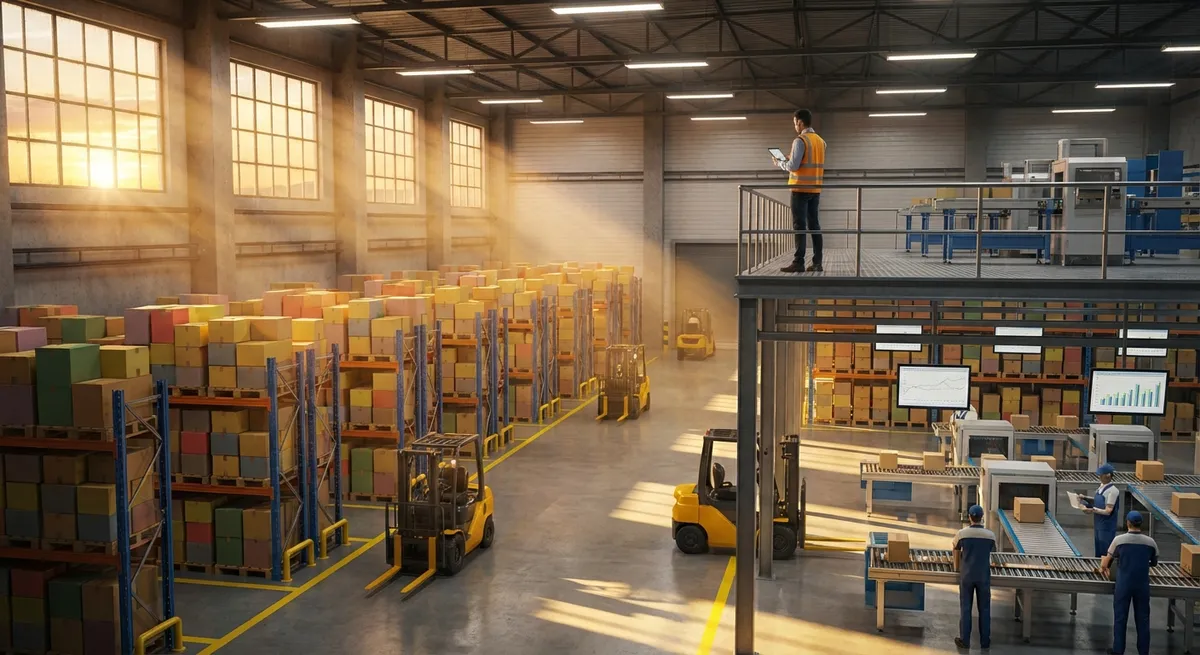
I recently walked into a client’s warehouse and felt like I’d stepped into a live-action game of Tetris that everyone was losing.
Pallets were stacked like Jenga towers. Labels were handwritten and half falling off. Two pickers literally bumped into each other in the same narrow aisle, both looking for the same SKU… that wasn’t where the system said it was.
The owner told me, half joking, “We don’t need more orders, we need less chaos.”
When I tested their process end-to-end—order placed → picked → packed → shipped—I found:
- The average picker walked 7+ miles per shift, mostly backtracking.
- Order accuracy hovered around 93%, which sounds okay… until you realize 7 out of every 100 shipments were wrong.
- “Urgent” orders were handled by yelling across the warehouse. (Yes, really.)
On paper, they were a growing mid-size distributor. On the floor, they were a slow-motion traffic jam with forklifts.
What changed everything wasn’t some fancy AI robot army. It was a single, unsexy decision:
They agreed to treat operations as a strategic function, not a cost center.That mindset shift unlocked everything that came next.
The “Invisible Profit” Hiding In Plain Sight
In my experience, most industrial and B2B companies obsess over sales and treat operations like plumbing: you only notice it when it breaks.
But the math doesn’t care how exciting something feels.
McKinsey has reported that improving operational productivity by just 15% in warehousing and logistics can swing margins by several percentage points in low-margin businesses. That’s the difference between “we’re barely hanging on” and “we can actually invest for growth.”
When we dug into this client’s numbers, here’s what we found:
- Labor made up over 60% of warehouse operating costs.
- Overtime was slowly creeping up month after month, even though order volume was only growing ~5% per quarter.
- Stockouts and wrong shipments were leading to chargebacks from big retail customers—basically silent revenue leaks.
Once we mapped the workflow, it looked exactly like what I’ve seen in dozens of plants and warehouses:
- Over-reliance on tribal knowledge (“Ask Mike, he’s the only one who knows where that is”)
- Legacy systems duct-taped to spreadsheets
- Layouts that made sense five years and three product lines ago
- Management afraid to touch anything because “we’re already behind”
The profit wasn’t in some new product line. It was buried inside:
- Walking distance
- Error rates
- Dead inventory
- Poor slotting (where items are stored)
The best part? Fixing these things doesn’t require a PhD. It requires brutal honesty and a willingness to measure what everyone feels but nobody tracks.
How We Rebuilt the “Back End” Without Burning It All Down
I’m not a fan of overnight revolutions in industrial environments. Every time I’ve seen someone rip-and-replace systems in one shot, the floor staff end up hating it, and the “solution” quietly dies.
So we took a layered approach.
1. We started with a stopwatch, not software
For a week, I shadowed picks and packs like an overly curious ghost:
- Timed common order types
- Counted steps between zones
- Watched how often staff asked for help or double-checked items
One picker joked, “Are you here to replace us with robots?” I told him the truth: “Nope. I’m trying to get you home on time.”
That changed his whole vibe.
When I showed management that some routes had 40–50% wasted walking time, it stopped being “my opinion” and became data they couldn’t ignore.
2. We rearranged the floor like a supermarket, not a storage unit
Most warehouses accidentally evolve into shape. Few are truly designed.
We:
- Moved high-velocity SKUs closer to packing
- Grouped commonly ordered items (based on order history, not guesses)
- Widened a few key aisles to prevent bottlenecks at peak hours
Nothing fancy. No architect. Just practical slotting optimization.
Result within a month: average pick time dropped by 22%. Same people, same equipment, less chaos.
3. We upgraded the brains before the tools
Everyone expects me to say, “We installed a brand-new WMS and the heavens opened.” Not what happened.
First, we cleaned up master data:
- Standardized SKU naming
- Killed duplicate entries
- Fixed unit-of-measure inconsistencies (yes, that boring)
Then we turned on features in their existing WMS they’d literally been paying for and ignoring:
- Directed picking
- Basic wave planning
- Real-time inventory visibility
Only later did we talk about integrating barcode scanners and, eventually, RFID for a subset of high-value items. That was a step three, not step one.
The Surprising Human Side: People Don’t Hate Change, They Hate Bad Change
If there’s one thing industrial leaders underestimate, it’s how personal operations changes feel to the floor.
When you alter layouts, systems, or workflows, people quietly wonder:
- “Is this going to make my job harder?”
- “Are they going to use this data against me?”
- “Is this how they replace us?”
So I’ve learned to do three things early and loudly:
- Explain the “why” in plain English
I told the crew, “If we can ship the same volume with less overtime and fewer screwups, that’s more job security, not less. The big customers don’t tolerate errors forever.”
- Pilot with the toughest skeptics
I picked the grumpiest, most experienced picker for the pilot. If I can win them over, everyone else usually follows. When he shaved minutes off his pick route and saw his own numbers improve, he became my loudest supporter.
- Share the wins, not just the warnings
Every Friday for the first quarter, we posted three numbers in the breakroom:
- Average pick time
- Error rate
- Overtime hours
When they saw overtime actually drop while shipments went up, the energy changed from “another management fad” to “this might actually help.”
There are still trade-offs. One picker told me, “I kinda liked the old chaos. It felt… busy.” I get that. Systems can feel sterile at first. But when people started leaving on time and not getting yelled at for wrong shipments, the nostalgia faded pretty fast.
What Actually Moved the Needle (And What Was Overhyped)
Over a full year, here’s what delivered real ROI vs. what sounded cool but did almost nothing.
High-impact moves
- Slotting optimization
Moving the right items to the right spots did more than any piece of tech we deployed. The National Institute of Standards and Technology (NIST) has case studies showing how layout and workflow design alone can drive major efficiency gains in manufacturing and logistics. It sounds basic because it is—but it works.
- Process standardization
We documented picking, packing, receiving, and put-away like they were core IP. That cut training time for new hires and made performance gaps obvious and fixable.
- Real-time inventory accuracy
Using cycle counts instead of giant, once-a-year physicals kept inventory accuracy north of 98%. That alone reduced emergency “where is this?” hunts that were killing productivity.
Overhyped or lower ROI (for this business)
- Robotics
A vendor tried to sell them AMRs (autonomous mobile robots). Cool demo, terrible fit. Their order volume and layout just didn’t justify it yet. Sometimes a pallet jack and smart layout beat a $200k “innovation” project.
- Over-customized software
At one point, someone suggested building a custom WMS extension. I’ve seen that movie. It ends with the one developer who understands it quitting. We stuck mostly with out-of-the-box features.
- Dashboards nobody reads
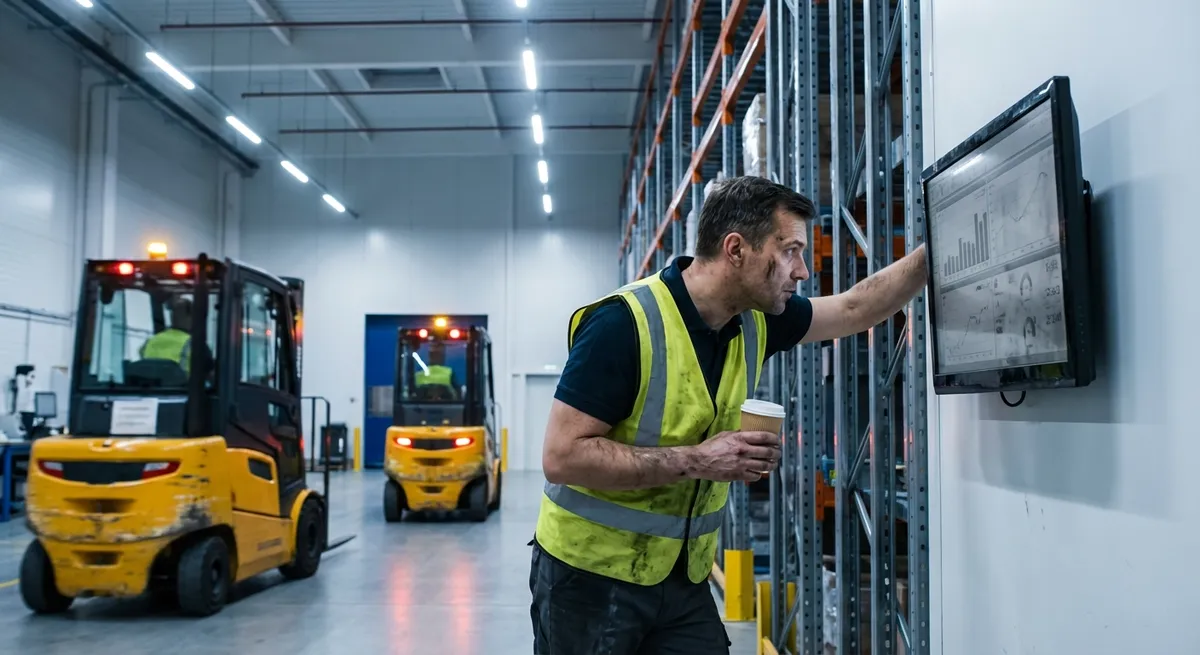
The CEO wanted a giant operations dashboard on a TV. I’ve built those. They look impressive, but unless floor leads actually use them in daily standups, they become expensive wallpaper.
That’s the unsexy reality: execution beats flash.
Why This Matters Way Beyond One Warehouse
Here’s the big picture I wish more founders and leaders in “boring” industries understood:
- Supply chain and operations are now frontline strategy.
The pandemic made that painfully obvious. Companies with resilient, efficient ops weathered disruptions better, full stop.
- Industrial customers quietly care about this.
Big retailers track your OTIF (on-time, in-full) performance. OEMs watch your defect rates. There’s a reason major brands obsess over supplier reliability reports.
- There’s real talent upside.
Younger workers don’t want to spend 10 hours a day in chaos. When I’ve helped modernize operations, recruiting got easier because the work felt more professional and less like a daily fire drill.
Personally, I’ve fallen a bit in love with this side of business. It’s not glamorous, but when you watch a messy operation turn into a calm, humming system, it’s incredibly satisfying.
And the best part? Customers rarely see any of this. They just see faster shipments, fewer errors, and better service. It’s like industrial stage magic.
The Before-and-After Numbers That Sold Everyone
Here’s where that one “we’re going to treat ops as strategic” decision landed after about 12 months:
- Order accuracy: 93% → 99.2%
- Average pick time per order: down ~28%
- Overtime hours: cut by nearly half, even with higher order volume
- Chargebacks from key customers: down over 60%
- Staff turnover in the warehouse: down double digits
Did it fix every problem? Not even close. There are still bottlenecks in receiving. Peak season still gets hairy. But the business is now scaling on purpose instead of by brute force.
And that dusty warehouse? It didn’t become a showroom. It became something better: a predictable, controllable engine for profit.
If you’re in a business or industrial role and your operation feels like that Tetris game I walked into, you don’t need a miracle. You need to:
- Measure the chaos
- Design around reality, not ego
- Upgrade people and processes before you upgrade toys
It’s not as sexy as a viral product launch, but when payroll hits and customers keep renewing, it feels pretty damn good.
Sources
- McKinsey & Company – “Reimagining industrial operations” – Analysis of how operational improvements drive margins and competitive advantage in industrial businesses.
- U.S. Bureau of Labor Statistics – Warehousing and Storage Industry Data – Labor cost, employment, and productivity trends that frame why warehouse efficiency matters so much.
- NIST (National Institute of Standards and Technology) – Manufacturing and Supply Chain Case Studies – Real-world examples of layout, workflow, and process changes improving industrial performance.
- Harvard Business Review – “Operations Strategy: The Quest for Competitive Advantage” – Explores why treating operations as strategic (not just tactical) changes business outcomes.
- MIT Center for Transportation & Logistics – Research on supply chain, warehousing, and logistics innovations that informed the best-practice concepts discussed here.