I Tried Living With an EV for 30 Days in a Gas-Obsessed City
I was that person who swore I’d “wait until the infrastructure catches up” before going electric. Then my friend tossed me the keys to their EV and said, “Just borrow it for a month. You won’t shut up about it after.”
Thirty days later, I still love the rumble of a V6… but I’m also low‑key obsessed with silent launches, instant torque, and never standing in a sketchy gas station parking lot at midnight again.
This isn’t a fanboy review. I tracked my charging costs, messed up my range planning (twice), road-tripped with 7% battery left and my palms sweating, and learned what EV life actually feels like when your city is still 90% gas powered.
Here’s what went surprisingly right—and what genuinely sucked.
Range Anxiety Is Real… for About a Week
When I first took the EV home, the range estimate might as well have been a countdown to my own doom.
I had a 250‑mile EPA-rated EV (similar to a Chevy Bolt EUV). My brain treated that number like a fragile promise: one wrong turn and I’d be stranded behind a strip mall begging for an outlet.
The first week, I drove like I was in a hyper‑miling contest:
- Coasting up to red lights
- Turning off climate control
- Silently judging people who floored it away from stop signs
Then I did the one thing that killed my anxiety almost overnight: I mapped my actual life.
I pulled up Google Maps and highlighted everywhere I regularly go: gym, office, grocery store, my friend’s place, my parents’ house, the climbing gym. The longest round trip? About 60 miles.
Even with errands stacked back to back, I wasn’t cracking 100 miles in a day. That meant, in practice, I was using maybe 40–50% of the battery on “heavy” days.
By week two, I’d stopped staring at the range meter every 90 seconds. It started to feel more like my phone: plug in when I’m home, don’t think about it when I’m not.
That said, when I pushed it on a longer drive (we'll get there), range anxiety came roaring back with a vengeance.
Home Charging Turned Out to Be the Secret Superpower
I’d always heard “charging at home is the real game-changer,” but I didn’t fully get it until I actually lived with it.
I don’t have a fancy Level 2 wall box. I used a regular 120V outlet (Level 1), which is officially the slowest way to charge—like watching paint dry in winter.
Here’s what surprised me: it was still good enough for my normal life.
On Level 1, I was adding roughly 3–5 miles of range per hour plugged in. That sounds terrible… until you remember your car is sitting for 10–12 hours while you sleep.
So if I came home with 120 miles of range left and plugged in overnight, I’d wake up to 180–190. For my routine, that was almost always plenty.
It changed my mental model from “refueling” to “topping up.” I wasn’t driving to a station, standing there while it filled, and leaving. The “refuel” part just… disappeared into the background of my day.
Where home charging really wins:
- Convenience: No gas station detours. No “I’ll do it in the morning” panic. It’s just there.
- Cost: My local residential electricity rate hovers around $0.15/kWh. Over the month, I averaged about 3.5 miles per kWh, which means ~4.3 cents per mile. My gas car (about 28 mpg, $3.60/gal) costs roughly 12.8 cents per mile. That’s nearly 3x more per mile for gas.
- Time: Plug in, walk away. The “waiting” happens while I’m asleep or watching YouTube.
Where it loses:
- If you’re doing unexpected long drives back-to-back, Level 1 can’t catch up. One evening, I did an airport run, late dinner, and then another emergency pick-up. I woke up with less than I wanted and had to spend time at a fast charger anyway.
After this month, I get why EV owners fight to keep their garage or assigned parking spot. Home charging is the killer feature—if you can actually get it.
Public Charging: When It Works, It’s Magic. When It Doesn’t, It’s Chaos.
Let me tell you about the night I almost decided EVs “aren’t ready yet.”
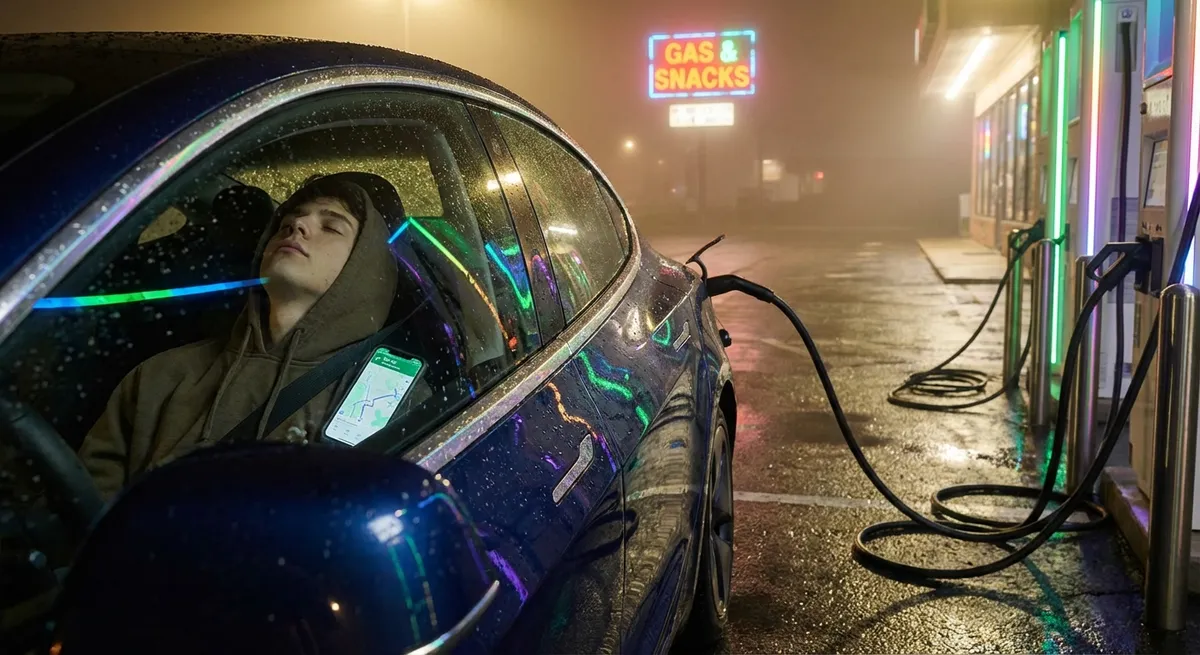
Saturday. Late. I’d misjudged my day and rolled into the city with 19% battery. No problem, I thought—there’s a DC fast charger location four miles away.
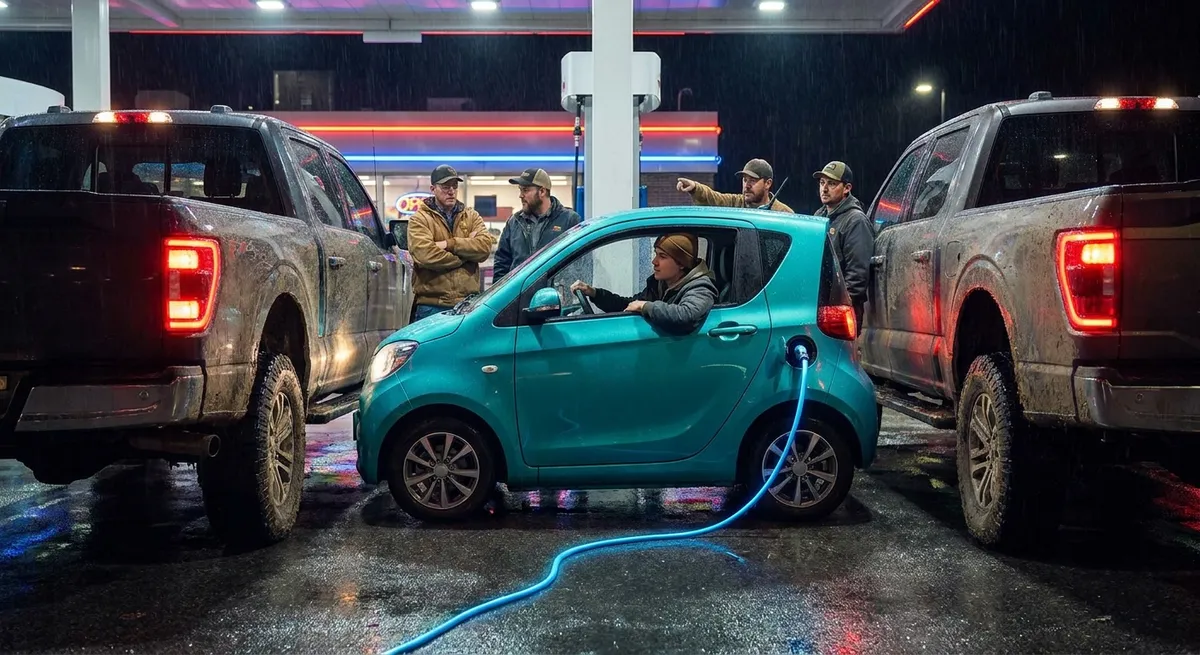
I get there: one station is offline, one has a car that’s clearly been “finished charging” for 40 minutes (no owner in sight), and the last one is crawling at way below its advertised speed.
I plug in. The session fails. I replug. It starts. Then dies at 4%. The app crashes. I stand there, under harsh parking lot lights, while the wind aggressively reminds me that I could be in bed right now.
Eventually, I got a different stall working and charged up enough to get home. But the whole thing felt like using public Wi‑Fi in 2007: works great when it works, deeply annoying when it doesn’t.
On the flip side, fast charging at a well-maintained station is honestly kind of glorious.
On a weekday road-test, I stopped at a 150 kW DC fast charger with 22% battery, grabbed a coffee, opened my laptop. In about 25 minutes, I went from 22% to 78%—more than enough to finish my day. I spent less time “fueling” than I normally waste staring at my phone in a gas station line.
What I learned:
- Networks matter a lot. In my city, some brands’ stations were consistently better maintained and more reliable than others.
- Apps are required homework. Before I relied on any charging network, I downloaded their app, set up payment, and tested at least one session during the day when I wasn’t desperate.
- Urban charging can feel like the Wild West. Stations can be blocked, broken, or slower than advertised. If your life is all apartments and street parking, EV ownership is still doable—but requires more planning than “I’ll just charge somewhere.”
I get why Tesla’s Supercharger network gets so much praise. When charging is seamless, the whole experience feels like the future. When it’s not, you feel like a beta tester in a half-finished rollout.
Road Trip Reality: The 7% Battery Moment
About halfway through the month, I decided to test what everyone online swears is “fine now”: a proper highway trip in an EV with under 300 miles of range.
I planned a 210‑mile round trip to visit a friend. There was a DC fast charger almost exactly at the halfway mark. I preconditioned the battery (the car warmed it for optimal charging), set off, and felt very smug.
The drive out? Flawless. Charged from 32% to 80% while I ate a burrito and scrolled Instagram. No stress.
The drive back? Completely my fault—and completely terrifying.
I decided to “push it” and skip my planned stop, assuming I’d arrive home with ~5–8% battery. Then:
- A detour due to construction
- Strong headwinds
- Me driving faster than the efficient sweet spot
Suddenly I’m watching the projected range drop faster than the miles left. The car starts politely suggesting nearby chargers like, “Hey buddy, maybe don’t be stupid?” I ignore it. Because of course I do.
At 14% battery, the “relax, you’re fine” feeling evaporated. Every mile after that felt like the battery percentage was personally attacking my life choices.
I eventually limped into a DC fast charger with 7% left, absolutely drenched in adrenaline for no good reason.
Here’s the weird thing: I still got home. I was never actually stranded. The car gave me plenty of warnings. My range prediction app wasn’t wrong; I’d just ignored all of it because I wanted to “see how far it could go.”
So, road trips with an EV?
- Totally doable with planning.
- Not as carefree as a gas car where you can miss three exits and still be fine.
- Weirdly fun in a nerdy “optimizing my energy use” way… if you respect the limits.
Would I take this specific EV on a 1,000‑mile drive? Only if I liked planning and didn’t mind building my day around a couple of 30–40 minute stops. For some people, that’s a hard no. For me, it’s a “sometimes, yeah.”
Performance and Daily Driving: The Part That Hooked Me
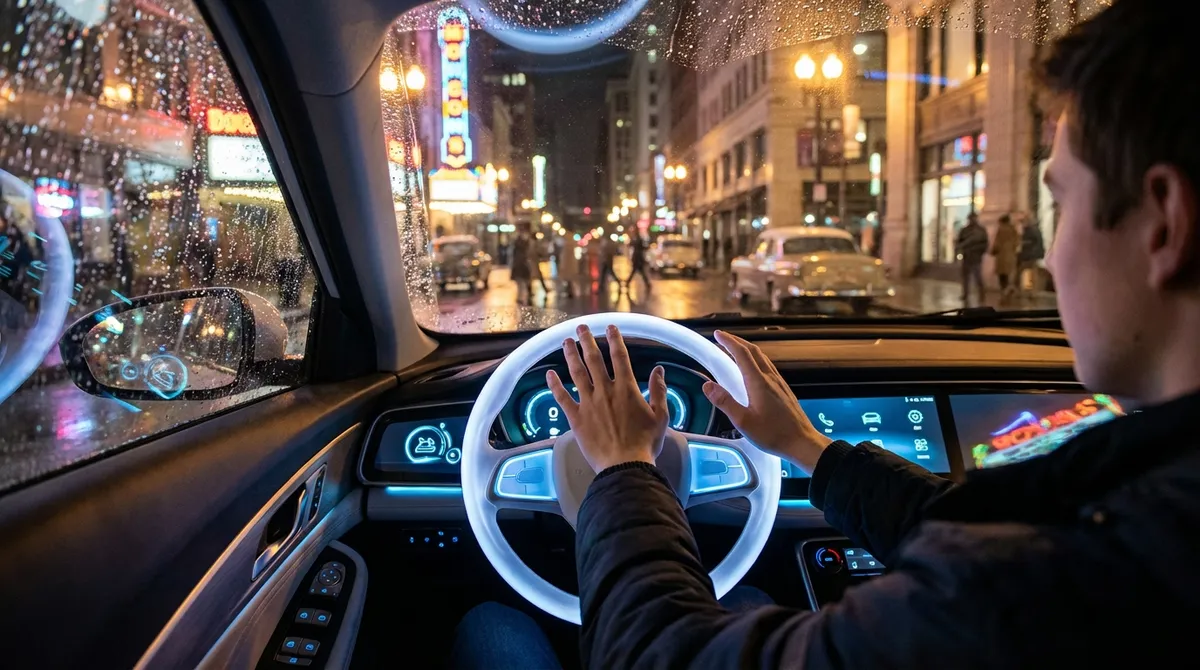
Let’s talk about the thing that surprised me the most: EVs are genuinely addictive to drive.
I’m used to that slight delay in gas cars—press pedal, engine revs, gears shuffle, then power. EVs just… go.
Merging onto the highway felt like being quietly launched. No drama, no noise, just immediate torque. You don’t need a 3‑second 0–60 monster to feel it; even modest EVs feel punchy around town.
Stuff that won me over fast:
- One-pedal driving: I set the regenerative braking to max and basically never touched the brake pedal in city traffic. Lift off the accelerator, the car slows and recaptures energy. It’s oddly satisfying—and kind of turns rush hour into a video game.
- Silence: At first, it felt eerie. Then it felt luxurious. I could hear my podcasts at low volume. Conversations didn’t have to fight engine noise. My brain felt less… buzzy after long drives.
- Stop-and-go traffic: EV + instant torque + no gears hunting = traffic is still annoying, but it’s physically less exhausting.
There are downsides:
- At high sustained highway speeds, efficiency drops more dramatically than in a gas car. Pushing 75–80 mph on my test route noticeably reduced range.
- The quiet cabin means annoying sounds (rattles, cheap plastics, unfinished roads) stand out more.
- If you love engine sound as part of the whole experience, EVs can feel a bit sterile.
Still, every time I went back to my gas car that month, it felt… old. Like switching from a modern smartphone back to a perfectly functional flip phone. It still works. But it’s not the same.
The Money Question: Did I Actually Save Anything?
I tracked every mile and every kWh as best I could. Here’s how it shook out for my 30‑day test.
My numbers (rounded):- Total driven: ~1,050 miles
- Average energy use: ~3.5 miles per kWh
- Energy required: ~300 kWh (roughly)
- Home electricity cost: ~$0.15 per kWh
- Public DC fast charging blended cost: ~ $0.32 per kWh (varied by network)
I did roughly 70% of my charging at home, 30% at fast chargers.
Estimated monthly “fuel” cost for the EV:- Home: 210 kWh × $0.15 = $31.50
- Public: 90 kWh × $0.32 ≈ $28.80
Total ≈ $60.30 for the month.
Same mileage in my gas car:- 1,050 miles / 28 mpg ≈ 37.5 gallons
- 37.5 gallons × $3.60/gal ≈ $135
So honestly, I nearly halved my “fuel” cost even with a decent chunk of (more expensive) fast charging thrown in.
Of course, money isn’t that simple:
- Upfront cost: Many EVs still carry a higher sticker price than comparable gas cars. Incentives (like the U.S. federal tax credit up to $7,500) help, but not everyone qualifies.
- Home charger install: A Level 2 charger can cost $500–$1,500 installed, depending on your home’s electrical setup.
- Battery longevity: Modern EV batteries are holding up far better than people feared a decade ago, but long-term replacement cost is still a concern, even if many cars have 8–10 year warranties on the pack.
For my use case—moderate monthly miles, stable home, reliable access to charging—an EV would absolutely make financial sense over several years. If I moved constantly, rented without guaranteed parking, or drove 400+ miles in single days often? Way more complicated.
The Stuff Nobody Told Me (But I Found Out the Hard Way)
Over 30 days, a few weird little realities popped up that I hadn’t seen in shiny EV ads:
- Cold weather is a battery bully. On two unusually chilly mornings, my range estimate dropped by about 10–15% and the car warned me that regenerative braking would be limited until the battery warmed up. Still drivable, but the difference was obvious.
- Preconditioning is gold. Heating or cooling the cabin while the car’s still plugged in (using grid power, not the battery) is a game-changer. Getting into a toasty or cooled car without killing range felt like cheating.
- You become obsessively aware of energy. I started noticing how much hills, speed, cargo weight, and even wind affected range. It’s like the car turns your driving style into a live experiment.
- Friends will absolutely ask for silent launches. Every new passenger: “Floor it. I wanna feel it.” You will indulge them. Every time.
- You have to trust the car more. A gas gauge is vague, but we’ve lived with it forever. An EV’s predicted range is more detailed—but also reacts more dramatically to how you drive. You learn to trust the average, not the last five minutes.
Would I Actually Switch? Here’s My Honest Take
By the end of my 30‑day EV experiment, my opinion had gone from “I’ll wait a few more years” to “I could absolutely daily one of these right now—with caveats.”
I’d go electric tomorrow if:
- I have consistent access to a private or assigned parking spot with at least Level 1 charging, ideally Level 2.
- Most of my driving is under 150 miles a day.
- I’m okay planning out long road trips and building in 30–40 minute charging stops.
- I value quiet, smooth driving and lower operating costs more than I value engine noise.
I’d hesitate or say not yet if:
- I street-park full-time in a city with sparse, unreliable public chargers.
- I regularly drive long distances in rural areas with few DC fast chargers.
- I need to tow heavy loads or haul gear way beyond what most EVs are currently optimized for.
- I hate planning and want to improvise long drives with zero thought.
The biggest shift wasn’t technical—it was psychological. Once I stopped thinking of the car like a gas vehicle with a “weird refueling problem” and more like a smartphone I plug in when I’m home, the whole concept clicked.
So no, I’m not selling my gas car tomorrow. But the “someday EV” in my head just quietly moved from “maybe in 10 years” to “probably my next car.”
And honestly? That might be the most dangerous part of this experiment. Because now every time I hear an engine idling aggressively in traffic, a tiny part of me thinks:
You’re burning money and making noise. I could’ve done this whole drive in silence.
Sources
- U.S. Department of Energy – Fuel Economy: All-Electric Vehicles – Explains EV energy use, charging levels, and efficiency basics
- U.S. Energy Information Administration – Average Retail Price of Electricity – Provides current and historical U.S. residential electricity prices
- Alternative Fuels Data Center – Developing Infrastructure to Charge Plug-In Electric Vehicles – Breakdown of public and private EV charging infrastructure and considerations
- Consumer Reports – Electric Vehicle Ownership Costs: Today’s Electric Vehicles Offer Big Savings for Consumers – Analysis of EV vs. gas car operating costs and long-term savings
- International Council on Clean Transportation – Electric vehicle capitals: What markets are leading the transition to electric? – Data-driven look at where EV adoption and charging ecosystems are working best