I Daily-Drive an EV With No Home Charger: What Nobody Tells You
When I bought my first electric car, the dealer asked, “So where’s your home charger going?” I smiled, nodded…and quietly panicked because I live in a city apartment with zero off-street parking. No driveway. No garage. Just a curb, some pigeons, and a lot of wishful thinking.
Everyone online seemed to assume you already had a Level 2 charger in your garage. But I didn’t. And I still wanted an EV.
So I did it anyway.
After a year of daily-driving an EV with no home charger—through winter cold snaps, road trips, and a couple of “uh oh, 4% battery” moments—I’ve figured out what actually works, what’s annoying, and where the real dealbreakers are. If you’re EV-curious but charger-less, this is the behind-the-scenes version no glossy brochure gives you.
How I Survive on Public Charging (Without Making It a Full-Time Job)
When I signed the paperwork, my biggest fear wasn’t range anxiety—it was charging anxiety. I had this mental image of spending hours lurking in parking lots like a phone desperately hunting for an outlet.
The reality turned out weirder and, honestly, much more manageable.
I started by mapping my life around chargers I already passed: the grocery store, my gym, a nearby mall, and one glorious DC fast charger behind a random hotel. I used apps like PlugShare and A Better Routeplanner to scout which stations actually worked, which were flaky, and which were permanently “ICE’d” (blocked by gas cars).
Pretty quickly, I realized something: most of my “charging time” wasn’t extra time. I was already in the grocery store for 40 minutes. I was already at the gym for an hour. I just plugged in and let electrons do their thing while I did mine.
For my normal workweek, here’s what actually happens:
- I top up once or twice on Level 2 chargers (the slower ones) while doing errands.
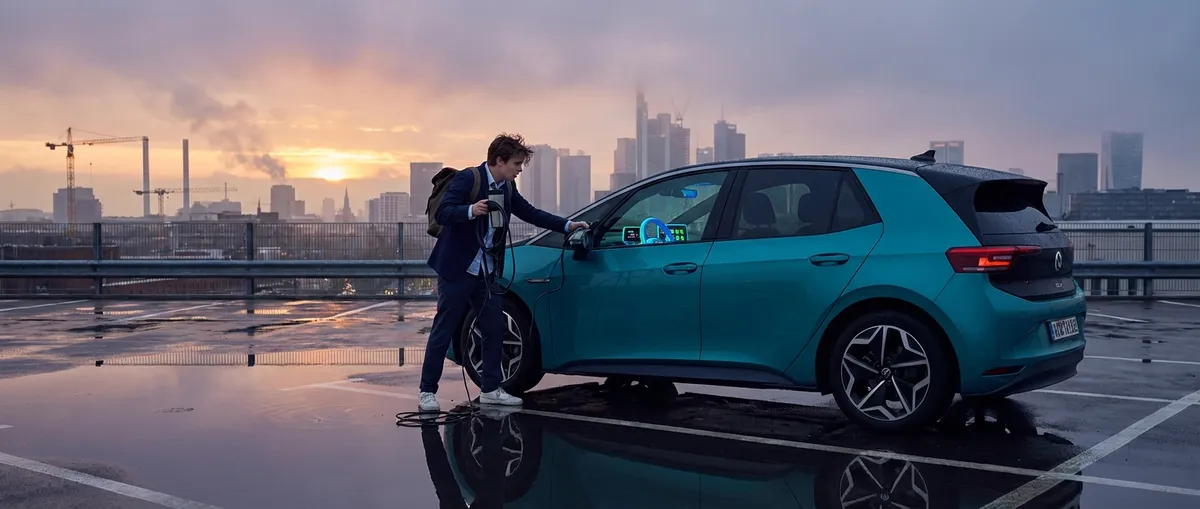
- Every week or two, I hit a DC fast charger (the turbo ones) for a bigger boost—usually while answering emails in the car with a coffee.
On an average week, I probably spend 45–60 minutes thinking about charging. That’s it. When I used to own a gas car, I spent 15–20 minutes a week at gas stations anyway, plus the random “oh no, I’m on empty” dashes. So the time trade-off wasn’t as dramatic as I feared.
There are annoying moments. I’ve had:
- Chargers that looked fine in the app but were actually dead.
- Stations blocked by cars that finished charging but never moved.
- A night where I drove to three chargers in the rain because the first two were offline.
But once I learned which spots were reliable (and which brands consistently worked), my charging anxiety cooled way down.
The Real Math: Does This Actually Make Sense Without Home Charging?
When I tested this lifestyle, I promised myself I’d bail if it turned into a part-time job. So I paid attention to the numbers—time, money, and headaches.
Financially, public charging was the wild card. At home, electricity is cheap. On the road, prices range from “wow, that’s a steal” to “uh, this is basically premium gas in disguise.”
In my experience:
- Level 2 public chargers (like those at malls or office parks) tend to be affordable, sometimes even free for a couple of hours. I’ve seen rates around $0.15–$0.30 per kWh in my area.
- DC fast chargers can be pricey. I’ve paid close to $0.45–$0.55 per kWh on peak days. On certain networks, that made one of my road-trip sessions feel almost like a gas fill-up in cost.
To see whether the economics still worked, I compared:
- My old gas car: ~27 mpg, with gas hovering around $3.50–$4.00 per gallon.
- My EV: roughly 3–3.5 miles per kWh.
On cheap or moderately priced Level 2 charging, the cost-per-mile was definitely lower than gas. Even on the expensive DC fast charging days, it was usually in the same ballpark as a fuel-efficient gas car, just not dramatically cheaper.
The surprise winner for me was maintenance. No oil changes, no exhaust system, no timing belts, fewer moving parts in general. According to the U.S. Department of Energy, EVs typically have lower maintenance costs than gasoline vehicles because of simpler drivetrains and reduced wear on brakes due to regenerative braking. Over months, that difference is very real when you stop dropping $80–$120 at the shop every few months.
Where it doesn’t make sense is if:
- Your city has almost no reliable chargers.
- Public rates are very high and you drive a lot of highway miles.
- You’re already driving a super-efficient hybrid that sips fuel.
In those cases, the money side might not wow you enough to justify the extra friction of hunting for chargers.
Daily Life Hacks: How I Stopped Worrying About Range All the Time
I used to obsess about range numbers like I was monitoring a medical device. Over time, I relaxed—and I picked up a bunch of little tricks that make EV life without home charging way easier.
The single biggest mindset shift was this: stop thinking “full to empty,” start thinking “top up often.”
When I tried running my battery down low and then doing big, dramatic fast-charging sessions, I stressed myself out and paid more. Now I treat charging like topping up my phone:
- If I see a charger and I’ve got 40 minutes anyway? I plug in.
- I rarely let the car dip below 20% unless I’m on a road trip.
- I almost never bother going all the way to 100%. I’ll usually unplug around 80–90%, because it’s faster and better for battery health.
Speaking of battery health, I went full nerd on this. Most EV makers recommend avoiding constantly fast charging to 100% or letting the battery sit at 0–5% for long stretches. A study from Recurrent and various manufacturer guidelines all point to moderate charging habits extending battery life, especially avoiding extreme highs and lows.
A few practical things that helped:
- Preconditioning in winter: If you can, preheat the cabin while plugged in. In cold weather, EV range can drop significantly—Consumer Reports saw cold-weather dips of 25–50% depending on the model. I’ve definitely felt that punch in the face on below-freezing mornings. Warming the car while charging means you waste less battery on heating when you drive.
- Using eco mode more than my pride wants to admit: The car dials down acceleration and HVAC aggressiveness. It’s less “sci‑fi rocket” and more “very competent appliance,” but my range shoots up.
- Learning my real range, not the marketing number: If the sticker says 270 miles, I assume 200–220 on the highway, less in winter. Once I accepted that number as my “real” range, the stress faded.
The truth is, range anxiety mostly lives in your head. Once you’ve survived your first “oh no, I’m at 8%” scare and figured it out, your brain rewires a bit. You stop thinking “What if I run out?” and start thinking “Okay, where’s my next top-up?”
The Awkward Stuff Nobody Glamorizes
There are parts of this life that EV fanboys gloss over and EV haters scream about. Reality’s in the messy middle.
What actually sucks, in my experience:
- Charger reliability is…not great. The National Renewable Energy Laboratory reported that a notable share of public chargers are nonfunctional at any given time. I feel that. I’ve rolled up to broken screens, error codes, and stations half-wrapped in caution tape.
- Charging etiquette can be infuriating. People hog stalls after their session ends. Some treat EV-only spots as regular parking. I’ve had to decide whether to leave a passive-aggressive note or just seethe quietly while doing laps.
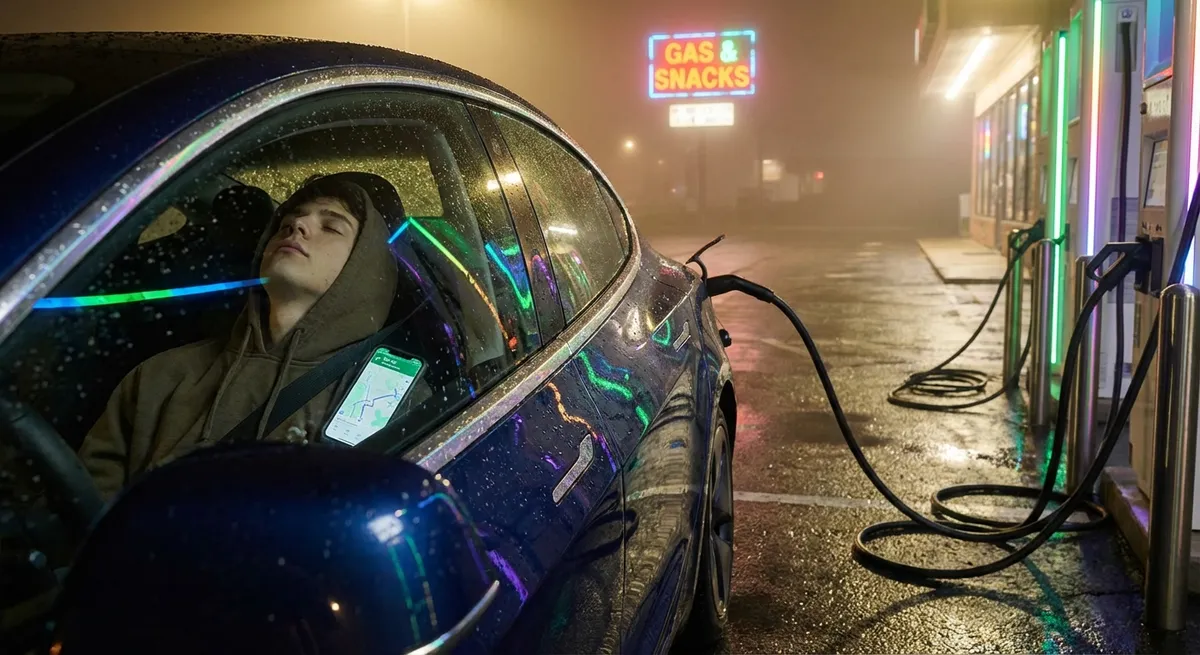
- Night charging can feel sketchy. A few DC fast chargers near me are in poorly lit corners of parking lots. If you’re alone and it’s late, it can feel uncomfortable hanging out in a parked car for half an hour.
But there are also upsides nobody talks about enough:
- Never standing in the cold at a gas pump again. I still get a petty thrill driving past gas lines.
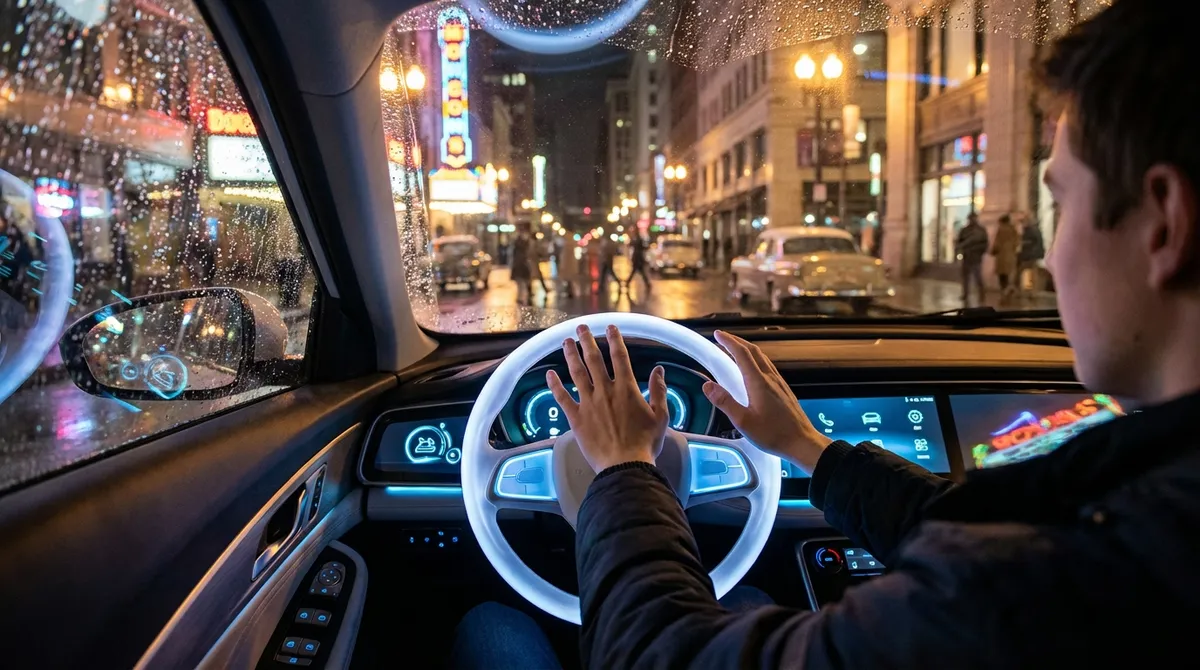
- The car is weirdly relaxing. Instant torque is fun, but the real magic is the quiet. No engine rumble, no gear hunting. It feels like driving future tech, even when I’m just going to Target.
- Stopping becomes intentional. On road trips, instead of “drive until I’m numb, then fill up,” it’s “every few hours, stretch, pee, grab a snack while charging.” Those 20–30 minute pauses have made me less exhausted, even if the trip clocks in a bit longer.
The biggest non-obvious downside: you lose spontaneity. With a gas car, if a friend says, “Hey, let’s drive two hours to the beach right now,” you just go. With an EV and no home charger, my brain instantly pops up a mental checklist: Do I have enough charge? Is there a fast charger near the beach? What’s the plan if that station is full?
The adventure is still there—you just do a bit more pre-calculating than before.
Who Should Actually Do This (And Who Shouldn’t Touch It Yet)
After living this way for over a year, I’ve realized this lifestyle fits certain people perfectly…and will absolutely drive others insane.
You’re probably a good match if:
- You mostly drive in a metro area with solid public charging.
- You like planning a bit and don’t mind using apps for your life logistics.
- You’re already the type who charges your phone before it hits 1%.
- You want lower maintenance and enjoy the vibe of quiet, smooth acceleration.
You might hate it if:
- Your area has spotty or unreliable chargers—and you know this from experience, not maps.
- You regularly do last-second long drives with no time to plan.
- You already feel drained by errand logistics and mental load.
- You’re sensitive to uncertainty; a glitchy station will ruin your whole day.
Personally, I haven’t regretted the switch once. I’ve cursed at charger errors, sure. I’ve sat in parking lots watching the kW number like it’s a heart monitor. But overall, my fuel and maintenance costs dropped, my drives feel calmer, and I weirdly like the ritual of plugging in instead of pumping fuel.
Would I love a home charger someday? Absolutely. That would turn a “works fine” experience into a “this is stupidly convenient” one. But the idea that you must have a garage charger to own an EV is just not true anymore—at least not where I live.
If you’re EV-curious and charger-less, the real question isn’t “Is this possible?” It is.
The real question is: Are you okay turning your car into something you manage a little more…like your phone, and a little less…like your toaster?
For me, that trade has been worth it.
Conclusion
I went into EV life without a home charger expecting chaos, constant stress, and way too much “battery babysitting.” What I got instead was a new rhythm: topping up while I shop, planning charging stops into my road-trip snack breaks, and learning which stations are my ride-or-dies.
It’s not friction-free. Public chargers break. People are inconsiderate. Winter slaps your range around. But once you know your routes, your reliable stations, and your personal comfort zone for low battery, the drama mostly fades into the background.
If you’re on the fence, don’t just scroll reviews—borrow or rent an EV for a week and live how you actually live: go to work, run errands, see friends, all without a home plug. That test run told me more than any spec sheet ever could.
I thought not having a garage would lock me out of the EV world. Turns out, it just made me learn the game a little faster.
Sources
- U.S. Department of Energy – Electric Vehicle Benefits and Considerations – Overview of EV maintenance, operating costs, and practical pros and cons
- Consumer Reports – Electric Vehicle Cold Weather Testing – Data on how cold temperatures impact EV range and performance
- National Renewable Energy Laboratory – Evaluating Electric Vehicle Charging Station Performance – Research on public charger reliability and uptime
- A Better Routeplanner (ABRP) – Widely used EV route-planning tool that factors in charging stops, speeds, and weather
- PlugShare – Crowdsourced global map of EV charging stations with user reviews, photos, and reliability reports