
I Swapped My Daily Commute for an EV: What Nobody Told Me Before I Plugged In
The first time I parallel parked and then literally plugged in my car at the curb, a guy walking his dog stopped and just stared. “So you… charge that like a phone?” he asked. Honestly, that’s exactly what it felt like.
When I recently ditched my gas car for an electric vehicle as my daily driver, I thought I knew what I was signing up for: lower fuel costs, quiet ride, no more gas station smell on my hands. What I actually got was a crash course in battery anxiety, charging etiquette, weirdly addictive instant torque—and a whole new way of thinking about driving.
This isn’t a fanboy EV love letter or a “never again” rant. It’s the real-life stuff I wish someone had told me before I made the switch.
The First Week: Range Anxiety Is Real (But It Mutates, Fast)
The first few days with my EV felt like I’d been handed a very expensive smartphone stuck at 23% battery—permanently.
I kept staring at the range estimate like it was a heart monitor. When I tested my normal commute—about 38 miles round trip—I did the math 20 times: “EPA says 270 miles… so I’m totally fine… right?” Then I cranked the heater, watched the projected range drop, and panicked all over again.
What I learned quickly:
- The number on the dash is an estimate, not a promise. Weather, speed, hills, and how aggressively you accelerate all mess with it.
- Highway miles drain faster than chill city driving. At 75 mph, my car’s “270-mile range” looked more like 210–220 in winter.
- Regenerative braking is sneaky powerful. In stop-and-go traffic, I was gaining back miles I’d “lost” on the highway.
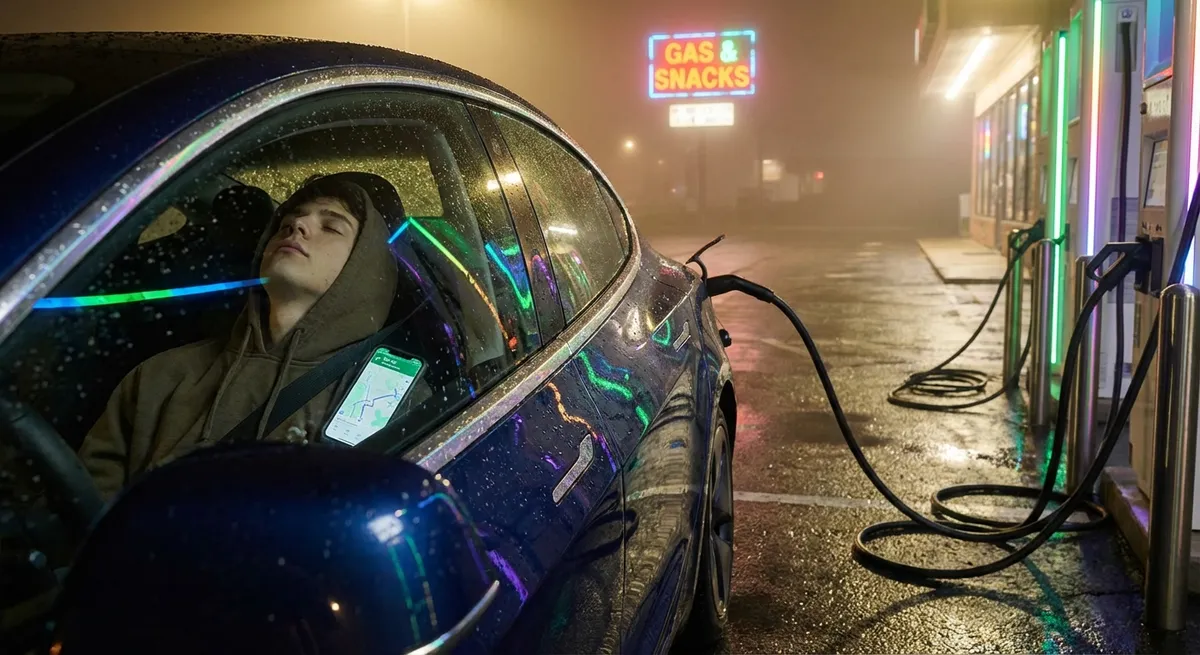
One cold, rainy night, I pushed it too far. I rolled into a DC fast charger with 7% battery, sweating like I’d just hypermiled across a desert. That was the moment I realized the stress wasn’t really about the battery—it was about trust. Within about two weeks, I’d mentally shifted from “I need 200+ miles to feel safe” to “Eh, I’ll plug in tonight, I’ve got 40% left.”
Range anxiety doesn’t exactly disappear. It just evolves into something way more manageable, like how you learn—eventually—not to freak out when your phone hits 30%.
Living With Charging: It’s Not Like a Gas Station (And That’s the Point)
When I tell people I drive an EV, the first question I get is: “But where do you charge?”
My answer: Mostly at home… sometimes very awkwardly in public.
At home, it’s ridiculously easy. I started with the basic Level 1 charger that came with the car (just a fancy cable in a regular outlet). It added about 3–5 miles of range per hour, which sounds pathetic… until you realize my car’s parked for 10–12 hours every night. That’s plenty for commuting if you’re not road-tripping daily.
When I upgraded to a Level 2 charger (240V), everything changed. I tested a few weeks of “charge every other night” and averaged about 25–30 miles of range added per hour. That meant I could plug in after dinner, wake up to a “full tank,” and never think about it. It felt like my house quietly turned into a private gas station that only charges while I’m sleeping.
Public charging, though? Whole different beast.
At DC fast chargers, I’ve met:
- The guy parked at 90% still “just topping off” while scrolling TikTok
- The road-tripper panicking because the next charger is 100 miles away
- The unbothered EV veteran casually planning lunch while their car jumps from 15% to 80% in 25 minutes
When I tested a 500-mile weekend trip, I realized public charging is all about planning your stops instead of reacting to a low tank. I used apps like PlugShare and the in-car navigation to line up chargers near food or coffee. It felt less like “Ugh, I have to stop for fuel” and more like “OK, forced stretch break, let’s move.”
Is it as fast as a gas fill-up? No. But weirdly, my stress dropped, because refueling became part of the rhythm of the trip—not an emergency event at 1/8 of a tank.
Cost Reality Check: Where the EV Math Actually Works (And Where It Doesn’t)
Before I pulled the trigger, I sat down with a spreadsheet like I was about to buy a small business. I compared gas vs. electric using my real mileage and local prices.
In my area, residential electricity is roughly $0.15 per kWh. My car averages about 3.5 miles per kWh. That’s around 4–5 cents per mile. My old gas car? It averaged 27 mpg, and gas hovered around $3.50/gal—about 13 cents per mile.
So for me, fuel cost per mile got chopped by more than half.
But here’s the nuance that doesn’t show up in viral posts:
- Upfront price: A lot of EVs still cost more than equivalent gas cars—unless you snag federal or state incentives. I used the U.S. Department of Energy’s site to check and confirmed I qualified for a federal tax credit, which made the numbers way more reasonable.
- Public DC fast charging is not “cheap electricity.” Some networks charge per kWh, some per minute. On a long trip using only fast chargers, my “fuel” cost was closer to 9–11 cents per mile—still usually less than gas, but not a slam dunk.
- Maintenance is cheaper, but not zero. No oil changes is awesome. But when I priced out new tires rated for the weight and torque of an EV? That was a spicy line item.
Over the first year, I’ve watched my fuel and maintenance costs drop enough that the higher sticker price made more sense. But if you do mostly short drives and have a super fuel-efficient hybrid already, the financial “win” might be smaller than the YouTube thumbnails suggest.
Under the Hood (Kinda): What Actually Feels Different to Drive
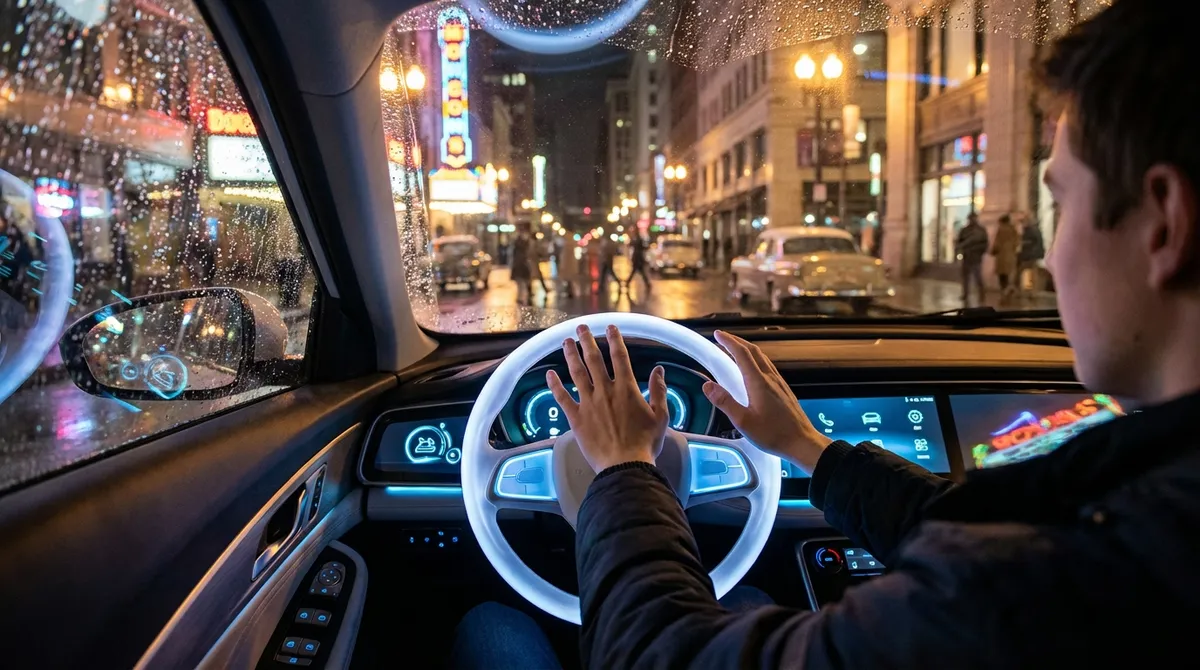
The first time I floored it from a stoplight, I laughed out loud alone in the car. Instant torque is not a meme; it’s very, very real.
In my experience, the biggest everyday driving differences aren’t just “it’s quiet” (it is) or “it’s fast” (also yes). It’s the smoothness and control:
- The single-speed transmission means no gear hunting, no jerky downshifts—just one long, linear surge.
- Regenerative braking changes how you drive. I switched to one-pedal driving mode and needed a few days to stop over-braking. Now, feathering the accelerator to slow down while recapturing energy feels strangely satisfying.
- There’s way less mechanical drama. No engine vibration at idle, no exhaust note, no transmission clunks. It’s almost too calm, especially at low speeds.
But that calm can be a safety issue. Twice, pedestrians stepped out assuming no car was around because they didn’t hear one. My EV does have a low-speed artificial noise, but it’s subtle. I’ve had to be hyper-aware in parking lots and dense neighborhoods.
Handling-wise, the low battery pack means a low center of gravity. On a twisty road I regularly drive, the same corner that had my old car leaning and protesting now feels locked in and planted. The weight is real—you feel it over potholes—but the balance offsets a lot of that.
The downside? Long, steep descents with a fully charged battery are awkward. Regenerative braking can’t dump energy into a full pack, so you’re back to old-school friction brakes. The first time I experienced that, I wondered for a split second if something “broke” before I remembered, “Oh right, physics.”
The Stuff EV Fans Don’t Tweet About
Let me be honest about the annoying parts—the ones I didn’t fully appreciate until I lived with the car.
1. Winter range hits harder than you think.On a 28°F morning, I watched my projected range drop 15–20% before I even got to work. Battery chemistry doesn’t love cold; cabin heat is a big energy hog. Preconditioning (warming the car while plugged in) helps a ton, but it’s one more thing to remember.
2. Public charging reliability is… inconsistent.On one road trip, I rolled up to a station with four DC fast chargers. One was out of order. One wouldn’t start a session. Another cut out halfway. I ended up moving stalls like I was speed dating. Networks are improving, but “just charge anywhere” is not the current reality in lots of regions.
3. Towing and rooftop boxes are range killers.I tested a weekend with a loaded roof box. My efficiency tanked by about 25–30%. If you’re dreaming of EV life with constant towing, you’ll be planning charges a lot more carefully—at least with most current models.
4. Apartment and street parkers are still getting the short end.I’m lucky enough to have a driveway. Friends of mine who rely on street parking are stuck juggling public L2 chargers, workplace charging, and the occasional fast-charge run. Until cities either run curbside power or mandate charging in more residential buildings, this is a real barrier.
None of these are deal-breakers for me—but they’re real-world friction points that shiny ads rarely show.
Why I’m Still Glad I Switched (Even With the Weirdness)
After living with an EV as my only car, I’ve noticed a subtle but huge shift: I think about “fuel” way less often, even though I’m more aware of energy than ever.
I love waking up to a “full tank” without detouring to a gas station. I like that my brake pads will probably last ages because regen does most of the work. I appreciate the quiet on early drives when my brain isn’t ready for chaos yet.
I’ve also had more random sidewalk conversations with strangers in the last year than in a decade of gas-car ownership. People want to know: Does it really save money? How far can you go? What happens if the battery dies? There’s still curiosity—borderline suspicion—baked into every question.
My honest answer now goes something like this:
If you road-trip 40,000 miles a year in wild, rural areas with sketchy infrastructure? Maybe not your moment.
If you live in a dense city with no access to charging at home or work? It might be more hassle than it’s worth right now.
But if your daily life fits inside a reasonable radius, you can reliably plug in where you sleep or work, and you’re OK occasionally planning around charging instead of winging it, an EV can be a surprisingly low-drama, high-fun upgrade.
The shift isn’t just from gas to electricity. It’s from “fill up when empty” to “sip energy constantly in the background.” Once that clicked for me, the car stopped feeling like a science project and started feeling like… just my car.
Sources
- U.S. Department of Energy – Alternative Fuels Data Center: Charging Infrastructure Basics – Solid overview of home, workplace, and public charging levels and how they work
- U.S. Environmental Protection Agency – Fueleconomy.gov: Electric Vehicles – Technical breakdown of EV efficiency, range, and how electricity costs compare with gasoline
- International Energy Agency – Global EV Outlook 2024 – Data-driven look at EV adoption, charging networks, and policy trends worldwide
- Consumer Reports – Electric Vehicles: Buying Guide – Independent testing and ownership cost comparisons for EVs vs. gas vehicles
- U.S. Department of Energy – Vehicle Cost Calculator – Interactive tool to compare total cost of ownership between EVs and conventional vehicles using real-world assumptions