I Ate Like a Coffee Snob for a Week on a Broke Person’s Budget
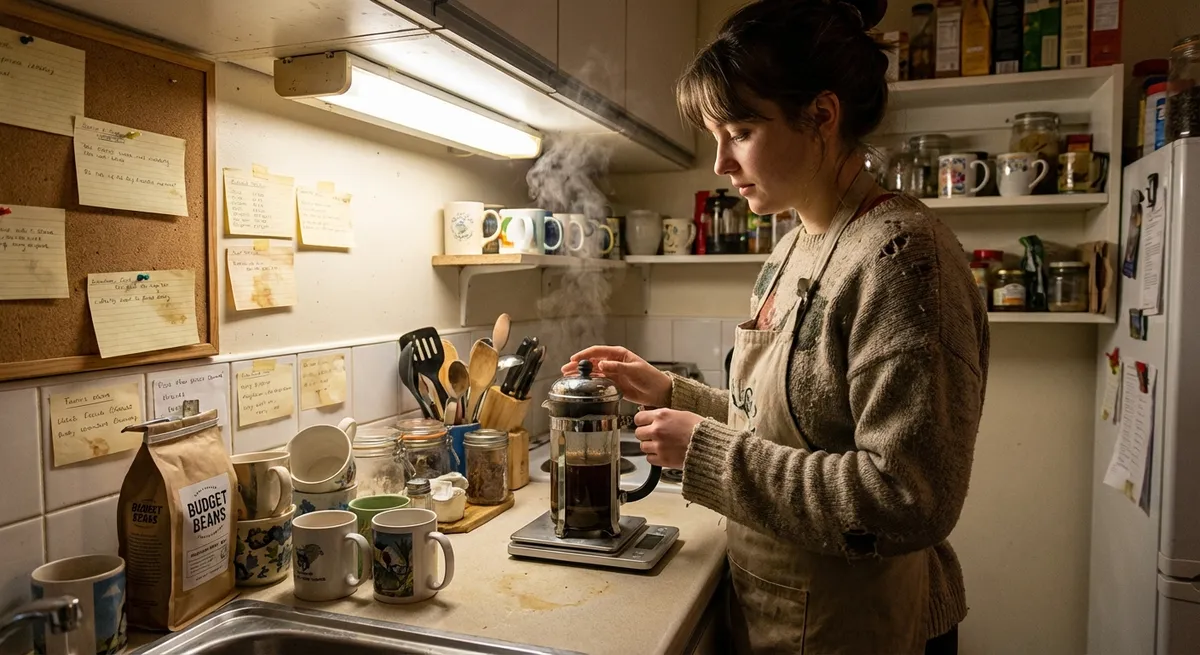
I thought “third-wave coffee” was just hipster for “please pay $7 for caffeine.” Then I accidentally fell down a rabbit hole of barista YouTube and… yeah. Suddenly I’m standing in my kitchen with a food scale, sniffing beans like I’m auditioning for a perfume ad.
The catch? I refused to spend $500 on gear.
So I gave myself a challenge: for one week, I’d try to drink coffee at home that actually tastes like the fancy café stuff—without blowing my grocery budget. What surprised me wasn’t just how different my coffee tasted, but how a few tiny changes completely rewired my mornings.
Here’s what actually worked, what was overrated, and the setup I’d recommend to anyone who wants “specialty coffee vibes” on a basic paycheck.
How I Broke Up With Sad Grocery Store Coffee
I used to buy coffee the way you buy paper towels: whatever was on sale, giant bag, preferably “French Roast” because it sounded cool and dark.
Then I learned two annoying truths:
- Coffee is a fresh food, not a pantry rock.
- “Dark roast” is often code for “we roasted the nuance out of this.”
I recently discovered that roasted coffee peaks in flavor about 3–14 days after roasting and starts to noticeably degrade in about a month. Some specialty roasters even print “roasted on” dates; meanwhile, my old supermarket brick just said “best by some time next year,” which is… not great.
When I tested fresh beans from a local roaster against my usual pre-ground tub, the difference was wild. The old stuff tasted like generic “coffee.” The fresh beans, brewed the exact same way, suddenly had an actual flavor: a little chocolatey, a little cherry, way less bitter.
It reminded me of the first time I had real bread from a bakery after a life of white sandwich bread. Same category, completely different experience.
The budget-friendly switch that made the biggest impact:I stopped buying giant bags and switched to smaller, fresher bags of whole beans—usually 10–12 oz from a local roaster or from the “better” section of the grocery store.
Pros for my broke budget:
- I drink less coffee because I actually sip it
- I stopped wasting half-stale beans
- My home coffee finally stopped tasting like it was brewed through a sock
The one con: it feels more expensive upfront because specialty bags are smaller. But when I did the math per cup versus takeout coffee, I was still way ahead.
The $35 Gadget That Changed Everything (And the One That Totally Didn’t)
Every coffee nerd will tell you the grinder is the most important tool. Annoyingly… they’re right.
I’d always bought pre-ground coffee because it was easier. But ground coffee stales much faster than whole beans—oxidation ramps up once the surface area increases, and you can literally smell the aroma disappearing if it sits out.
So I bought a cheap blade grinder. And yeah, it was better than pre-ground… but still choppy and inconsistent. My French press was either sludge or tea.
A barista friend finally bullied me into trying a manual burr grinder. I grabbed a no-frills one for about $35.
When I tested this side by side—same beans, same brew method—the burr grinder instantly won. The grind size was actually even. My French press suddenly had clarity instead of mud. My pour-over didn’t turn into bitter tar.
What worked about the manual burr grinder:
- Consistent grind = more even extraction = cleaner flavor
- No need for electricity (camping coffee win)
- Way cheaper than electric burr grinders
What kind of sucked:
- Grinding for two people’s coffee every morning is a mini arm workout
- If you’re rushed, it’s mildly irritating
- Some super cheap manual grinders have plastic burrs—worth avoiding
On the flip side, the gadget that did nothing for my coffee?
A cute glass carafe with a built-in metal filter I bought because it looked “aesthetic” on Instagram.
The filter was ultra-fine but still let sediment through. The coffee was thin, kind of metallic, and the cleanup was annoying. When I swapped back to my beat-up French press and a basic pour-over cone, everything tasted better again.
Lesson: spend on the grinder, not the “pretty” brewer. A $10 plastic pour-over cone with good beans and a burr grinder will beat a $60 fancy brewer with stale, pre-ground coffee almost every time.
The Three Brew Methods That Actually Deserve the Hype
I tried to narrow it down to one “best” brew method, but different styles fit different moods (and levels of human functionality before 9 a.m.).
Here’s what I landed on in my real kitchen, with real morning brain:
1. French Press for “I Woke Up 6 Minutes Ago”
When I’m half-asleep and mildly regretting life, French press wins.
My rough routine:
- Coarse grind (think chunky sea salt)
- About 1:15 coffee to water ratio (15–17 g coffee for ~250 ml water)
- Boil water, let it sit 30 seconds
- Pour, give a quick stir, steep 4 minutes
- Gently push the plunger, trying not to wage war with the grounds
In my experience, French press gives the most forgiving, cozy cup. It’s full-bodied, slightly heavy, with more oils because there’s no paper filter. Some people describe it as “muddy”; I think of it as “soup but make it coffee.”
Pros:
- Cheap, simple, and nearly indestructible
- Great for darker roasts or chocolatey blends
- Perfect when you’re not in the mood to baby your brew
Cons:
- Can be sludgy at the bottom
- Not ideal for super delicate, fruity beans
- Cleaning the grounds out feels like a mini crime scene
2. Pour-Over for When I Want to Feel Like a Chemist
On slower mornings, I reach for my plastic V60-style cone and a kettle with a semi-decent spout (not even a real gooseneck—just “less chaotic”).
Basic routine:
- Medium-fine grind (slightly finer than French press)
- Paper filter, rinse with hot water
- 1:16 ratio (about 18 g coffee to ~288 g water)
- 30–45 second bloom with a small amount of water
- Slow, spiraling pours in 2–3 stages over 2.5–3 minutes
This is where I really noticed what different beans could do. A washed Ethiopian coffee I tried tasted like lemon and jasmine. A natural-processed Brazilian? Like Nutella and dried fruit. Same method, drastically different vibes.
Pros:
- Clean cup, low sediment, lots of clarity
- Amazing for lighter roasts and single-origin beans
- Very little equipment needed: cone, filters, mug
Cons:
- More hands-on; you can’t just walk away
- If you mess up your pour, the coffee will roast you by tasting sad
- Not ideal when you’re already late for work
3. Cold Brew for My Over-Caffeinated Summer Self
I always thought cold brew was just “iced coffee but colder.” Turns out: not even close.
I started making room-temp, long-steep cold brew with a big jar and a cheap mesh filter. My basic setup:
- Coarse grind
- 1:8 ratio (e.g., 100 g coffee to 800 g water) for concentrate
- Steep 12–16 hours at room temp, then strain
- Dilute with water or milk to taste when serving
Cold brew shocked me with how smooth it was. Low acidity, virtually no bitterness, and ridiculously easy to drink. Almost… dangerously easy.
Pros:
- Brew once, drink for 3–4 days
- Incredible over ice with a splash of milk or oat milk
- Great way to use slightly older beans
Cons:
- Higher caffeine hit per cup if you’re not careful diluting
- Less complexity than hot-brewed, especially for more nuanced beans
- Requires planning ahead (no instant gratification)
The Tiny Tweaks That Made My Coffee Taste “Café-Level” (Without Fancy Gear)
By the end of the week, I realized it wasn’t about being precious and perfect. It was about consistently doing a few simple things that compound.
Here’s what actually mattered most, in my experience:
1. Water quality was a secret boss fight.My tap water is… not amazing. When I tried brewing with filtered water (basic Brita pitcher), my coffee suddenly tasted less harsh and more balanced.
Coffee is more than 98% water, and the minerals in that water really change how extraction works. I’m not out here mixing custom mineral blends like a lab tech, but plain filtered water made a noticeable difference immediately.
2. Slightly lowering the water temperature saved my lighter roasts.Boiling water (100°C / 212°F) often scorched my lighter beans, especially in French press and pour-over. Letting the kettle sit for about 30–45 seconds (around 93–96°C / 200–205°F) gave me sweetness instead of sharp bitterness.
3. Actually measuring my coffee didn’t kill the vibe.I resisted using a scale because it felt… extra. But a cheap digital kitchen scale made my coffee consistent. No more “why is this cup sad?” roulette. Once I found a sweet spot, I could eyeball it better later.
4. Storage matters more than the jar’s aesthetic.When I switched from a clear jar on the counter to an opaque, airtight container in a cupboard, my beans stayed noticeably better for longer. Light, heat, air, and moisture are the four horsemen of stale coffee.
5. Milk and sugar are allowed.This isn’t a religion. Yes, good beans taste amazing black. But a splash of milk or a tiny bit of sugar can round off rough edges, especially if you’re transitioning from chain lattes. I stopped judging myself and just leaned into what actually made me happy.
When Fancy Coffee Isn’t Worth It (Yes, There Are Limits)
I’m all for geeking out, but I also don’t think everyone needs to:
- Buy a $200 gooseneck kettle
- Own five different drippers
- Memorize TDS (total dissolved solids) numbers
- Hunt down rare micro-lot coffees like Pokémon
Some things that, in my experience, were not worth the hype for a budget setup:
- Super expensive, ultra-light Scandinavian roasts if you’re used to dark coffee—they can taste sour or “under-brewed” at first
- Single-origin beans for espresso if your machine is basic and unadjustable—they’re trickier to dial in
- Daily café trips “for the latte art” when you could invest that money once in a burr grinder and good beans
On the flip side, what is worth splurging on occasionally:
- A bag of genuinely fresh, well-rated specialty beans—especially if the roaster publishes origin, altitude, and process
- A local café that weighs doses, cleans their machine often, and can tell you what makes a particular bean special
- A good grinder you’ll use for years rather than replacing every six months
Why I’m Weirdly Protective of My Morning Mug Now
That one experiment week was supposed to be a fun little “let’s see if I can make fancy coffee at home” challenge. Instead, it quietly became a habit.
Here’s what changed for me:
- My takeout coffee spending dropped hard. I still go out for coffee, but now it’s intentional, not automatic.
- My first 10 minutes of the day feel like a ritual instead of a scramble. Grind, pour, wait, breathe.
- I stopped chugging coffee like fuel and started actually tasting it. Not in a snobby way—just with a bit more attention.
Do I still mess up brews? Oh, constantly. I still occasionally over-grind, under-steep, or forget my French press for 12 minutes and wonder why my coffee tastes like despair. But the baseline quality is so much higher that even my “meh” cups are better than my old “good” ones.
If you’re curious where to start without going full coffee lab, I’d say this:
- Grab one bag of freshly roasted whole beans (something medium roast, chocolatey, and approachable).
- Get a basic manual or cheap electric burr grinder.
- Pick one brew method—French press or pour-over—and actually learn it for a week.
- Use filtered water, slightly-off-boil, and a rough 1:15–1:17 coffee-to-water ratio.
Then tweak it until one morning you take a sip and think, “Okay… wait. Did I make this?”
When that moment hits, you’ll get why people obsess over this stuff—and you might never look at the sad office coffee pot the same way again.
Sources
- National Coffee Association – Brewing Essentials – Covers grind size, water temperature, ratios, and storage best practices
- Specialty Coffee Association – Coffee Standards – Industry benchmarks for brewing ratios, water quality, and cupping protocols
- Harvard T.H. Chan School of Public Health – Coffee and Health – Evidence-based overview of coffee’s health impacts and recommended intake
- U.S. Department of Agriculture – FoodData Central: Coffee, brewed – Official nutritional data for brewed coffee
- Blue Bottle Coffee – Beginner’s Guide to Coffee Brewing – Practical brew guides and explanations of different methods from a major specialty roaster