I Tried "Circadian Resetting" For 21 Days And My Energy Did Something Wild
I used to think being tired all the time was just my personality. I’d slam coffee at 3 p.m., doom-scroll in bed till midnight, wake up feeling like I’d been mildly hit by a bus, and repeat. Then I kept seeing this phrase “circadian rhythm” all over sleep research and biohacking TikTok.
So I decided to run a real experiment on myself: 21 days of trying to reset my body clock using what researchers actually recommend—not just what influencers yell into their ring lights. No gadgets, no supplements with sketchy claims. Just science-backed circadian tweaks.
What happened honestly surprised me more than any “miracle” diet I’ve ever tried.
The Moment I Realized My Sleep Wasn’t Just “Bad Luck”
I used to tell people, “I’m just a night owl, my brain wakes up at 10 p.m.” But when I tracked my days, the pattern was brutal:
- I’d get a second wind around 9:30 p.m.
- I’d scroll, snack, answer Slack messages I had no business opening.
- I’d fall asleep after 1 a.m., wake up groggy at 7:30 a.m., and feel like my skull was full of cotton until noon.
The breaking point was when I replied to a work email at 12:47 a.m. and my boss wrote back, “You okay?” That low-key mortified me.
Around that time, I stumbled on research from the National Institutes of Health showing that our circadian rhythm—the internal ~24-hour clock in our brain and body—doesn’t just control sleep. It regulates hormones, body temperature, digestion, even mood. When it’s off, you’re not just “tired”; your whole system runs slightly wrong.
I remember thinking: okay, if jet lag can mess me up that badly in one week, what’s a decade of micro–jet lag from bad habits doing?
What Circadian Resetting Actually Is (And What It’s Not)
When I first heard “circadian resetting,” I pictured some sci-fi machine zapping my brain into becoming a morning person. Reality is less dramatic and way more doable.
At its simplest, circadian resetting is about giving your body clear, consistent signals about:
- When it’s daytime (light, movement, food)
- When it’s nighttime (darkness, wind-down, low stimulation)
The master clock in your brain—called the suprachiasmatic nucleus (SCN) in the hypothalamus—relies mostly on light hitting your eyes to set its schedule. That clock then coordinates a whole orchestra of “peripheral clocks” in your liver, gut, muscles, and other tissues.
What I didn’t realize before reading more deeply:
- Morning light isn’t just “nice”—it literally shifts the timing of your melatonin release later that night.
- Eating at irregular times can desync your gut and liver clocks from your brain clock.
- Blue light at night doesn’t just “strain your eyes”; it actively delays your internal night.
When I tested this on myself, I didn’t try to become That Person who wakes at 5 a.m. to meditate and juice kale. My only goal: shift from “constantly tired and wired” to feeling awake when I needed to be, and sleepy when I actually wanted to sleep.
The 21-Day Plan I Followed (No Fancy Tech, Just Strategy)
I pieced this plan together from sleep research, circadian rhythm studies, and what felt remotely realistic for my life. Here’s what I actually did—not the aspirational version.
1. Morning Light: The Rule That Changed Everything
I made myself a brutal rule:
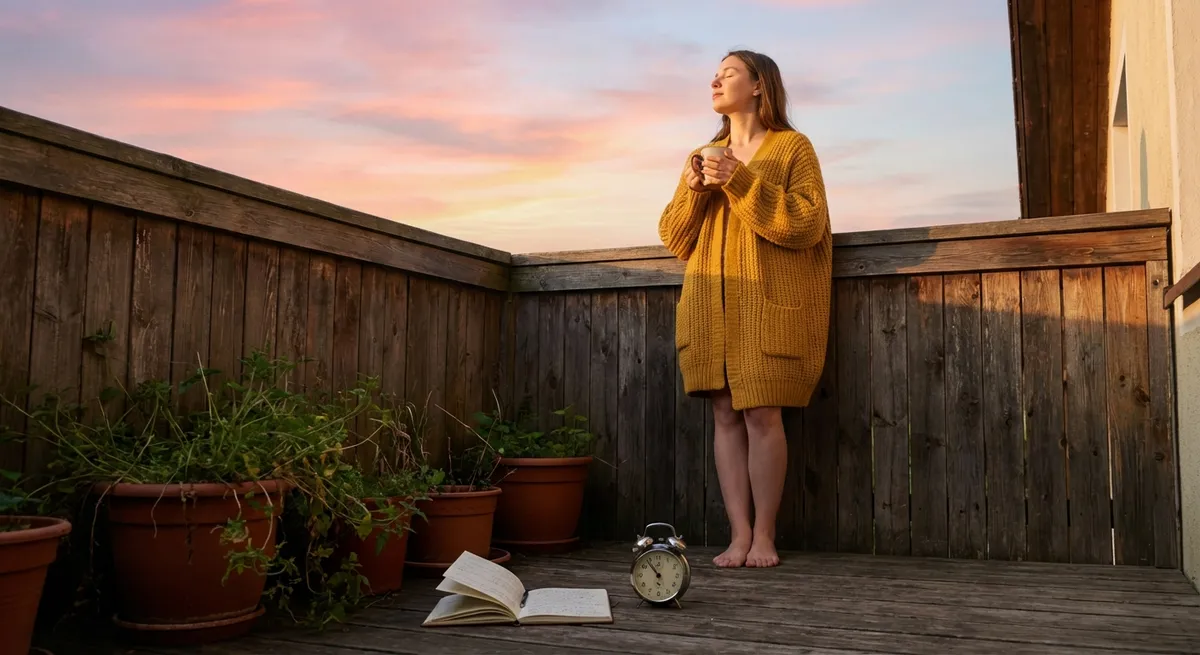
Within 30 minutes of waking, I had to get at least 10–15 minutes of outdoor light.Not through a window. Outside. Even if it was cloudy.
On day one, I shuffled out in sweatpants, hair doing interpretive dance, and just walked around the block. This felt weirdly vulnerable, but the effect was real: I felt more awake by 9 a.m. than I normally did at 11.
Why it works (short nerdy bit):
Studies from researchers like Dr. Andrew Huberman and chronobiologist Dr. Satchin Panda show that bright outdoor light in the morning (even on overcast days) can hit 10,000+ lux, which triggers your SCN to anchor your circadian clock. That sets a timer in your brain for when to release melatonin that night—usually about 14–16 hours later.
When I skipped this (I did twice), my whole day felt mushier. I’d crash harder in the afternoon and struggle to fall asleep.
2. Caffeine Curfew: The Rule I Hated, Then Loved
I learned that caffeine’s half-life is about 5–6 hours for most people. So that iced coffee at 4 p.m.? A chunk of that caffeine is still hanging out in your system at 10 p.m., quietly messing with sleep quality even if you can fall asleep.
So I set a ruthless cut-off:
No caffeine after 1 p.m.The first few days were…not cute. I missed my 3 p.m. emotional-support coffee. But by day 7, something clicked. I was less jittery at night, and I didn’t wake up at 3 a.m. with my heart slightly racing for no reason.
Pro tip from my own experimenting: replacing that late coffee with cold water plus a brisk 3-minute walk did more for my energy than a sad decaf ever did.
3. Feeding My Body Clock (Instead of Confusing It)
I didn’t do hardcore intermittent fasting, but I did clean up my meal timing to send better signals to my circadian system.
What I changed:
- Ate breakfast within 1–2 hours of waking instead of skipping it
- Tried to keep most of my calories earlier in the day
- Set a gentle rule: no big meals within 3 hours of bedtime
Research from Salk Institute and others suggests that time-restricted eating aligned with daytime hours can support better metabolic health and sleep, partly by keeping your gut and liver clocks synced with your brain.
When I tested this, the biggest thing I noticed: on nights when I ate a heavy late dinner, my sleep was shallower and I woke up hot and restless. When I kept dinner lighter and earlier, falling asleep felt physically easier, like my body wasn’t multitasking digestion and rest.
4. The 90-Minute Wind-Down That Killed My Doom-Scrolling
This was the hardest habit for me:
For 90 minutes before bed: no work, no intense news, no “just one more” episode, no bright overhead lights.Here’s what I did instead on most nights:
- Switched to warm, low lighting (lamps, not ceiling lights)
- Put my phone on grayscale mode and “Do Not Disturb”
- Did something low-stimulation: stretching, boring podcasts, physical books
- Kept my bedroom cool, dark, and boring (no TV, no laptop)
I didn’t go full monk. I still checked my phone sometimes. But even dropping my screen brightness and using night-shift mode made a noticeable difference.
On nights I broke my own rule and fell into a TikTok hole, it was like hitting “delay” on my sleep. I’d feel my mind rev back up and my “sleep window” disappear.
The Payoff: What Actually Changed (And What Didn’t)
By day 10, I realized something wild had happened:
I was waking up before my alarm some days, and I didn’t hate my life when it went off.
Here’s the honest breakdown.
The Wins
1. My energy evened out like crazy.Before, my days felt like: half-asleep → anxious productivity burst → 3 p.m. crash → 9 p.m. second wind.
By the third week, my mental graph looked more like: a gentle slope up in the morning, stable focus through the afternoon, and a real wind-down at night. I still got tired, but it was predictable tired, not “I could sleep on this keyboard” tired.
2. Falling asleep stopped being a negotiation.Instead of tossing around for 45 minutes, I was often out in 10–20 minutes. The “tired but wired” feeling at night dropped dramatically. It felt like my brain and body agreed on what time it was.
3. My mood stopped whiplashing so hard.This one surprised me the most. On nights I slept 7.5–8 hours with a consistent schedule, my anxiety the next day felt lower—like background noise instead of a full broadcast. There’s solid research linking circadian disruption to mood disorders, and I could kind of feel why.
The Stuff That Was Meh (Or Just Hard)
1. Social life took a mild hit.Turning down late dinners or drinks “because I’m experimenting with my circadian rhythm” makes you sound…unhinged. I compromised: if I had a late night with friends, I let myself sleep in a bit and then tried to get morning light as soon as I woke.
2. It didn’t fix everything.I still had anxious days. I still procrastinated. Circadian resetting wasn’t some magic button that made me a productivity robot. It just gave me a more solid base to operate from. Which, to be fair, was kind of huge.
3. The first week felt worse before it felt better.Shifting my sleep time earlier meant going through a mini-version of jet lag. Those first 3–4 nights, I lay in bed earlier than usual, not totally sleepy yet, wrestling with the urge to check my phone. By week two, my body started catching up.
How To Try Your Own Mini Reset (Without Making Yourself Miserable)
I’m not a doctor, and if you have insomnia, sleep apnea, or another sleep disorder, this is absolutely a “talk to your healthcare provider” situation first. But if your main issue is chaotic habits and “I’m tired all the time,” here’s what I’d actually recommend after doing this myself.
Start With Just Two Anchors
If you try to overhaul everything at once, you’ll quit by day three. The two levers that made the biggest difference for me:
- Light: 10–15 minutes of outdoor light within 30 minutes of waking, every day you can.
- Consistency: Aim to wake up and go to bed within the same 60–90 minute window, even on weekends.
If all you did was those two things for two weeks, you’d probably feel something shift.
Then Add One “Night Guardrail”
Pick one of these to experiment with for 7 days:
- No caffeine after 1–2 p.m.
- No big meals within 3 hours of bedtime
- No bright overhead lights and no laptop in bed for 60–90 minutes before sleep
From my experience, the easiest starting point is the lighting change—switching to lamps and warmer tones at night. It doesn’t feel like “giving something up,” but your brain reads it as a real signal: hey, we’re powering down soon.
When It’s Not Working (Yet)
Some nights during my 21 days were rough anyway. Stuff I found helpful when sleep wouldn’t come:
- Getting out of bed after ~20 minutes of tossing and doing something boring and calm in low light
- Writing down whatever I kept thinking about in a “brain dump” notebook
- Reminding myself: “My body knows how to sleep; I’m just giving it the conditions.”
And honestly, expecting imperfection kept me from quitting. You don’t fail your circadian reset because you had one chaotic weekend.
The Part I Didn’t Expect: My Relationship With Rest Changed
Before this experiment, I treated sleep like a chore I could bargain with. “I’ll steal an hour from sleep and pay it back later.” Except the debt never really cleared.
After 21 days of actually working with my body’s clock, I started seeing rest less like a luxury and more like infrastructure. You don’t notice good infrastructure when it’s working—but when it’s broken, everything feels harder.
Am I a perfect, glowing morning person now who bounces out of bed at 5 a.m.? Absolutely not. I still love nights. I still over-caffeinate sometimes. I definitely still scroll too late on occasion.
But now, when my rhythm drifts, I know how to steer it back: light, timing, and a little respect for the fact that my biology runs on a clock whether I acknowledge it or not.
And honestly? Waking up without feeling like a zombie all the time feels way more “biohacker” than any weird supplement I’ve ever tried.
Sources
- National Institute of General Medical Sciences – Circadian Rhythms – Overview of how the body clock works and what controls it
- NIH MedlinePlus – Caffeine and Sleep – Explains caffeine’s effects, half-life, and impact on sleep quality
- Harvard Medical School – Blue Light Has a Dark Side – Details how evening light, especially blue light, shifts melatonin and circadian timing
- Salk Institute – Time-Restricted Eating and Metabolism – Research on how aligning eating windows with circadian rhythms affects health
- National Heart, Lung, and Blood Institute – Healthy Sleep – Educational resource on sleep, circadian rhythm, and health consequences of poor sleep