The Night I Realized We’re All Stardust (And What That Actually Means)
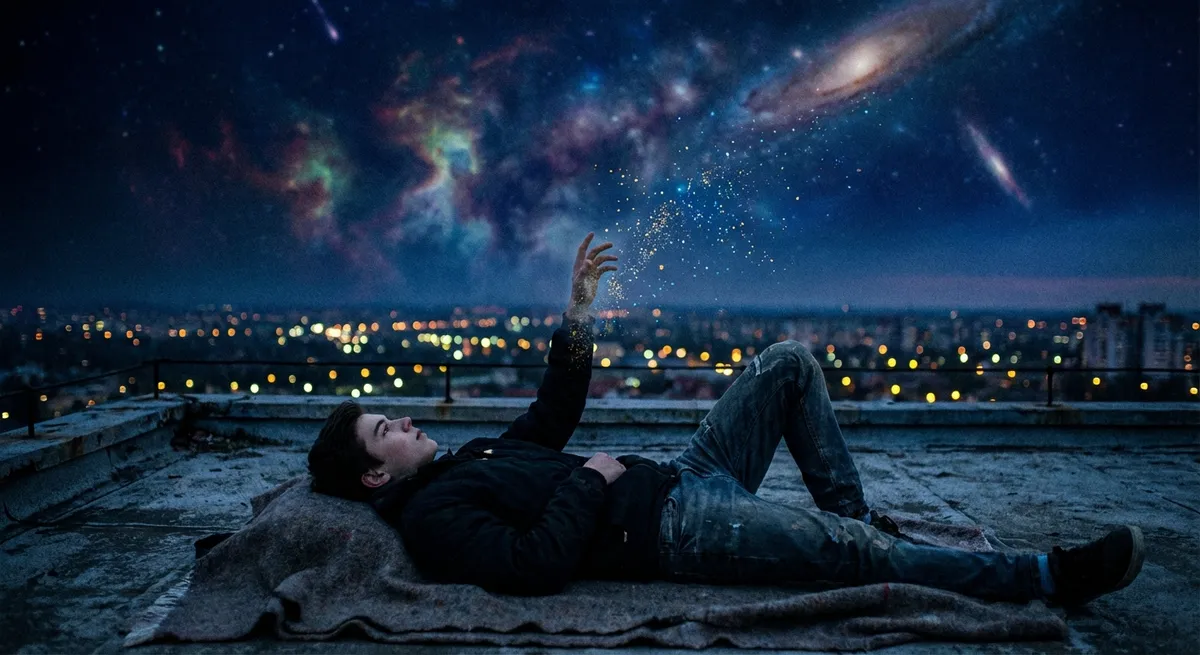
I always thought “we’re made of stardust” was just Tumblr poetry with better lighting. Then one late night, I ended up deep in an astrophysics rabbit hole, staring at a periodic table that might as well have been a family tree… for atoms. That was the night I realized this phrase is way less metaphor and way more literal than anyone ever explained to me.
And once I connected the dots—from exploding stars to the iron in my blood—I couldn’t stop seeing the universe every time I boiled water or went for a run. So I started digging: textbooks, NASA papers, and a slightly unhinged number of space documentaries.
Here’s what I learned, what surprised me, and where the stardust story is a little overhyped (but still absolutely wild).
How I Went From “Cute Quote” To “Wait, This Is Chemistry”
The turning point for me was a chart from astrophysicist Jennifer Johnson that color-coded where each element in our bodies actually comes from—big bang, dying stars, neutron star collisions, the works. I remember zooming in on “iron” and “carbon” and just whispering “no way” at my laptop.
When I checked the numbers, it got even weirder. Roughly 96% of the mass of the human body is just four elements: oxygen, carbon, hydrogen and nitrogen. Hydrogen is the OG—formed in the first few minutes after the Big Bang. But carbon and oxygen? Those needed stars that lived, burned, and died dramatically.
I tested this idea in the nerdiest possible way: I mapped the elements in my body to their cosmic sources. Rough estimates based on published astrophysics data look something like this:
- The hydrogen in the water I drink and the fat in my cells: Big Bang leftovers
- The carbon in my DNA and the oxygen in my lungs: forged inside stars like the Sun’s older cousins
- The iron in my blood: likely from ancient supernovae
- The calcium in my bones: massive stars that died violently
Suddenly “I’m tired” felt less like a mood and more like a multibillion‑year supply chain issue.
Once you see your own body as a recycling project for dead stars, brushing your teeth feels… oddly epic.
How Stars Actually Built Your Body (Without Asking Permission)
The science behind the stardust slogan starts with a very unromantic term: nucleosynthesis—the process of creating new atomic nuclei from pre-existing nucleons (protons and neutrons).
Here’s the fast‑forward version of how your atoms got here:
First, we’ve got Big Bang nucleosynthesis. About 13.8 billion years ago, the universe was a hot plasma soup. In the first few minutes, it cooled just enough for the simplest nuclei to form: mostly hydrogen, some helium, and trace amounts of lithium. That hydrogen is still around, including the hydrogen that’s now inside you. When I drink water, I’m literally swallowing atoms older than every galaxy.
Then come stellar furnaces. Inside stars, gravity squeezes matter so hard that hydrogen nuclei fuse into helium. In more massive stars, fusion climbs the periodic table: helium into carbon, carbon into oxygen, oxygen into neon, all the way up to iron in the biggest ones. When I first learned that stars stop at iron because fusing heavier elements starts costing energy instead of releasing it, it felt like discovering the universe’s budget cut.
To get the really heavy stuff—like the iodine in your thyroid or the gold in your jewelry—you need chaos: supernovae and neutron star mergers. In these events, there’s such an insane storm of neutrons that atomic nuclei grab them like free merch at a conference, building up heavier and heavier elements in a process called the r‑process (rapid neutron capture).
The part that hooked me emotionally: those explosions don’t just happen “out there.” Their shockwaves push gas and dust into dense clumps that eventually collapse into new stars, new planets… and eventually, chemistry experiments that call themselves humans.
We’re basically walking evidence that the universe recycles its failures into new projects.
The “We’re All Stardust” Line Is True… But Also Slightly Overdramatic
Once I started fact-checking the stardust cliché, I realized it’s both absolutely accurate and a bit exaggerated in the way it’s usually told.
Yes, most of the elements heavier than hydrogen and helium—so almost everything that makes up your body—came from stars. Carl Sagan’s line, “We are made of star stuff,” is about as legit as science quotes get.
But here’s the nuance I didn’t see on social media:
- Not all of you is stardust. The hydrogen in your body (about 10% of your atoms) is pre‑star—from the Big Bang itself. Technically, that’s “unprocessed” cosmic material, not recycled star guts.
- “From stars” doesn’t mean “from one star.” The atoms in your left hand could’ve formed in completely different galaxies than those in your right hand before everything got mixed into the Milky Way’s gas clouds.
- The timelines break your brain. Some of your atoms likely cycled through multiple generations of stars. Matter doesn’t care about your sense of narrative.
When I explain this to friends, someone always asks, “So is there literally star matter in me right now?” And the answer is: yes, but not as glowing space dust. It’s in the very ordinary form of carbon chains, water molecules, iron ions—boring‑looking stuff with an absolutely ridiculous backstory.
So yeah, the phrase “we’re all stardust” is a little melodramatic. But it’s melodramatic in the way that calling the ocean “water” is technically under-selling it.
The Moment It Hit Me: Breathing As A Cosmic Recycling Ritual
The first time I really felt this instead of just understanding it, I was standing in my tiny kitchen, waiting for the kettle to boil. Classic low‑budget existentialism setup.
I’d just read a paper breaking down that the oxygen I was breathing most likely formed inside red giant stars billions of years before our Sun even existed. I took a slow inhale and thought: this oxygen has already been through stars, comets, maybe multiple planets, and now it’s passing through my lungs for like half a second before moving on.
It made my whole “I need to drink more water” goal sound hilariously small compared to “I’m temporarily borrowing ancient atoms from the universe.”
Since then, I’ve started noticing these micro‑cosmic moments everywhere:
- When I cook with table salt, the sodium and chlorine are both products of long-dead stars, now vibing quietly on my roasted potatoes.
- When I go running and feel my muscles burn, that’s oxygen (from old stars) reacting with glucose (built from photosynthesis using sunlight from our current star).
- When I look at a gold ring, I’m basically looking at the aftermath of a neutron star collision that happened before Earth even formed.
The science didn’t make life feel less meaningful or more “scientific.” Weirdly, it did the opposite. It made my daily routines feel like I’d been dropped into the middle of a story that started billions of years before I showed up.
The Hard Limits Of Cosmic Poetry (And Why I Still Love It)
As much as I adore the whole stardust narrative, there are real limitations scientists are still wrestling with—and I think owning those honestly makes the story more powerful, not less.
One of the big debates I fell into was about where exactly the heaviest elements come from. For a long time, astrophysicists thought supernovae were doing most of the heavy lifting for things like gold, platinum, and uranium. Then in 2017, the gravitational wave event GW170817 gave strong evidence that neutron star mergers are also major factories for these elements.
The catch? Neutron star mergers are rare and don’t happen everywhere. So how do we end up with the amount of heavy elements we see in our galaxy? There’s still no perfect, clean answer—and I appreciate that the experts are comfortable saying, “We’re working on it.”
There’s also a very human downside: it’s tempting to turn “we’re made of stardust” into a kind of spiritual Instagram wallpaper and stop there. In my experience, that’s where people get misled by vague “cosmic energy” claims or pseudosciencey wellness pitches that throw in quantum words for vibes.
The actual science is more grounded and, honestly, cooler:
- Atoms follow strict, testable rules.
- We can simulate nucleosynthesis on supercomputers and compare predictions with the chemical fingerprints we see in stars.
- We can measure elemental abundances in ancient stars and literally watch the history of the universe’s chemistry unfold.
It’s messy, incomplete, and full of caveats—but that’s what makes it feel real. The romance isn’t that we have all the answers. It’s that we can trace the story of our matter from the first seconds of the universe to the exact moment you’re scrolling this on your phone.
Why This Changes How I See… Pretty Much Everything
Since diving into this, I’ve noticed a quiet shift in how I move through my day.
When I’m stuck in traffic or doom‑scrolling, there’s this background awareness that every person around me is a ridiculously unlikely arrangement of ancient particles that spent billions of years not being alive—and now they’re arguing about parking or watching cat videos.
The science doesn’t magically solve anything. It doesn’t fix climate change or tuition or whatever’s going on in your group chat. But it does two things for me:
First, it punches a hole in the idea that we’re separate from the universe. There’s no “out there” and “in here.” The same processes that light up galaxies also built the calcium in your teeth and the phosphorus in your DNA. We’re not observers; we’re participants.
Second, it makes curiosity feel worth protecting. When I read about the James Webb Space Telescope analyzing the atmospheres of exoplanets, I see it as a species made of stardust, using tools built from stardust, to look for other configurations of stardust that might be asking the same questions.
That’s absurd. And beautiful. And honestly, kind of funny.
Next time someone drops “we’re made of stardust” in a conversation, feel free to be that person and say: “Yeah—and the hydrogen in you is older than stars, your gold probably came from neutron stars smashing into each other, and the iron in your blood can’t be made in normal stars at all.”
Then watch their eyes do the little galaxy-brain thing.
Sources
- NASA – We Are All Made of Stardust – NASA explainer on how elements form in stars and spread through the galaxy
- PBS Space Time – Where Do Heavy Elements Come From? – Video + transcript breaking down nucleosynthesis, supernovae, and neutron star mergers
- American Chemical Society – The Chemistry of You – Detailed look at elemental composition of the human body
- LIGO – GW170817: Observation of Gravitational Waves from a Binary Neutron Star Inspiral – Official summary of the landmark neutron star merger event and its link to heavy elements
- Ohio State University – Origins of the Elements in the Periodic Table (Jennifer Johnson) – Visual breakdown of where each element in the periodic table comes from