
The “Lazy Glow-Up” Routine That Finally Got Me Consistent
I used to believe being “that person” with glowing skin and toned arms required 5 a.m. workouts, 10-step skincare, and drinking water out of a gallon jug with motivational timestamps. Spoiler: I tried all of that. I crashed every single time.
What finally worked wasn’t harder. It was lazier—but smarter.
I’ve started calling it my “Lazy Glow-Up” routine: the minimum viable effort that still visibly changes your face, your body, and your energy. It’s not aesthetic. It’s not TikTok-perfect. But it’s the first routine I’ve actually stuck with for more than three weeks, and it honestly shocked me how much it moved the needle.
Let me walk you through exactly what I do, what I tested that flopped, and what I’ll never skip again.
Why My Old Routines Kept Failing (And Maybe Yours Do Too)
When I finally got honest with myself, I realized my “failed” routines all had the same problems:
They were built for a fantasy version of me.
Fantasy Me wakes up at 5:00 a.m., loves cardio, and thinks a 9-step Korean skincare routine is “relaxing.” Real Me hits snooze, negotiates with the universe about burpees, and hates any skincare step that takes longer than my attention span.
The turning point came last year when I tried one of those intense 30-day challenges: daily HIIT, complete sugar detox, full skincare overhaul. Day 5, I was ravenous, sore, short-tempered, and my skin actually looked worse—red, irritated, and weirdly dull. My sleep tanked. My motivation followed.
When I started reading more actual research instead of just scrolling micro-influencer routines, the pattern made sense:
- The American College of Sports Medicine (ACSM) notes that even 150 minutes a week of moderate activity—basically brisk walking—has huge health benefits, and you don’t have to go “beast mode” every day to see results.
- Dermatologists consistently say over-exfoliating and product overload are common causes of irritation and barrier damage, not the solution to glowing skin.
So I tossed the “all or nothing” mindset and built a routine around three rules:
- I have to be able to do it on a bad day.
- It has to show results within 2–4 weeks or I’ll bail.
- It has to be simple enough that I don’t need willpower to remember it.
That’s how the Lazy Glow-Up routine started.
The 8-Minute Skin Routine That Survived My Laziness
I used to think glow = more products. When I tested that, my face disagreed.
The routine that finally stuck is painfully simple, but it checks all the science-backed boxes: protect, repair, and don’t wreck your barrier.
Morning: The “Bare Minimum But Effective” Trio
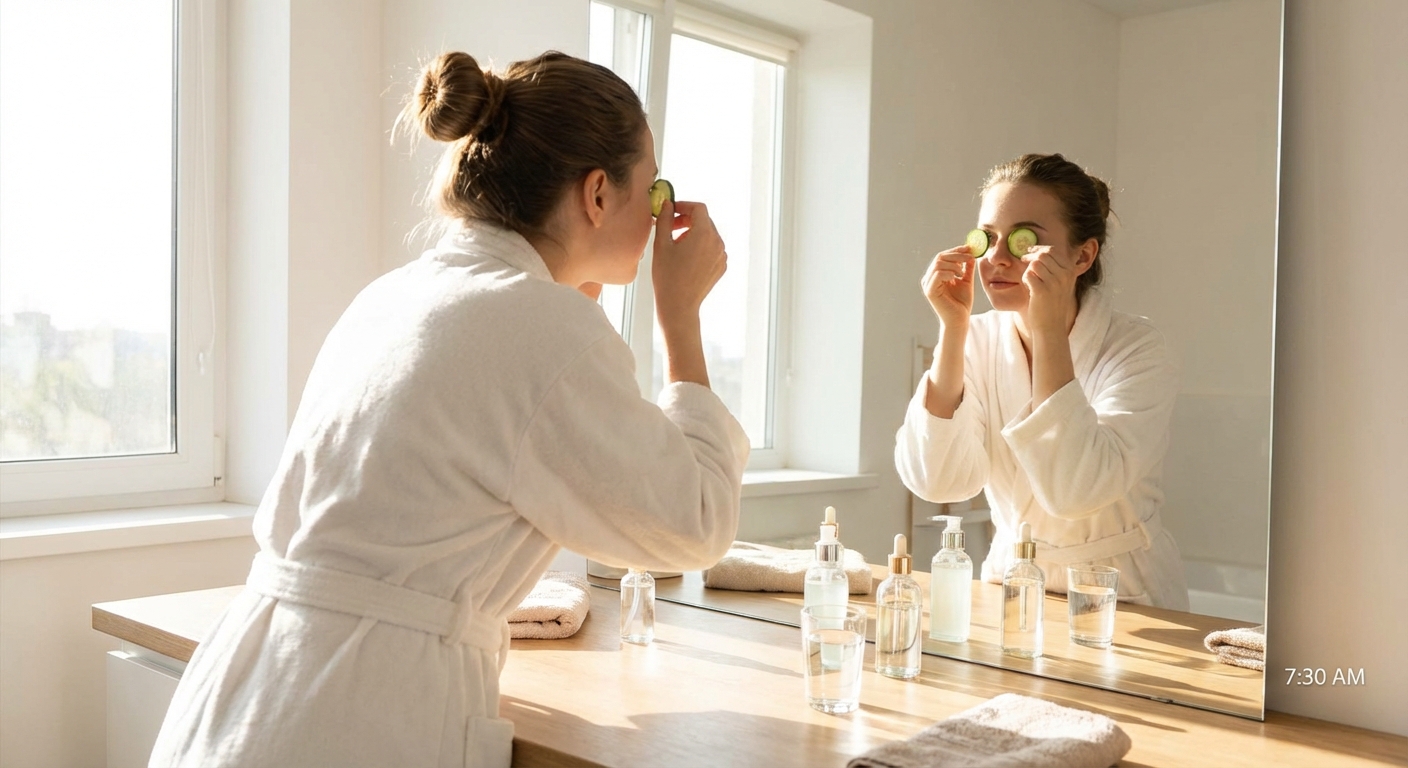
Here’s my exact morning routine that takes maybe 3–4 minutes:
- Rinse, don’t strip.
I used to double cleanse every single morning, which my dermatologist later told me was unnecessary for my non-oily skin. Now, on most mornings, I just rinse with lukewarm water or use a super gentle cleanser if I feel grimy.
- Vitamin C serum (thin, not sticky).
I tested 4 different formulas. The heavy, tacky ones pilled under sunscreen and annoyed me so much I’d “accidentally” skip them.
The one I stuck with is lightweight and around 10–15% L-ascorbic acid (derms like this range because it’s usually effective without being a chemical war zone on your barrier). It helped even out my acne marks within about a month.
- Sunscreen. Every. Single. Day.
This was the real before-and-after difference.
Once I committed to a broad-spectrum SPF 30+ that didn’t sting my eyes, my skin tone evened out slowly but steadily. No fancy filter, just less dullness and fewer new dark spots.
The American Academy of Dermatology has been screaming this from the rooftops for years: daily sunscreen is basically the most powerful anti-aging product you can buy.
That’s it. No eye cream, no jade roller, no morning mask. If I’m in a rush, I literally do vitamin C + sunscreen while my coffee brews.
Night: The “Skin Repair in 5 Minutes” Setup
Night is where the real repair happens for me—but I still keep it under 5 minutes.
Here’s what I landed on after lots of trial and error:
- One gentle cleanse, no scrubbing.
I stopped using any cleanser that made my face feel “squeaky clean.” That squeak = your barrier begging for moisture.
- Retinoid (2–4 nights a week).
When I first tested a retinol cream, I overdid it and got the classic peeling, redness, and burning. I almost gave up on it. Then I actually read what dermatologists recommend:
- Start 1–2 nights a week.
- Sandwiched with moisturizer if you’re sensitive.
Now, I’m at 3–4 nights, and my skin texture is noticeably smoother. Fine lines around my forehead softened, and my old breakout marks faded faster.
- Moisturizer that’s boring on purpose.
No fragrance, no actives, just a ceramide-rich or glycerin-based cream. The goal is barrier support, not entertainment.
When I tested that routine for four weeks with no “fun extras,” my skin calmed down. Fewer “mystery breakouts,” almost no flakiness, and my face stopped stinging when I tried new products.
And that’s when I realized: glow usually comes from consistency, not complexity.
The 20-Minute Movement Habit That Changed My Body (And My Mood)
I tried being a “gym person.” I paid for the membership. I bought the shoes. I even briefly dated a guy who thought leg day was a personality trait. None of it stuck.
What finally worked was lowering the bar so much I’d feel ridiculous not stepping over it.
My Non-Negotiable: 20 Minutes, Move However
I made myself a deal: 20 minutes of movement, 5 days a week. No rules about what kind.
When I tested this for six weeks, I noticed three things:
- My energy in the afternoon didn’t crash as hard.
- My legs and butt actually looked noticeably more defined.
- I felt less guilty and weirdly more proud of myself, because I kept the promise.
Here’s how a typical week looks for me now:
- Two days: Walking with intention – fast enough that I can talk but not sing.
Research from Harvard and the CDC backs this up: brisk walking counts as moderate-intensity exercise and is linked to lower risk of heart disease, better mood, and longer life. No burpees required.
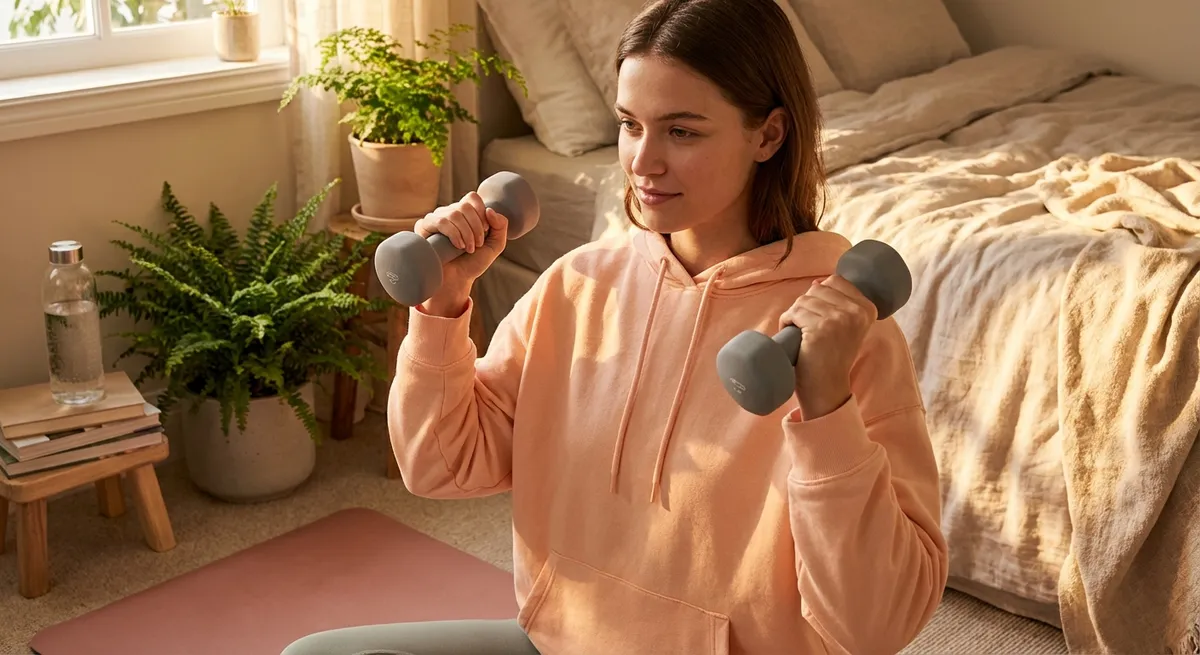
- Two days: Short strength circuits at home.
I rotate between:
- Squats, lunges, glute bridges
- Pushups (on knees when I’m dying), rows with dumbbells or a resistance band
- 30-second planks or dead bugs for core
I do 2–3 rounds, which takes around 15–20 minutes.
- One day: “Fun” movement.
This is my guilt-free day: dance workout on YouTube, a bike ride, or walking around a store like I’m in a movie montage.
When I paired this with getting around 7–8 hours of sleep, the changes were… actually visible. My shoulders looked a bit broader (in a good way), my jeans fit better, and my posture stopped giving “gremlin at a laptop.”
Why This Works If You’re Not Naturally Athletic
The ACSM and WHO both say you can break up your weekly activity in small chunks—even 10-minute bouts count. Exercise doesn’t have to be a 60-minute scheduled event.
For me, the mental trick was: I’m allowed to do “easy” workouts, but I’m not allowed to do nothing.
Some days my 20 minutes is literally walking laps in my living room while watching YouTube. Is it Instagram-worthy? Absolutely not. Does my body know the difference between that and a treadmill? Not really.
Tiny Nutrition Tweaks That Changed My Skin More Than Any Serum
I used to roll my eyes when people said “beauty starts from within.” Then I tracked my breakouts for two months and noticed an uncomfortably clear pattern with my sleep, water, and sodium bloat.
I still eat chips and chocolate, but I made three simple upgrades that gave me way more glow than I expected.
1. Protein First, Beauty Later
When I tested hitting at least 80–100 grams of protein most days (adjusted to my weight and goals), something wild happened:
I stopped being ravenously snacky by 4 p.m., my workouts felt stronger, and my nails stopped peeling as much.
I didn’t do anything fancy. I just:
- Added Greek yogurt instead of sugary cereal in the morning.
- Chose eggs or tofu more often.
- Added a protein shake on days I knew I’d be lazy about meals.
Plenty of research shows protein helps with satiety, muscle recovery, and maintaining lean mass—key if you want tone, not just “weight loss.”
2. Hydration That Isn’t a Personality Trait
I refused to become “the water bottle girl,” so I compromised with myself:
- 1 glass of water right when I wake up.
- 1 with lunch.
- 1 with dinner.
- Then I let the rest be “bonus” sips.
Shockingly, my afternoon headaches eased up, and the dry tight feeling in my skin softened a bit. Is my glow 100% from water? No. But my skin definitely looks happier when I don’t live on caffeine alone.
3. Smarter Snacks, No Food Morality
Instead of banning snacks, I hacked them.
I swapped my pure-sugar snacks for combos that pair protein + fiber + some fat:
- Apple + peanut butter
- Hummus + crackers
- Cottage cheese + berries
Blood sugar spikes are often tied to energy crashes and sometimes even skin issues. When I smoothed out my eating like this, my mood felt more stable, and I binged less at night.
And I still eat dessert. I just… don’t pretend 3 p.m. cookies count as “lunch” anymore.
Mental Glow: The One Habit That Quietly Made Me Look Better
I didn’t expect this part to matter as much as it did, but stress shows up on my face faster than any lack of sleep.
The habit that stuck wasn’t journaling or meditation apps. It was something way simpler: 10-minute decompression windows.
Here’s how I built it in:
- Before bed, I give myself 10 minutes where I’m not allowed to multitask.
- No scrolling, no emails, no “I’ll just answer one more DM.”
- I either stretch, lie on the floor, or do literally nothing.
When I tested this for a month, two things changed:
- I fell asleep faster.
- I stopped waking up puffy and wrecked-looking as often.
Stress cranks up cortisol, which has been linked to breakouts, sleep disruption, and even slower skin healing. I used to underestimate that. Now, whenever my skin freaks out, I check: “Have I actually relaxed lately or just consumed content about relaxing?”
That small nightly reset is the only “mental health practice” I’ve actually been consistent with.
What I Don’t Do Anymore (Even Though The Internet Loves It)
To keep this honest: there are plenty of trendy things I tested and decided weren’t worth my time, money, or sanity.
- Endless product layering. My barrier said no.
- Extreme detoxes or “no carb” challenges. I lost energy, not glow.
- Daily HIIT. Great for some people, but my joints and stress levels hated me.
- Three different exfoliants at once. I ended up with sensitized, flaky skin that needed weeks to recover.
That doesn’t mean these things never work for anyone. But for my real-life energy budget? The return on investment just wasn’t there.
The Part Nobody Tells You About a Real Glow-Up
When I put all of this together—simple skincare, 20 minutes of movement, basic nutrition upgrades, and a 10-minute nightly decompression—something unexpected happened:
I started trusting myself again.
Not because I transformed overnight, but because I finally built a routine I could actually live with.
My skin isn’t airbrushed. My abs don’t look like a fitness model’s. But I look more awake. My clothes fit better. My face looks calmer. And people have started saying, “You look… healthier. What are you doing?”
The answer is boring, which makes it kind of perfect for sharing: I picked the laziest habits that still work—and I did them consistently.
If you’ve bounced between intense routines and total burnout, try this:
- Strip your skincare to 3–4 steps max.
- Commit to 20 minutes of movement, 5 days a week, in any form you don’t hate.
- Anchor your day with simple protein, water, and one tiny stress reset.
It won’t transform you in 72 hours. But give it 30 days and take a before photo now. The subtle changes creep up on you, until one random morning you catch your reflection and think, “Wait… when did I start looking like that?”
And that’s the kind of glow-up that actually lasts.
Sources
- American Academy of Dermatology – Skin care basics – Guidelines on gentle cleansing, moisturizing, and sunscreen for healthy skin
- American Academy of Dermatology – Retinoids: What they are and how they work – Evidence-based info on retinoids, benefits, and how to introduce them safely
- Harvard T.H. Chan School of Public Health – Physical Activity and Health – Overview of how moderate activity like brisk walking improves health and energy
- Centers for Disease Control and Prevention – How much physical activity do adults need? – Official recommendations for weekly exercise and how to break it into manageable chunks
- National Institutes of Health – Stress and Your Health – Explains how chronic stress affects the body, sleep, and overall health, including skin and mood