Returned Amazon Items: What to Know
If you’ve ever stared at a suspiciously cheap “Like New” deal on Amazon and wondered what’s the catch?, you’re not alone. Returned Amazon items are a booming, slightly mysterious part of online shopping—and knowing how they work can save you serious money (and a few headaches).
Let’s pull back the curtain on what really happens when millions of items get sent back to Amazon, and how you can shop returns smart, safe, and strategically.
Where Do Returned Amazon Items Actually Go?
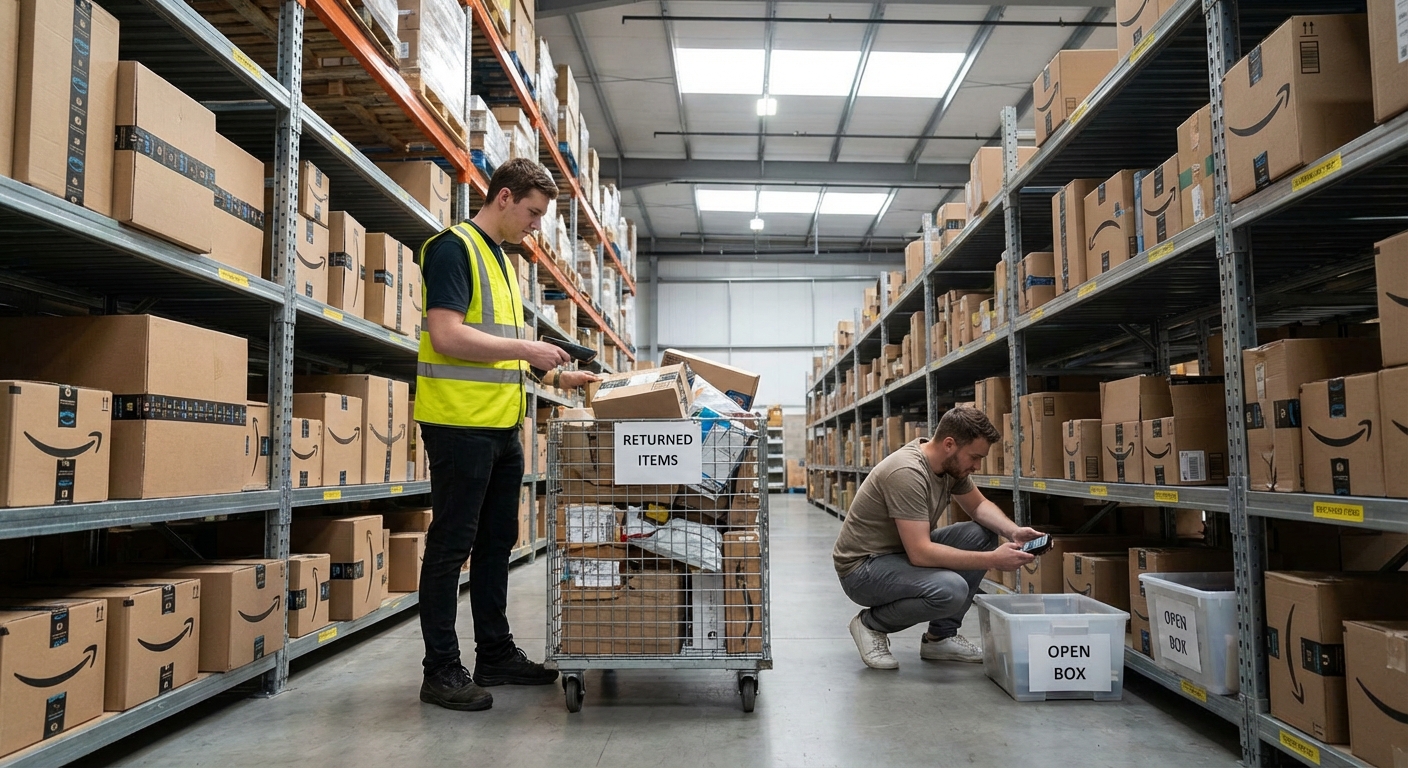
When you click that “Return” button, your package doesn’t magically vanish into the void. It usually ends up in one of these categories:
- Back to Stock (New)
If the box is unopened and pristine, Amazon may put it right back as new inventory.
- Amazon Warehouse (Used / Open Box)
Items that were opened, lightly used, or had damaged packaging are inspected and relisted through Amazon Warehouse with condition labels like:
- Used – Like New
- Used – Very Good
- Used – Good
- Used – Acceptable
- Liquidation Pallets
Products that aren’t worth restocking get bundled into big mystery-like pallets and sold to resellers, liquidation companies, or side-hustle pros.
- Recycling or Disposal
Items that are damaged beyond repair, unsafe, or not cost-effective to resell are recycled or disposed of.
How to Decode Amazon Warehouse Condition Labels
Shopping returned items doesn’t have to feel like a gamble—if you know how to read the fine print.
Here’s what the typical Amazon Warehouse conditions really mean in practice:
- Used – Like New
The gold standard of returns. Often an opened box, maybe a crumpled manual or torn plastic, but the item itself looks untouched. These can be almost indistinguishable from new.
- Used – Very Good
Minor cosmetic signs of wear. Maybe a small scratch, dent in the box, or slightly worn outer packaging. Functionally, usually flawless.
- Used – Good
Noticeable wear but still works properly. Think: scuffed edges, missing plastic wrap, or repackaged in a generic box.
- Used – Acceptable
The budget hunter’s playground. Could have more obvious wear, cosmetic issues, or missing non-essential accessories. Best when you don’t care how it looks—only that it works.
Pro tip: Always read the individual condition notes on the product page. They’ll often mention details like “scratches on screen” or “missing remote.” This is your x-ray vision into the return.Is It Safe to Buy Returned Amazon Items?
In most categories, yes—if you shop smart.
- Electronics are typically tested before being resold, especially through Amazon Warehouse.
- Many items still come with return windows and limited warranties.
- Some third-party sellers also specialize in refurbishing items and clearly label them as Renewed or Refurbished.
What to always check:
- Who’s the seller? Amazon Warehouse is generally safer than an unknown third-party.
- Is there a return policy listed? Many Warehouse items still qualify for Amazon’s standard return period.
- Are there recent reviews mentioning “used” or “open box”? These can clue you in on what buyers are actually receiving.
5 Wild Facts & Stories About Returned Amazon Items
These are the kinds of return stories that get screenshotted, shared, and dropped into group chats.
1. The “Brand New” Laptop That Was Full of Someone Else’s Life
One buyer ordered a “Used – Like New” laptop and opened it to find… a fully set-up desktop, complete with vacation photos, work documents, and saved logins.
Moral of the story?
- Always factory reset tech you buy used or open-box, even from Amazon.
- If it arrives clearly not wiped, consider returning it—data leaks can go both ways.
2. The Mystery Box Pallet Hustle
Whole TikTok accounts now exist around people buying Amazon return pallets—massive boxes of random returned items—for a few hundred dollars and unboxing them on camera.
One viral story: a reseller scored a pallet for under $500 and discovered:
- High-end headphones
- Multiple small kitchen appliances
- A nearly-new gaming console
They flipped the contents and made over $1,500 in profit.
Is it always that glamorous? No. Some pallets are 99% phone cases and broken cables. But the mystery and potential payoff keep people hooked.
3. The Duplicate Item Hack (That Backfires)
Another viral tale: a shopper tried the classic shady move—ordering a new item, then returning their old, used one in its place.
What they didn’t realize: Amazon’s systems flagged the serial numbers as mismatched. Their account got suspended for return fraud.
Amazon tracks more than you think:
- Serial numbers on electronics
- Product IDs on higher-ticket items
Lesson: don’t play games with returns. Amazon may be massive, but its anti-fraud tech is even bigger.
4. The “Wrong Item, Right Deal” Story
One customer ordered a basic office chair, but the return mix-up gods intervened: they opened the box and found a premium ergonomic chair worth triple the price.
They contacted support, and Amazon… told them to keep it.
While you shouldn’t expect this, it does happen: sometimes the cost to manage a return or exchange isn’t worth it to Amazon, so they let customers keep or donate the incorrect item. It’s rare—but it’s real.
5. When Returning Costs More Than Keeping
Behind the scenes, Amazon constantly crunches numbers. In some low-value cases (cheap items, heavy shipping, or damaged goods), Amazon will tell customers:
> “You’ll get a refund, but you don’t need to send it back.”
That’s why you see stories of people getting:
- A replacement and keeping the defective item
- A full refund for minor damaged packaging
It’s cheaper for Amazon to refund than to pay for shipping, processing, and restocking. For shoppers? It’s a story you drag into every group chat.
How to Score the Best Deals on Returned Amazon Items
If you want the best mix of savings + safety, use these strategies:
- Shop Amazon Warehouse directly
Search for "Amazon Warehouse" or filter by Condition: Used and Seller: Amazon Warehouse.
- Focus on categories that age well
Good bets:
- Desks, shelving, chairs
- Kitchen tools & appliances
- Headphones, monitors, keyboards
Higher-risk bets:
- Mattresses, bedding, and anything extremely personal
- Safety equipment (baby seats, helmets, etc.)
- Compare the discount
A “Used – Very Good” item with just 5% off isn’t worth the risk. Look for legit savings:
- 15–30% off for open-box, Like New
- 30–50% off for cosmetic issues or missing accessories
- Read reviews with the word “Warehouse” or “renewed”
Many buyers mention if they purchased from Amazon Warehouse and what condition the item actually arrived in.
When You Shouldn’t Buy Returned
Even deal lovers need boundaries. Consider skipping returns for:
- Baby safety products (car seats, cribs, monitors)
- Medical devices or health items (CPAP machines, glucose monitors)
- Heavily used wearables (earbuds, certain fitness trackers, unless professionally refurbished)
In these categories, peace of mind is worth paying full price.
Final Take: Returned Items Are the Internet’s Best “Almost-New” Secret
Returned Amazon items live in that sweet spot between full-price new and sketchy used—if you know where and how to look.
You can:
- Save big on open-box and lightly used items
- Shop more sustainably by giving products a second life
- Avoid nasty surprises by reading condition notes and seller info
And next time you see a wild story about Amazon returns on TikTok or Reddit, you’ll know exactly what’s really going on behind that viral screenshot.
Share this with the friend who always has a cart full of “Saved for Later” deals—they might be one Amazon Warehouse scroll away from their new favorite bargain.