I Turned My Apartment Into a Tiny “Learning Lab” — Here’s How It Changed How I Remember Everything
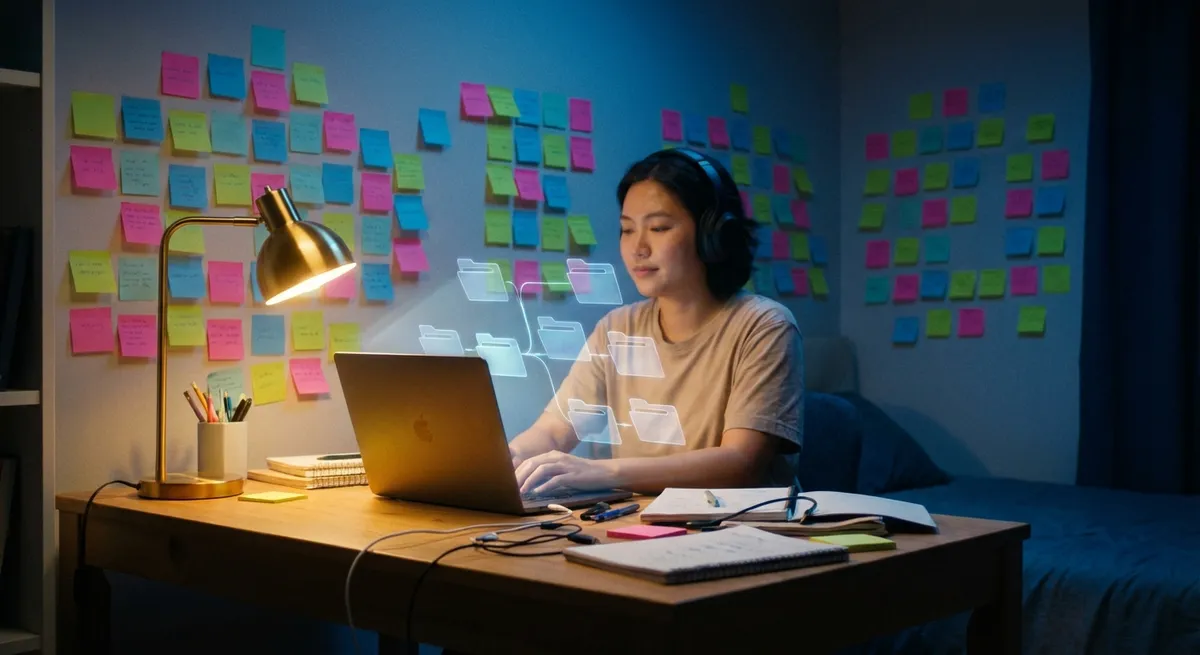
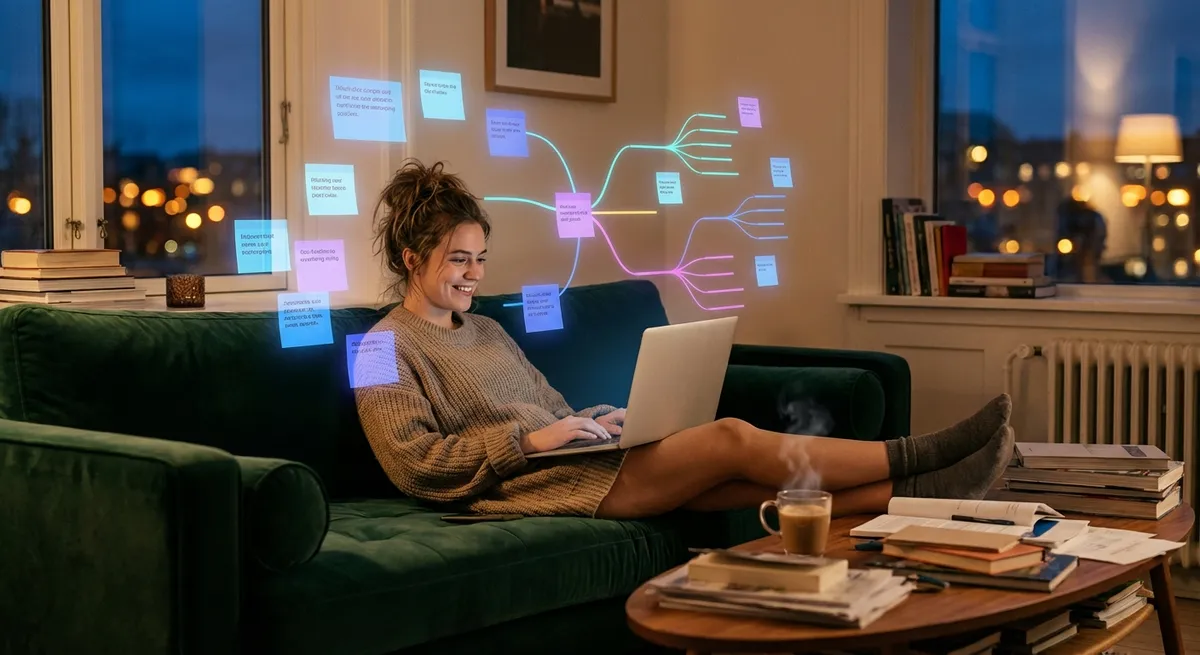
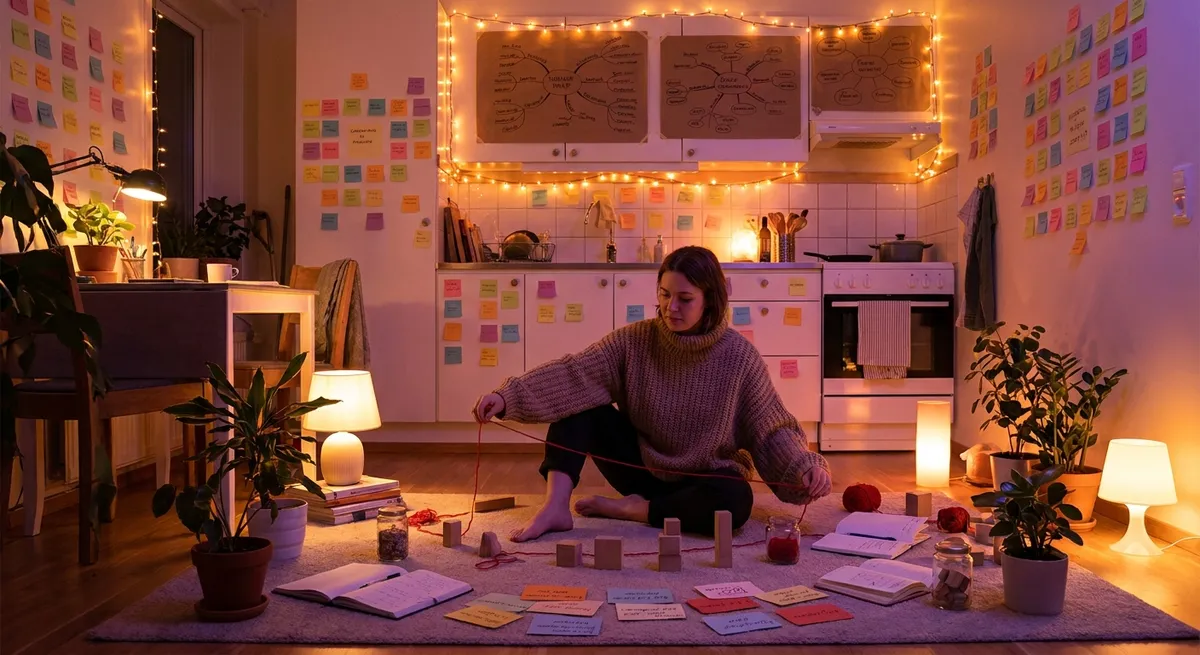
I recently realized my brain was basically a browser with 200 tabs open and zero idea which one was playing music. I’d read books, watch videos, scroll articles… and then forget 90% of it a week later. So I did something a little weird: I decided to turn my entire apartment into a reference system — a tiny, chaotic-looking “learning lab” that quietly helps me remember what actually matters.
I’m not talking about a Pinterest-perfect home office. I mean sticky notes on the coffee machine, a quote taped inside my closet, a QR code on my bookshelf, and a very judgmental whiteboard next to my TV. And it worked way better than any fancy app I’d tried.
Here’s how turning my space into a living reference library rewired the way I learn, remember, and actually use information instead of letting it die in my camera roll.
How I Realized My Brain Was a Terrible Filing Cabinet
The “aha” moment hit while I was hunting for a screenshot of a book recommendation I knew I saved... somewhere. Twenty minutes later, I’d scrolled through a year of memes, recipes, and random flight confirmations—and still didn’t find it.
When I tested myself on what I’d consumed that week, it was brutal. I could tell you I watched a 30-minute video on attention span, but I couldn’t name one actionable thing from it. Zero. Just vibes.
So I did a small experiment: for three days, every time I learned something I didn’t want to forget—like a quote, a stat, or a quick how-to—I forced myself to put it somewhere physical in my apartment instead of dumping it in a notes app. A scrap of paper on my fridge. A sticky note on my bathroom mirror. A sharpie message on a cardboard box.
By day three, I could recall way more details than usual. I remembered numbers, names, even exact phrasing. That’s when I started reading into why this worked.
Cognitive psychologists call this “context-dependent memory” — we recall information better when we’re in the same environment where we encoded it. I’d basically started building tiny “memory anchors” all over my space without realizing it.
That’s when I got intentional and turned my home into an actual reference system, not just a sticky-note graveyard.
The Core Idea: Turn Your Space Into a Giant, Low-Tech Reference Map
Once I leaned into the experiment, I gave myself one rule: every piece of information I care about should have a visible “home” tied to a real-world context.
Instead of burying everything in digital folders, I matched information to locations, objects, and habits. Think: your room as a physical index, not just somewhere you exist between doomscrolling sessions.
Here’s how I broke it down.
1. “Hot Spots” for High-Value Info
I started by mapping what researchers would call my “high-traffic zones” — the places I stand, sit, or walk past multiple times a day:
- Coffee machine
- Bathroom mirror
- Front door area
- Desk
- Bedside table
Each spot got a specific category of reference info:
- Coffee machine → One actionable idea I want to try that day (productivity tweak, workout, tiny habit).
- Bathroom mirror → One mindset shift I’m working on (quote, reminder, reframed belief).
- Front door → Micro-checklist (keys, water, headphones, courage).
- Desk → “Active project” reference (priority list, one metric I’m tracking).
- Bedside table → One “slow-burn” idea (a concept I want to think about for a week).
When I tested this for a month, the wild part wasn’t just remembering more — it was that I used more of what I learned. Because my references sneaked into my day when I wasn’t “trying” to be productive.
2. The 30-Second Reference Rule
I realized that when “saving” something took more than 30 seconds, I just… didn’t. So I made a rule: if it takes longer than half a minute to store, I’m overcomplicating it.
So instead of:
- “Let me open my second-brain app, pick a folder, add tags, and format this nicely…”
I did:
- Rip scrap paper, scribble main point, tape it somewhere visible.
Later, if something stuck, then I’d promote it to a more permanent system (like a Google Doc or Notion page). But first, it had to survive the “fridge test”: does it still feel useful after seeing it 10 times?
Weirdly, this made my digital reference systems better too, because I was only archiving what had already proved itself in the real world.
How I Built a Reference “Layer” Over My Life (Without Making My Place Look Like a Conspiracy Board)
I’m not gonna lie: there was a week when my apartment looked like a detective’s office in a true crime doc. String was almost involved. I had to dial it back.
Here’s the system that landed somewhere between “functional” and “my friends won’t stage an intervention.”
Anchoring Ideas to Objects
One trick that worked ridiculously well: pairing ideas with objects I already interact with daily.
For example:
- I stuck a tiny note on my light switch that said, “Do the uncomfortable thing first.”
After seeing this for weeks, I stopped checking email first and tackled the one scary task instead. It wasn’t magic — just ruthless repetition in the exact moment I was about to start my day.
- I taped a short breathing exercise to the inside of a kitchen cabinet.
Now, when I’m bored-snacking, I see “4-7-8 breathing: inhale 4, hold 7, exhale 8.” Sometimes I do it, sometimes I don’t. But I remember it without having to “look it up.”
This lines up with something called implementation intentions in behavioral research: pairing a cue (“when I walk into the kitchen”) with an action (“I do one round of breathing”). Your object becomes the cue.
The “Wall of Inputs” and the “Shelf of Outputs”
I noticed I was hoarding inputs (articles, books, podcasts) and collecting almost zero outputs (things I created from them). So I split my reference world into two visible zones:
- Wall of Inputs:
A small corkboard with:
- Book I’m currently reading
- One printed article I want to digest this week
- One question I’m researching
- Shelf of Outputs:
- A cheap notebook labeled “Stuff I Actually Used”
- Sticky notes with decisions I made because of something I learned (switch bank, change workout, try new budgeting rule)
Any time I realized information led to an actual change, I wrote a one-liner:
> “Listened to Dr. Matthew Walker on sleep → moved phone charger out of bedroom → falling asleep faster.”
This moved my reference system from “hoarding information” to “tracking transformation,” which is way more motivating than just collecting quotes like Pokémon cards.
Where Digital Still Wins (And How I Stopped Letting It Own Me)
I’m not anti-tech. I still use digital tools. I just stopped pretending they were automatically making me smarter.
In my experience, digital reference systems are amazing for searchable depth, but terrible for daily visibility. So I split the job like this.
Physical = Front-of-Mind
Digital = Long-Term Library
Here’s how I connect them:
- When I find a high-value article, I highlight one quote, then write it on paper and stick a tiny QR code (from a free QR generator) next to it that links to the full article.
Now “future me” can go deeper instantly, but “present me” still gets the daily nudge.
- For books, I stopped obsessing over perfect highlights. Instead, after finishing, I write three sentences on a sticky note:
- One core idea
- One behavior I’ll change
- One person I should share it with
That note goes in the front cover. The detailed notes live in a doc; the book itself is now a physical “reference tile” for that idea on my shelf.
There’s research suggesting that writing things by hand improves memory compared to typing, because it engages more cognitive processes (motor, visual, and conceptual). I definitely felt that. When I wrote something once, I remembered it way more vividly than the 47th highlight in my Kindle app.
The Upsides, the Downsides, and What Totally Flopped
To keep this honest, not everything about my “learning lab” experiment was genius.
The Stuff That Actually Worked
- I remembered where I learned something.
Not just “I saw it online somewhere,” but “oh yeah, that came from the sticky note by my coffee machine, from that NYTimes piece on habit loops.” The physical anchor helped.
- I used more information in real decisions.
I switched banks after rereading a note about FDIC insurance limits. I started strength training consistently because “3x/week is enough for health” lived on my bathroom mirror for a month.
- I wasted less time hunting.
I knew: physical notes = current active ideas, digital folders = deep archive. My brain relaxed a bit because it knew where to look.
The Stuff That Was Annoying (And How I Fixed It)
- Visual clutter overload.
When everything is highlighted, nothing is. At one point, I had 20+ notes up. I started a rule: max 7 visible references in my whole place. Anything new meant something old had to go.
- Cringe factor when guests came over.
There’s no way to casually explain “Ignore the note on my kettle that says ‘Stop being a coward’.” I adjusted: bathroom and bedroom got personal notes; kitchen and living room stayed more neutral.
- Forgetting to update things.
A “this week” note was still up three weeks later. Now I do a 10-minute Friday reset: purge dead notes, keep only what’s still alive.
What Completely Failed
- I tried a color-coded, category-based sticky system (blue for health, yellow for work, pink for relationships). It lasted… about four days. Too fussy.
- I attempted a “quote of the day” system. That quickly became “quote of whatever day I remembered to change it,” which defeated the whole point.
- I tried voice notes as environmental reminders. It was terrifying. Nobody wants their own voice randomly saying “hydrate, loser” through a Bluetooth speaker.
The lesson: the best reference system is the one you don’t resent maintaining.
How You Can Build Your Own Tiny “Learning Lab” in One Weekend
If you want to test this without turning your place into a post-it jungle, here’s the low-friction version I wish I’d started with.
Step 1: Pick Just Three Zones
Choose:
- One place you start your day
- One place you end your day
- One place you pass constantly
For example:
- Start: bathroom mirror
- End: bedside table
- Constant: fridge door or light switch
Step 2: Assign Each Spot a “Reference Role”
- Mirror → Identity or mindset reminder
- Bedside → One idea you’re actively learning (sleep, finance, creativity)
- Fridge/light switch → One behavior cue (move for 5 minutes, drink water, stretch)
Write one short, specific reference per spot. Not “be healthier,” but “Walk 8k steps today” or “No phone in bed after 11 p.m.”
Step 3: Connect One Physical Note to One Digital Deep Dive
For each note, save one supporting resource somewhere digital:
- A reputable article
- A podcast episode
- A book chapter
Write the title or a tiny QR code on the physical note so you can go deeper when curiosity hits.
Now you’ve got a surface-level reminder with a trapdoor into the nerdy depths.
Step 4: Do a 10-Min Weekly Clean-Up
Once a week:
- Remove anything that’s no longer relevant
- Keep only what still feels active
- Move anything “graduated” (stuff you’ve fully internalized) to a notebook or digital file called “Stuff That Stuck”
If you still notice it after three weeks, it’s either really powerful… or you’re ignoring it. Either way, it deserves a decision.
Why This Feels Different (And Why I’m Not Going Back)
After a few months of living with this “reference layer” over my life, here’s what changed for me:
- I stopped treating knowledge like a collectible and started treating it like a tool.
- My apartment quietly keeps me honest about what I actually care to remember, not what I impulsively saved.
- I feel less guilty about not capturing everything, because what I do capture actually shows up in my day.
There’s a quote I taped to my front door that pretty much sums it up:
> “The shortest pencil is longer than the longest memory.”
I don’t trust my brain to store everything anymore. I trust it to notice what’s important — and then I give that stuff a visible, physical home.
And honestly? Coming home to a space that reflects the ideas I’m actively living with feels a lot better than another graveyard of unopened tabs.
Sources
- American Psychological Association – Context-Dependent Memory – Overview of how environmental context can influence what we remember
- Harvard Business Review – The Science of Effective Learning – Explains why retrieval practice and spacing beat passive rereading
- NYTimes – Why Handwriting Is Still Essential in the Keyboard Age – Discusses research on how writing by hand strengthens memory and learning
- National Institutes of Health – Implementation Intentions and Behavior Change – Research review on how “if-then” planning helps turn intentions into action
- University of North Carolina Learning Center – Active vs. Passive Learning – Practical breakdown of why active engagement makes information stick more effectively