How “Reading in Public” Quietly Rewired My Brain (And My TBR Pile)
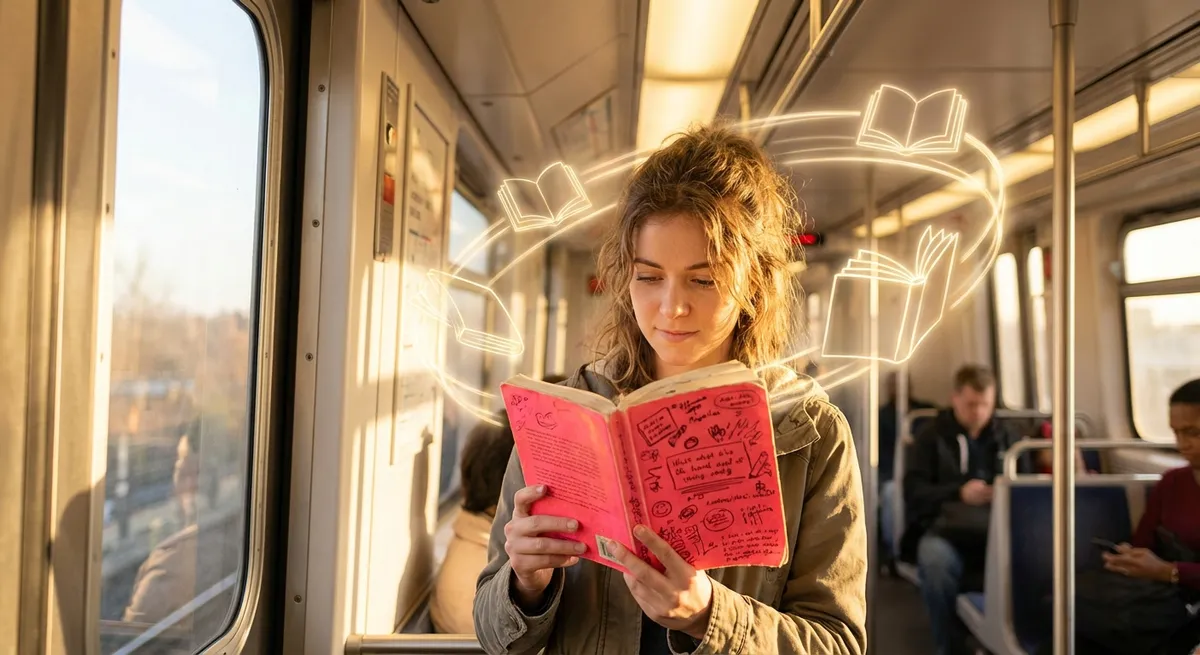
A few months ago, I did something I’d low‑key avoided my entire adult life: I started reading books in public on purpose. Not scrolling, not doom-reading news, not skimming ebooks with the screen brightness down — actually cracking open a physical book on trains, in coffee shops, in parks, even in line at the DMV.
I thought it’d just be a productivity hack for my to-be-read pile. Instead, it completely changed how I read, what I remember, and who I talk to. It also made me weirdly obsessed with the psychology of reading and why our brains treat a paperback on a bench very differently than a Kindle in bed at 1 a.m.
Here’s what happened when I turned my reading life into a semi-public sport — and why you might want to test it yourself (even if you’re book-shy).
The Day a Stranger Roasted My Book (And Why That Hooked Me)
The moment that started this whole thing was extremely unglamorous: I was on a sticky subway seat, reading a very hyped fantasy novel. A guy standing near the door leaned over and just said, perfectly deadpan:
“Chapter 19 is where it stops pretending it’s clever.”
I laughed, he moved down the car, and that was it. But I raced to Chapter 19. And yeah… he was kinda right.
On the ride home, I realized two things:
- I read completely differently when someone might comment on my book.
- I missed this weird, chaotic, in-person layer of reading culture that doesn’t exist in Goodreads reviews or TikTok comments.
So I made a deal with myself: for one month, I’d do at least half my reading in public spaces — cafes, buses, parks, lobbies, laundromats. No headphones. No phone near the book. Just me, the pages, and whoever happened to orbit around.
Here’s what that experiment did to my brain, my focus, and my book choices.
Why My Brain Reads Differently When Other People Can See the Cover
When I started this little challenge, I figured the only real change would be “more minutes read.” Instead, the quality of my attention shifted.
1. “Social spotlight” turned my focus up
There’s a concept in psychology called the spotlight effect — the idea that we massively overestimate how much people are paying attention to us. Studies going back to the early 2000s show that we walk around assuming everyone notices our t-shirts, our mistakes, our everything… when most people don’t.
But here’s the twist: that feeling of being watched can boost performance and self-control. A 2018 paper in Nature Human Behaviour discussed how social presence can nudge us into more goal-oriented behavior and reduce mind-wandering.
When I read in public, I felt that fake spotlight. My brain was like, “We’re on stage. Don’t get caught replaying that argument from 2019.” I wasn’t actually performing, but the ambient accountability made it way harder to keep glancing at my phone or rereading the same paragraph five times.
In my experience, a 30-minute reading sprint in a café felt as dense and focused as an hour in my living room.
2. Physical books won the attention war
I tested physical vs digital reading outside — the experiments were not subtle:
- Week 1: Mostly paperbacks.
- Week 2: Mostly Kindle / phone.
- Week 3: Mixed both.
On my phone, my reading sessions collapsed every time a notification slid in. Even when I had Do Not Disturb on, my thumb was too used to hopping apps. It’s that “continuous partial attention” researchers keep warning about — our brains get trained to expect interruptions.
With a paperback, the friction vanished. Just ink and paper. No red badges. No sudden “Your storage is almost full.”
Studies back this up: research from University of Stavanger (Norway) has shown that people often comprehend and remember narratives better on paper than on screens, especially when reading long-form fiction. My totally unscientific version of that? I could recall plot details and names more clearly from the physical books I’d hauled around town.
3. I weirdly started curating my book covers
Here’s the slightly embarrassing part: I became strategic about what book I was seen with.
On the bus, I felt totally fine reading a 700-page epic fantasy that screamed “nerd alert” in foil lettering. In a trendy café? I grabbed literary fiction with minimalist covers like I was auditioning for a bookstagram aesthetic I don’t even have.
Was this shallow? Absolutely. Did it change what I picked up from my shelf? Also yes.
And there’s a name for this too: identity signaling. When we visibly consume certain books, we’re not just reading — we’re sending out a tiny flare about who we are (or want to be seen as). Researchers in media and consumer behavior have looked at how people use cultural products — books included — to perform identity and group belonging.
The upside: that little performative streak nudged me toward harder, more rewarding reads I’d been avoiding. The downside: I caught myself caring more about “smart-looking” covers than whether I actually wanted to read the thing.
Unexpected Plot Twist: Strangers Turned Into a Live Recommendation Engine
I thought reading in public would be mostly about me and my focus. What I didn’t expect was how many people would treat my book as a conversation starter.
Over that month:
- A barista quietly slid me a sticky note with three book recs after clocking my copy of The Secret History.
- An older woman in a waiting room told me she’d read my novel “when it first came out… before you were born,” then recommended the author’s memoir, which I’d never heard of.
- A college student asked if the book I had “was worth the TikTok hype or just vibes.”
These tiny interactions changed my reading pipeline more than any algorithmic recommendation feed had in months.
And there’s real data that “social reading” matters. Pew Research has reported that discovering books through friends, family, and in-person communities (like book clubs and libraries) remains one of the strongest drivers for what people actually pick up — often more powerful than online reviews alone.
What hit me hardest was the variety. Algorithms tend to feed us more of what we already like. Random humans in a doctor’s office? They’ll shove a decades-old backlist title at you that’s totally outside your usual genre.
The good side of analog recs
In my experience, human recs:
- Broke me out of my subgenre echo chamber.
- Came with context: “I read this when I was divorcing,” “This got me through a night shift job,” “I hated the ending but I still think about it.”
- Felt stickier — I remembered who recommended the book, not just the title.
The messy side
Of course, this wasn’t all magical:
- People occasionally tried to spoil endings. (“Wait till he dies!” Cool, thanks, man.)
- Some recommendations were wildly off-base. I made exactly zero progress in a dense military history brick someone swore was “a page-turner.”
- A couple of times, I just didn’t want to talk, and closing the conversation without being rude took real emotional gymnastics.
Public reading is not a cozy bookclub bubble; it’s more like open mic night. You don’t fully control who grabs the mic.
What Public Reading Did to My TBR Pile (And My Reading Shame)
Before this experiment, my reading habits lived in a quiet loop:
- I’d buy books faster than I read them.
- I’d feel guilty about the expensive, unread stack.
- I’d start something, get distracted, and then punish myself by… buying more books.
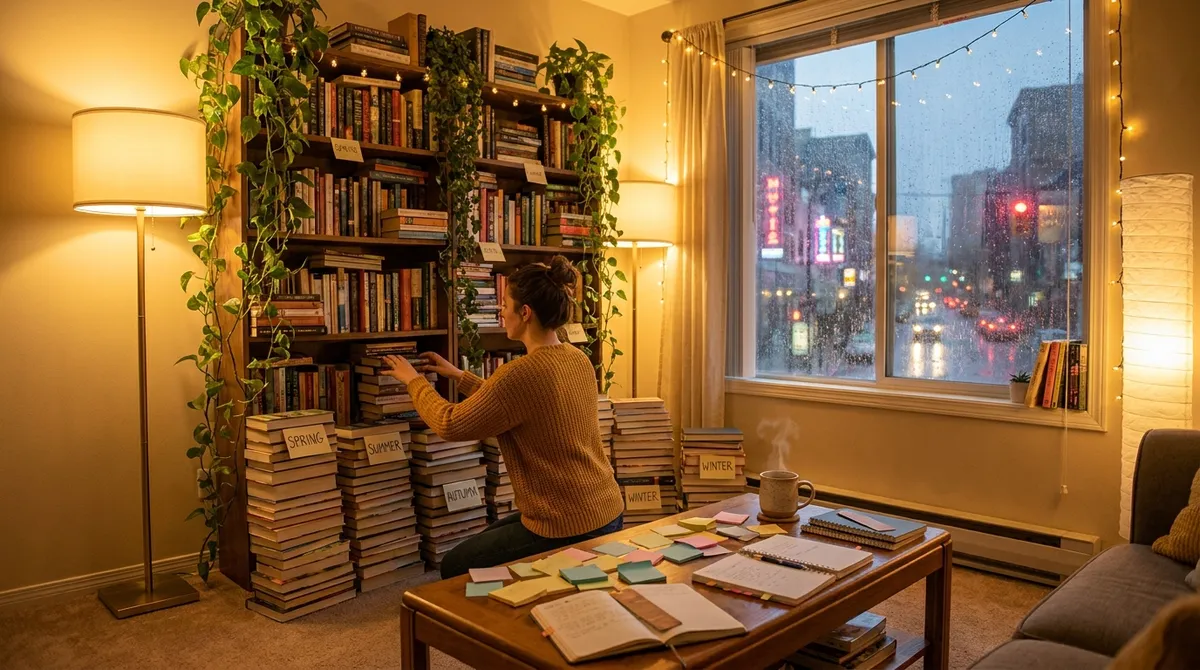
When I started physically carrying books with me, I saw my TBR in a new (slightly brutal) light.
The “backpack test”
If I wasn’t willing to lug a book in my bag all day — through subway delays, coffee spills, and questionable weather — did I really want to read it?
I began doing this little gut-check:
> “Would I be okay if someone asked me about this book in line at Target?”
If the answer was “no” because I didn’t care enough, or I’d picked it up for clout, or it was 1,000 pages of “I should read this classic one day” energy… it quietly moved down the list.
This cut a lot of shame out of my reading life. Instead of resenting the unread stack glaring at me from the shelf, I focused on books that passed the backpack test. Pages turned, guilt lowered.
Letting myself DNF… in public
Something else shifted: I got way more comfortable not finishing books, even obvious crowd-pleasers.
I vividly remember closing a very beloved bestseller halfway through my cappuccino, putting a sticky note in it that said “not for me,” and feeling like I’d just escaped a cult.
There’s strong evidence that reading for pleasure is most beneficial — in terms of empathy, vocabulary, even mental health — when it’s voluntary, not forced. Pushing myself through novels I hated because “everyone else loves this” was the opposite of that.
Reading them outside, in front of other humans who clearly had their own complicated relationships with books, helped me drop the weird perfectionism. If I wouldn’t waste my precious café hour on a boring date, why was I wasting it on a boring book?
How to Turn Your Own City Into a Giant, Quiet Reading Room
If you’re tempted to test this out, here’s what worked — and what really didn’t — when I treated public spaces as my personal reading labs.
What actually helped
- Pick “low-interruption” spots first.
Libraries are the obvious choice, but I also had good luck with:
- Parks with benches slightly off the main path.
- Corner seats in coffee shops.
- Public transit (trains > buses, at least for me).
- Start with books that are easy to re-enter.
Complex literary fiction with six timelines? Maybe not your first foray. Fast-paced novels, short story collections, or essay collections are much kinder to the “I just got interrupted by someone’s smoothie order” reality.
- Give yourself a “no phone, no headphones” window.
I did 20–40 minute blocks where my phone stayed in my bag, not on the table. The friction of pulling it out was just enough to keep me in the book.
- Have a “polite exit line” ready.
For days when I wasn’t up for chatting, I’d say something like:
“I’d love to hear more, but I’m on a pretty tight time block with this chapter.”
Not perfect, but it usually worked.
What didn’t work (at all)
- Forcing “smart” books just to look impressive.
Every time I did this, I resented both the book and the setting. It turned reading into performance instead of pleasure.
- Reading super intense content in chaotic spaces.
Emotional memoirs in a loud café? No thanks. My nervous system tapped out.
- Expecting a movie moment every time.
Most of the time, no one said a word, which is also kind of the point. Your reading life doesn’t have to be cinematic to be meaningful.
Why I’m Keeping This Habit (Even Though My Couch Is Jealous)
By the end of the month, I wasn’t just reading more — I was reading differently:
- I remembered more details.
- I finished more books instead of bouncing between five.
- I found new authors through total strangers.
- I felt less weirdly ashamed of all the books I hadn’t read yet.
Public reading didn’t turn me into a productivity machine or some hyper-literary version of myself. It just made my reading life feel less private in the best possible way — less like a guilty pleasure I snuck in before bed, more like a visible, legitimate part of my day.
If your TBR pile is judging you from across the room, or if your attention span feels like it’s fried, try this:
Bring one physical book with you tomorrow. Read it somewhere you’d normally be scrolling. Notice how it feels to turn an actual page while the rest of the world rushes around you.
It might be awkward. It might be peaceful. Someone might tell you Chapter 19 is where it all falls apart.
But that’s kind of the magic: once your reading leaves the house, you have no idea what story it’s really about to become — on the page and around it.
Sources
- Pew Research Center – “Who doesn’t read books in America?” – Data on reading habits, formats, and how people discover books
- Harvard Library – “Reading in a Digital Age” – Overview of research comparing print and digital reading, comprehension, and attention
- University of Stavanger Reading Centre – Summaries and links to studies on reading on screens vs paper, including comprehension differences
- American Library Association – The Value of Libraries for Lifelong Learning – Context on social and community aspects of reading and book discovery
- Nature Human Behaviour – Social influences on self-regulation – Research on how social presence and perceived observation can affect focus and goal-directed behavior